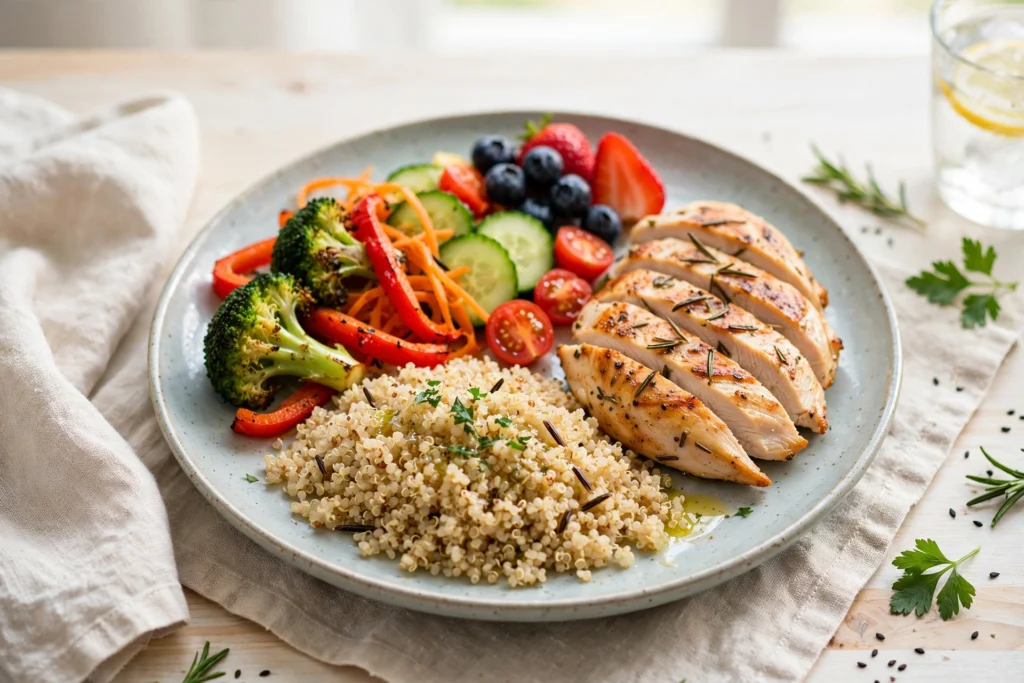
Few things are more frustrating than doing everything “right” — eating clean, hitting the gym, skipping dessert — and not losing weight. If this sounds familiar, you are not broken, and you are definitely not alone. Weight loss plateaus and stalls are incredibly common, and they almost always have identifiable, fixable causes.
Before you give up or drastically slash calories, work through these 11 hidden reasons. One (or more) of them is almost certainly your culprit.
In This Guide You’ll Learn
- How to tell a real weight loss stall from normal day-to-day fluctuation
- The 11 most common hidden reasons for not losing weight despite diet and exercise
- How hidden calories, portion creep, sleep, stress, and hormones each block fat loss
- When a flat scale actually means you are gaining muscle, not failing
- A 14-day stall-breaker plan to restart your progress
- When to see a doctor about a weight loss plateau
- Answers to the most common plateau questions
First: Are You Actually Stalled?
A true weight loss plateau means zero change for 3 or more weeks despite consistent effort. Many people panic after 5–7 days of no movement, but that is normal. Your weight naturally fluctuates 1–2 kg day to day due to water, hormones, digestion, and salt intake.
Women should also expect a 1–3 kg swing around their menstrual cycle — that is water, not fat, and it always resolves. Similarly, a salty restaurant meal or a hard workout can add a kilo of water overnight. None of this is fat gain, and none of it means your plan has stopped working.
How to know if you are truly stalled:
- Weigh yourself 3–4 times per week, first thing in the morning, after using the bathroom.
- Compare weekly averages, not daily numbers.
- Measure your waist monthly — sometimes fat loss continues even when the scale stalls (body recomposition).
- If the 4-week trend is flat, you have a real stall. Let us fix it.
1. You Are Eating More Than You Think

This is the number one reason for stalled weight loss, by a wide margin. Studies show people underestimate their calorie intake by 30–50% — even dietitians do it.
The usual suspects:
- Cooking oil: pouring freely from the bottle instead of measuring. Two “glugs” can be 250+ calories.
- Nibbling while cooking: tasting the curry, eating the kids’ leftovers, grabbing a handful of nuts — none of it gets “counted” mentally, but it all counts calorically.
- Weekend blowouts: eating perfectly Monday to Friday, then consuming 3,000+ calories on Saturday. One bad day can erase a week of deficit.
- “Healthy” foods in large portions: nuts, peanut butter, olive oil, avocado, dried fruit, and granola are nutritious — and extremely calorie-dense. A “small handful” of almonds is often 3 servings.
- Liquid calories: that daily fresh orange juice (150 cal), the milky sugary chai (100 cal x 3 cups), the weekend lassi (300 cal).
Here is a sobering bit of maths: if your daily target is 1,600 calories and you unknowingly eat 1,900, you will not gain weight — but you will not lose it either. You will sit exactly at maintenance, week after week, wondering why nothing is happening. A 300-calorie daily error is almost invisible in real life, yet it completely erases a sensible deficit.
The fix: Track everything honestly for 7–14 days — every bite, every sip, every taste. Use an app or a notebook. Most people find 300–500 “invisible” calories within the first three days. You do not need to track forever, but this audit is essential.
2. Your Portions Have Slowly Grown

This is “calorie creep” — the gradual, unconscious increase in serving sizes over time. The bowl of rice that was one cup in January is now one and a half cups in June. The two rotis became three. The “tablespoon” of peanut butter became a heaped tablespoon.
Your brain normalises whatever you repeatedly serve yourself. After a few months, larger portions feel like “normal” portions. Restaurant servings make it worse — a single restaurant biryani or karahi portion can easily pack 900–1,200 calories, roughly two full home meals.
The fix: For one week, go back to basics. Measure your carbs (rice, pasta, oats) with a cup. Use the hand method for protein (palm-sized) and fats (thumb-sized). You will likely be surprised.
3. You Are Overestimating Exercise Calories

Exercise is wonderful for health, but it burns far fewer calories than most people believe — and fitness trackers routinely overestimate by 20–40%.
Reality check:
- 30 minutes of moderate gym workout: ~200–250 calories (not 500)
- 1 hour of brisk walking: ~250–300 calories
- 30 minutes of yoga: ~120–150 calories
Worse, many people unconsciously eat back their exercise calories (“I worked out, so I deserve this”), or they become less active for the rest of the day after a workout (fewer steps, more sitting), which cancels out the burn. Researchers call rest-of-day activity NEAT — non-exercise activity thermogenesis — and it often matters more than the workout itself. A person who walks 10,000 steps daily without formal exercise typically burns more than someone who does an intense 30-minute session and then sits for 12 hours.
The fix: Treat exercise as a health bonus, not a calorie licence. Do not add exercise calories back into your food budget unless you are doing intense training for 60+ minutes. And track your daily steps — if workout days have fewer total steps than rest days, you are compensating without realising it.
4. You Have Been Dieting Too Long Without a Break
If you have been in a calorie deficit for months, your body adapts. This is called adaptive thermogenesis — your metabolism slows down, hunger hormones (ghrelin) increase, fullness hormones (leptin) decrease, and your body becomes remarkably efficient at conserving energy. You burn fewer calories doing the same activities.
This is not “starvation mode” in the mythical sense, but it is a real, measurable metabolic slowdown of 10–15% after prolonged dieting. It also explains why the last few kilos are always the hardest: a lighter body burns fewer calories, so the deficit that worked at 90 kg barely registers at 75 kg.
The fix: Take a diet break. Eat at maintenance calories (not a surplus) for 1–2 weeks. This helps normalise hormones, reduces diet fatigue, and often restarts weight loss when you resume the deficit. Many people find they actually lose a little weight during the break as stress hormones drop. A diet break is not quitting — it is a planned, strategic part of long-term fat loss.
5. You Are Not Eating Enough Protein

Protein is the most important macronutrient for weight loss, yet it is the one most dieters under-eat — especially vegetarians and those who fear “too much” protein.
Inadequate protein causes:
- Greater hunger and more snacking
- Muscle loss (which lowers your metabolism)
- Slower recovery from workouts
Quick protein portions that each give roughly 20–25 g: 100 g chicken breast, 120 g fish, 3 whole eggs, 200 g Greek yoghurt, 100 g paneer, 1.5 cups cooked lentils (daal), 80 g soya chunks, or a palm-and-a-half of mixed nuts is not enough on its own — pair nuts with dairy or lentils.
The fix: Aim for 1.2–1.6 g of protein per kilogram of body weight. For a 70 kg person, that is 84–112 g daily. Include a protein source at every meal: eggs, chicken, fish, lentils, chickpeas, Greek yoghurt, paneer, or soya chunks. If you are vegetarian, you need to be especially deliberate — combine lentils, dairy, and soya throughout the day.
6. Poor Sleep Is Sabotaging You
Sleep deprivation is a weight loss killer that most people completely overlook. When you sleep less than 6–7 hours:
- Ghrelin (hunger hormone) rises by ~15%
- Leptin (fullness hormone) drops by ~15%
- Your brain’s reward centres become hyperactive, intensifying junk food cravings
- You eat 300+ extra calories the next day, mostly from carbs and fat
- Insulin sensitivity drops, promoting fat storage
One study found that dieters who slept 8.5 hours lost significantly more fat than those who slept 5.5 hours — even eating identical calories. The sleep-deprived group lost mostly muscle instead of fat.
The fix: Prioritise 7–9 hours of sleep. Keep consistent sleep/wake times, even on weekends. Avoid screens for the last 30–60 minutes before bed. Keep the bedroom dark and cool. Cut caffeine after 2 pm. If stress or a newborn is disrupting sleep, be extra careful with food the next day — your hunger signals cannot be trusted when you are tired.
7. Chronic Stress and High Cortisol

Ongoing stress — work pressure, financial worries, family issues — keeps cortisol elevated. High cortisol:
- Increases appetite, especially for sugary and fatty “comfort” foods
- Promotes fat storage specifically around the abdomen
- Disrupts sleep (which worsens everything above)
- Causes water retention, masking fat loss on the scale
Many people eat perfectly all day, then demolish a packet of biscuits at 11 pm after a stressful day. That is cortisol talking. And stress rarely travels alone — it disrupts sleep (Reason #6), drives comfort eating (Reason #1), and raises water retention, so one bad week of stress can stall the scale from three directions at once.
The fix: You cannot eliminate stress, but you can change your response. Build a 10-minute daily decompression ritual (walk, breathing exercises, journaling, prayer). Identify your stress-eating triggers by noting what you eat and how you feel. And protect your sleep — stress and poor sleep feed each other.
8. A Medical Condition May Be Involved
Sometimes the problem is not your effort — it is your biology. Several medical conditions make weight loss genuinely harder:
- Hypothyroidism: an underactive thyroid slows metabolism significantly. Symptoms include fatigue, cold intolerance, dry skin, and hair loss. A simple blood test (TSH) can diagnose it.
- PCOS: affects 8–15% of women and causes insulin resistance, making fat loss harder (though absolutely still possible with the right approach — see our guide to losing weight with PCOS).
- Insulin resistance / prediabetes: high insulin levels lock fat in storage mode.
- Cushing’s syndrome: rare, but causes rapid central weight gain.
- Medications: antidepressants, antipsychotics, corticosteroids, some diabetes drugs, and beta-blockers commonly cause weight gain or block weight loss.
One important caution: many people blame their thyroid or hormones without evidence, while the real culprit is untracked calories. Work through Reasons #1–7 honestly first. If — and only if — you have been truly consistent for 8+ weeks with zero results, pursue the medical route. Our health disclaimer explains the limits of general nutrition information.
The fix: If you have been truly consistent for 8+ weeks with zero results, get bloodwork done: thyroid panel (TSH, T3, T4), fasting glucose and HbA1c, and vitamin D. Review your medications with your doctor. Do not just assume it is medical, but do not ignore the possibility either.
9. You Are Gaining Muscle While Losing Fat
This is actually good news disguised as a stall. If you recently started strength training, you may be building muscle while losing fat simultaneously — a process called body recomposition. Muscle is denser than fat, so the scale stays flat while your body shrinks.
Signs this is happening:
- Clothes fit looser despite no scale change
- Waist measurement decreasing
- You look leaner in photos
- Strength increasing in the gym
This phase is most common in the first 2–4 months of a new training programme, and in people returning to exercise after a long break. It is also why protein matters so much (Reason #5): without enough protein, you cannot build the muscle that keeps your metabolism high.
The fix: Stop worshipping the scale. Take monthly waist measurements and progress photos. If your waist is shrinking, you are winning — regardless of what the scale says.
10. Your Gut Health May Be Working Against You
Emerging research shows gut bacteria influence weight regulation, hunger signals, inflammation, and how many calories you extract from food. An imbalanced gut microbiome (from antibiotics, poor diet, stress, or illness) is associated with weight gain and difficulty losing weight.
Signs of gut issues: bloating, irregular digestion, constant sugar cravings, and feeling hungry soon after eating.
The fix: Feed your gut bacteria with diverse fibre (aim for 30 different plant foods per week — sounds like a lot, but spices, lentils, vegetables, fruits, and whole grains add up fast). Include fermented foods like dahi/yoghurt, and consider reducing ultra-processed foods that harm gut diversity. This pairs naturally with Reason #5: lentils, chickpeas, and vegetables feed both your muscles and your microbiome.
11. You Are Too Focused on Perfection
Ironically, the all-or-nothing mindset stalls more diets than any food. The pattern: eat perfectly for 5 days, have one “bad” meal, feel guilty, abandon the whole plan for a week, restart on Monday. Repeat forever.
One unplanned meal does not ruin a week. But the guilt-driven binge that follows it absolutely does.
The fix: Adopt the 80/20 mindset. If 80% of your eating is on-plan, the 20% does not matter. A single restaurant meal in a week of consistent eating changes almost nothing mathematically. What matters is what you do most of the time, not all of the time. Get back on track at the very next meal — not next Monday.
Your 14-Day Stall-Breaker Plan
Knowing the reasons is only half the battle. Here is a simple two-week plan that applies the fixes above in a sensible order:
| Days | Focus | What to do |
|---|---|---|
| 1–3 | Audit | Track every bite honestly; weigh yourself each morning; measure your waist. Find your hidden calories (Reason #1). |
| 4–5 | Protein + portions | Hit 1.2–1.6 g protein per kg daily; measure carbs with a cup for these two days (Reasons #2, #5). |
| 6–7 | Sleep + steps | Fix bedtime routine; aim for 7+ hours; hit 8,000–10,000 steps daily (Reasons #3, #6). |
| 8–10 | Stress + gut | Start a 10-minute daily decompression ritual; add one fermented food and two extra vegetables daily (Reasons #7, #10). |
| 11–14 | Assess | Compare your 2-week average weight and waist measurement. If the trend is moving, keep going. If it is still flat after honest effort, book bloodwork (Reason #8). |
Your Action Plan: What to Do This Week
Do not try to fix all 11 at once. Start here:
- Track honestly for 7 days — find your hidden calories (Reason #1).
- Check your sleep — are you getting 7+ hours? (Reason #6).
- Audit your protein — are you hitting 1.2 g/kg? (Reason #5).
- Measure your waist — is the scale lying? (Reason #9).
- If stalled 8+ weeks — get bloodwork done (Reason #8).
Most stalls resolve within 2–3 weeks of honestly addressing the top three.
When to See a Doctor About Your Stall
Most weight loss stalls are behavioural, not medical — but not all. Book an appointment with your doctor if any of these apply:
- You have been genuinely consistent for 8+ weeks with zero change in weight and measurements
- You have symptoms of hypothyroidism: unusual fatigue, feeling cold all the time, dry skin, hair loss, constipation
- You have signs of insulin resistance: darkened skin patches on the neck or armpits, intense sugar cravings, energy crashes after meals
- You recently started a new medication and your weight loss stopped at the same time
- You are a woman with irregular periods, excess facial hair, or acne alongside difficulty losing weight (possible PCOS)
Ask about a thyroid panel (TSH, T3, T4), fasting glucose and HbA1c, vitamin D, and a review of your current medications. General nutrition articles — including this one — cannot diagnose you; see our health disclaimer for the limits of this information.
Frequently Asked Questions
How long should I wait before worrying about a plateau?
Give it 3–4 weeks of true consistency before calling it a plateau. Daily and weekly fluctuations are normal. Compare 4-week average trends, not week-to-week numbers.
Should I cut more calories if I am not losing weight?
Not immediately. First check if you are accurately tracking (most people are not). Only reduce calories further if you have honestly tracked for 2+ weeks and confirmed your intake. Never drop below 1,200 calories (women) or 1,500 calories (men) without medical supervision.
Can stress really stop weight loss?
Yes. Chronic stress elevates cortisol, which increases appetite, promotes belly fat storage, disrupts sleep, and causes water retention. Managing stress is not optional self-care — it is a weight loss strategy.
Why am I losing inches but not weight?
You are likely gaining muscle while losing fat (body recomposition), especially if you recently started exercising. This is ideal — muscle improves your metabolism and appearance. Trust your measurements and photos over the scale.
Should I try a detox or cleanse to restart weight loss?
No. Juice cleanses and detox teas do not remove toxins — your liver and kidneys already do that — and any weight lost on a cleanse is mostly water and muscle, which returns within days. Worse, extreme cleanses can slow your metabolism further (Reason #4). The 14-day plan above restarts progress without any cleanse.
Can certain foods break a weight loss plateau?
No single food breaks a plateau. What helps is the overall pattern: enough protein, plenty of fibre, controlled portions, and consistent sleep. Spicy foods and green tea are sometimes marketed as metabolism boosters, but their effect is tiny — a few dozen calories at most. Focus on the big levers in Reasons #1–6 instead.
Do I need to see a doctor about my weight loss stall?
If you have been genuinely consistent for 8+ weeks with zero change in weight or measurements, yes. Ask for thyroid function tests, fasting glucose/HbA1c, and a medication review. Rule out medical causes before assuming it is a willpower problem.
The Bottom Line
Not losing weight despite diet and exercise is frustrating, but it is almost always solvable. The most common culprits are hidden calories, growing portions, poor sleep, and chronic stress — not a broken metabolism. Audit honestly, fix sleep and protein first, and give changes 3–4 weeks to work.
If you have tried everything and the scale still will not move, book a consultation with our nutritionists. We will analyse your diet, lifestyle, and lab work to find exactly what is blocking your progress — and build a plan that actually works for your body.
Keep reading: our Weight Loss Nutrition Guide pillar page, How to Lose Weight Without Exercise: 12 Proven Tips, How to Speed Up Metabolism After 40, How to Lose Belly Fat Naturally at Home, and the WHO healthy-diet fact sheet.
One last thought: if you are not losing weight right now, treat the stall as information, not failure. It tells you exactly where your plan needs adjusting — usually in the kitchen, in your sleep routine, or in your stress levels, rather than in the gym. Pick the single reason from this list that made you pause, and work on only that one for the next seven days. Small, consistent corrections beat dramatic overhauls every time: measuring your cooking oil, adding protein to breakfast, or setting a fixed bedtime can each quietly remove a few hundred hidden calories or restore the hormones that drive fat loss.
Track honestly, compare weekly averages instead of daily weigh-ins, and give each change at least two full weeks before judging it. Most people who work through this list systematically find their culprit within the first three reasons — and once the scale starts moving again, keep the habit that fixed it. That is how a two-week stall becomes a permanent result.