
Benefits of a Healthy Diet: A Complete Nutrition Guide
Food is far more than fuel. Every meal you eat is a message to your body — and a balanced, nutritious diet sends the right one. In Pakistan, where our tables are rich with dals, sabzis, fresh rotis and seasonal fruit, eating well does not require expensive imported foods or complicated plans. It requires understanding what your body needs and making steady, sensible choices.
This guide explains the real, science-backed benefits of a healthy diet and the key nutrition information every Pakistani family should know.
What Does a Healthy Diet Look Like in Pakistan?
A healthy diet is not about strict rules or giving up the foods you love. It is about balance, variety and moderation. A typical healthy desi plate includes:
- Whole grains — whole wheat roti, brown rice, oats or barley
- Protein — dal, lobia, chickpeas, eggs, fish, chicken or lean meat
- Vegetables — a generous serving of seasonal sabzi and fresh salad
- Dairy — a bowl of dahi or a glass of milk
- Fruit — one to two servings of seasonal fruit
- Healthy fats — in modest amounts from nuts, seeds and cooking oils
No single food contains every nutrient, which is why variety matters more than any “superfood.”
8 Science-Backed Benefits of a Healthy Diet
1. Healthy Weight Management
A diet built on whole foods — vegetables, lentils, whole grains and lean proteins — is naturally filling and less calorie-dense than one built on fried snacks, sugary drinks and refined flour. Fibre and protein keep you satisfied longer, which makes it easier to maintain a healthy weight without constant hunger. Sustainable weight control comes from habits, not crash diets.
2. A Stronger Heart
Diets rich in vegetables, fruits, whole grains, lentils and fish are consistently associated with better heart health. Fibre helps manage cholesterol levels, while potassium from fruits and vegetables supports healthy blood pressure. Cutting back on deep-fried foods, trans fats and excess salt further protects your heart.
3. Better Immunity
Your immune system runs on nutrients. Vitamin C from kinnow, amrood and lemons; vitamin A from carrots, mangoes and leafy greens; zinc from lentils, chickpeas and nuts; and protein from eggs, dairy and dals — all play roles in keeping your body’s defences working. No single food “boosts” immunity overnight, but a consistently nutritious diet keeps it strong.
4. Smoother Digestion
Fibre is the unsung hero of digestive health. Found in whole wheat, dals, vegetables, fruits and ispaghol, fibre keeps digestion regular, feeds beneficial gut bacteria and helps prevent constipation — a common complaint in diets heavy on refined flour and low on vegetables.
5. Strong Bones and Muscles
Calcium and vitamin D build and maintain bones; protein maintains muscle. Milk, dahi, leafy greens like palak and sarson, and almonds provide calcium, while sensible sun exposure and vitamin-D-rich foods support vitamin D levels. This matters at every age — from growing children to older adults at risk of bone loss.
6. A Sharper Mind and Better Mood
The connection between diet and mental well-being is real. Regular meals that include protein, whole grains, fruits and vegetables help stabilise energy and mood through the day. Omega-3 fats from fish, walnuts and flaxseeds support brain health, while B vitamins from whole grains and lentils play roles in nervous system function.
7. Steady Energy Through the Day
The afternoon slump many people feel is often a diet problem, not a sleep problem. Meals built on refined carbs and sugar cause quick spikes and crashes in energy. Balanced meals — combining complex carbohydrates with protein, fibre and healthy fats — release energy gradually and keep you alert and productive.
8. Healthier Ageing
A nutrient-rich diet across the lifespan is associated with healthier ageing: stronger bones, better muscle maintenance, sharper cognition and lower risk of chronic disease. It is never too early — or too late — to start eating better.
The Key Nutrients Behind These Benefits
Protein — The Builder
Protein repairs tissues, builds muscle, makes enzymes and hormones, and supports immunity. Good Pakistani sources: dals (masoor, moong), chickpeas, lobia, eggs, fish, chicken, milk and dahi. Aim to include a protein source at every main meal.
Carbohydrates — The Energy Source
Carbohydrates are the body’s preferred fuel. The key is choosing complex carbohydrates — whole wheat roti, brown rice, oats, barley, dals and vegetables — over refined ones like white bread, bakery items and sugary drinks. Complex carbs come packaged with fibre, which slows digestion and keeps you full.
Fats — Essential in the Right Kinds
Your body needs fat to absorb vitamins A, D, E and K, protect organs and make hormones. Choose unsaturated fats from nuts, seeds, mustard oil and olive oil in modest amounts, and limit saturated and trans fats from ghee-heavy frying, vanaspati, margarine and packaged snacks.
Fibre — The Regulator
Fibre supports digestion, helps manage cholesterol and blood sugar, and keeps you satisfied. Most Pakistanis get too little. Easy fixes: choose whole wheat atta over refined flour, eat dals and beans regularly, and fill half your plate with vegetables.
Vitamins and Minerals — The Protectors
These micronutrients run countless body processes — from vision (vitamin A) to blood clotting (vitamin K) to oxygen transport (iron). The simplest strategy: eat a colourful variety of fruits and vegetables, and don’t rely on any single food to cover everything.
Water — The Forgotten Nutrient
Water carries nutrients, regulates temperature and flushes waste. Many people mistake thirst for hunger. Keep a water bottle nearby and drink regularly through the day, especially in hot weather.
7 Simple Habits to Start Today
- Don’t skip meals. Skipping meals — especially breakfast — usually leads to overeating later. Three balanced main meals with one or two healthy snacks suit most people.
- Watch your portions. Use smaller plates, serve reasonable amounts, and stop eating when comfortably full rather than stuffed.
- Drink more water. Replace at least one sugary drink a day with water. Your body — and your energy — will notice.
- Snack smart. Keep roasted chana, peanuts, fruit or yogurt handy so hunger doesn’t drive you toward chips and biscuits.
- Cook at home more often. Home cooking lets you control oil, salt and portions. Simple dal-sabzi-roti beats takeaway most days.
- Eat the rainbow. Different colours mean different protective plant compounds — orange carrots, dark green saag, red tomatoes, purple jamun.
- Read your triggers. Notice when you eat from stress, boredom or habit rather than hunger — and address the real need.
The Bottom Line
A healthy diet is not a short-term project; it is a lifelong pattern of small, sensible choices. You don’t need perfection — you need consistency. Start with one or two habits from the list above, build on them, and let good nutrition compound over time.
Want a plan tailored to your body, your health conditions and your food preferences? Visit our Online Nutrition Consultation page or book an appointment — our team will build a practical eating plan around your life, not against it.
Benefits of a Healthy Diet: Common Questions
What does a healthy diet look like in Pakistan? It is about balance and variety, not strict rules: whole grains such as whole wheat roti, brown rice, oats or barley; protein from dal, lobia, chickpeas, eggs, fish, chicken or lean meat; a generous serving of seasonal sabzi and fresh salad; dairy such as dahi or milk; one to two servings of seasonal fruit; and healthy fats in modest amounts. No single food contains every nutrient, which is why variety matters more than any “superfood.”
Can a healthy diet improve energy and mood? The article lists steady energy through the day and a sharper mind and better mood among the benefits of a healthy diet, noting that the afternoon slump many people feel is often a diet problem rather than a sleep problem, and that regular meals including protein and whole grains support mental well-being.
Do I need expensive or imported foods to eat healthily? No. This guide stresses that eating well does not require expensive imported foods or complicated plans — Pakistani staples such as dal, sabzis, roti, dahi and seasonal fruit already provide the key nutrients.
Health disclaimer: This article is for general education only and is not medical advice, diagnosis, or treatment. If you have a health condition, discuss diet changes with your doctor or a registered dietitian. Please read our full Health Disclaimer. For Pakistan’s most nutrient-rich foods, see our Nutrient-Rich Foods guide, and for the World Health Organization’s principles of a healthy diet, see its healthy diet fact sheet.
How the Benefits of a Healthy Diet Change Through Life
A healthy diet pays off at every age, but the specific benefits shift as your body changes. What a growing child needs from food is different from what a busy office worker or a retired grandparent needs — and understanding these shifts helps you get the most from every meal.
Children and teenagers: Growing bodies need plenty of protein, calcium and iron. A healthy diet in childhood builds the bone density, muscle and brain connections that last a lifetime. Children who eat regular balanced meals — rather than skipping breakfast and snacking on chips — tend to concentrate better at school and fall sick less often. The habits formed now become the default eating pattern of adulthood.
Working adults: For adults juggling jobs, commutes and family, the biggest benefits of a healthy diet are steady energy, better stress resilience and protection against the lifestyle diseases — high blood pressure, type 2 diabetes and heart disease — that are rising fast in Pakistan. Regular meals built on whole grains, lentils, vegetables and lean protein keep blood sugar stable, which means fewer energy crashes and less reliance on chai and sugary snacks to get through the afternoon.
Older adults: After 50, the body absorbs some nutrients less efficiently and muscle mass declines naturally. A healthy diet rich in protein, calcium, vitamin D and B12 helps slow this decline. Soft, easy-to-chew foods like khichdi, dahi, soft-cooked sabzi and eggs become especially valuable. Staying well-nourished in later years is one of the strongest predictors of independence and quality of life.
Pregnancy and breastfeeding: During pregnancy, a healthy diet supports both mother and baby — folate from leafy greens and lentils, iron from meat and daal paired with vitamin C, calcium from milk and dahi. Eating well during these months is not about “eating for two” in quantity; it is about making every bite count nutritionally.
A 3-Day Sample Healthy Diet Meal Plan (Desi Style)
Theory is useful, but plates are what matter. Here is how a healthy diet looks across three ordinary Pakistani days — no imported ingredients, no complicated recipes.
Day 1: Breakfast — 2 boiled eggs, 2 whole wheat toast slices and a seasonal fruit. Mid-morning — a handful of roasted peanuts. Lunch — masoor daal, 2 rotis, mixed salad and a bowl of dahi. Evening — kinnow or amrood. Dinner — grilled fish or chicken with steamed vegetables and half a cup of brown rice.
Day 2: Breakfast — vegetable omelette with onion, tomato and green chilli, plus a glass of milk. Mid-morning — a banana. Lunch — chana chaat with yogurt, cucumber and lemon. Evening — roasted chana. Dinner — palak gosht (moderate oil) with 2 rotis and salad.
Day 3: Breakfast — oats cooked in milk topped with dates and crushed almonds. Mid-morning — dahi. Lunch — lobia curry, steamed rice (one cup cooked), bhindi sabzi. Evening — seasonal fruit. Dinner — light khichdi with a spoon of dahi and salad.
Notice the pattern: protein at every meal, vegetables twice a day, whole grains instead of refined ones, dahi appearing daily, and fruit replacing packaged snacks. This is a healthy diet in practice — not a diet chart to follow rigidly, but a template to adapt.
5 Common Mistakes That Cancel Out a Healthy Diet
Many Pakistani families eat reasonably well yet miss out on the full benefits of a healthy diet because of a few correctable habits.
1. Drowning good food in oil. Sabzi cooked in half a cup of oil carries far more calories than the vegetables themselves provide in nutrition. Use measured oil — a tablespoon or two per dish — and let spices, tomatoes and onions carry the flavour.
2. Drinking calories. Regular sodas, sweetened juices and heavily sweetened doodh patti add hundreds of calories without any nutrition. Water, plain lassi and unsweetened green tea hydrate without the cost.
3. Skipping meals, then overeating. Skipping breakfast or lunch rarely saves calories; it usually leads to larger, faster evening meals. Regular meal timing is one of the simplest pillars of a healthy diet.
4. Treating fruit as optional. Many people eat sabzi daily but consider fruit a luxury. Seasonal fruit — kinnow in winter, mango and falsa in summer, amrood year-round — is among the cheapest sources of vitamin C and fibre available.
5. Salting without tasting. Extra salt at the table, on fruit chaat and in cooking adds up. High sodium intake is linked to high blood pressure, which is common and often undiagnosed. Taste first, then decide.
Eating a Healthy Diet on a Pakistani Budget
One of the most persistent myths is that a healthy diet is expensive. In Pakistan, the opposite is often true — the cheapest foods in the bazaar are among the most nutritious.
Build meals around pulses. Daal, chana, lobia and moong cost a fraction of meat per serving and deliver protein, fibre, iron and folate. A family that eats daal four or five times a week is already eating a healthier diet than one that stretches a small amount of meat across the same days.
Buy seasonal produce. Vegetables and fruit in season cost less and taste better. Palak in winter, bhindi and karela in summer, kinnow from December to February — eating with the seasons is both economical and nutritious.
Eggs are the budget protein champion. Few foods match eggs for nutrition per rupee: complete protein, B12, vitamin D and choline in every egg.
Cook in bulk. A large pot of daal or a tray of roasted vegetables costs less per serving than cooking small amounts daily, and it makes a healthy diet the easy default on busy days rather than the exception.
Drink water, not money. Replacing even one daily soda or packaged juice with water saves thousands of rupees a year — money that can go toward fruit, nuts or better-quality cooking oil.
More Healthy Diet Questions
How quickly will I feel the benefits of a healthy diet? Some benefits arrive fast: steadier energy and better digestion often improve within one to two weeks of regular balanced meals. Others — healthier blood pressure, cholesterol and weight — typically take several weeks to months. Think of a healthy diet as compound interest for the body.
Can I follow a healthy diet if I eat out often? Yes, with a few strategies: choose grilled over fried, ask for extra salad, prefer roti over naan, drink water instead of soda, and keep portions reasonable by sharing or packing half for later. One restaurant meal does not ruin a healthy diet; the overall weekly pattern is what counts.
Is a healthy diet different for men and women? The foundations are the same, but women of childbearing age need more iron, pregnant women need more folate and calcium, and older women need extra attention to calcium and vitamin D for bone health. Men generally need slightly more calories but the same balance of food groups.
Do I need supplements if my diet is healthy? Most people eating a varied healthy diet do not need routine supplements. Exceptions include vitamin D in winter months with little sun exposure, B12 for strict vegetarians, and folic acid before and during early pregnancy — all worth discussing with a doctor rather than self-prescribing.
This guide is part of our Healthy Eating Basics collection. Explore all eight beginner guides there, from meal prep and grocery lists to reading food labels and building habits that last.
The Pakistani Healthy Diet Plate: A Simple Visual Rule
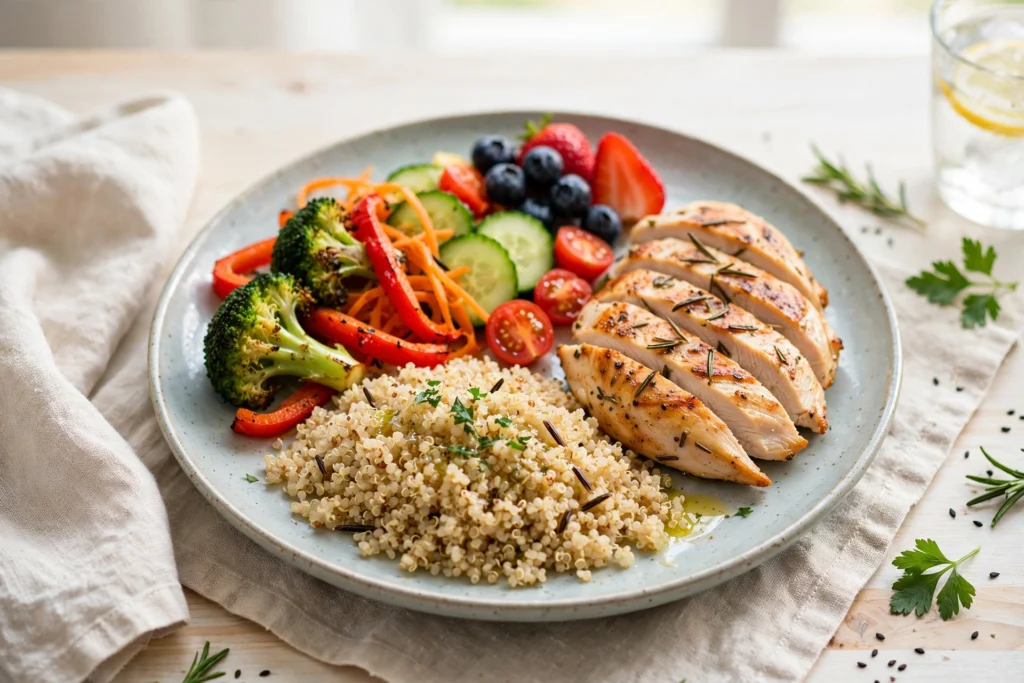
Forget complicated calorie counting. The easiest way to build a healthy diet at every meal is the plate method, adapted for Pakistani food.
Imagine your plate divided into four parts. Fill half the plate with vegetables — cooked sabzi plus fresh salad. Fill one quarter with protein — daal, chana, eggs, fish or chicken. Fill the last quarter with whole grains — one or two rotis, or a measured serving of rice. Add a small bowl of dahi on the side and drink water. That is a healthy diet on a single plate, no measuring cups required.
This visual rule works because it automatically controls portions while guaranteeing variety. The vegetables provide fibre, vitamins and volume that fill you up. The protein keeps you satisfied for hours. The whole grains give steady energy. And the dahi adds calcium and probiotics. When your plate looks like this most of the time, the benefits of a healthy diet follow naturally.
For children, use the same proportions on a smaller plate. For very active people or those trying to gain healthy weight, increase the grain and protein quarters slightly. For those managing weight, keep the vegetable half generous — it is the lowest-calorie part of the plate.
Your First 7 Days: Putting a Healthy Diet into Action
Reading about a healthy diet changes nothing; the first week of doing it changes everything. Here is a realistic ramp-up that does not demand perfection.
Days 1–2: Fix your breakfast. Eat a proper breakfast both days — eggs, dahi, fruit or oats. Notice how your morning energy and focus change when the day starts with real nutrition instead of just chai.
Days 3–4: Add vegetables. Make sure lunch and dinner both include a proper sabzi serving plus salad. Do not change anything else yet. Observe how the extra fibre affects your fullness and digestion.
Days 5–6: Tame the extras. Replace sugary drinks with water, measure your cooking oil instead of pouring freely, and swap one packaged snack for fruit or roasted chana. Small swaps, big cumulative effect.
Day 7: Review and repeat. Look back at the week. Which changes felt easy? Keep those permanently. Which felt hard? Shrink them — a smaller change you sustain beats a bigger one you abandon. A healthy diet is built one kept promise at a time, not in a single heroic week.
Remember: the goal was never perfection. The goal is a pattern — mostly whole foods, mostly home-cooked, mostly balanced — that you can maintain for years. That pattern is what delivers every benefit described in this guide.

nice