The glycemic index chart below is one of the most practical tools for managing blood sugar — whether you have diabetes, prediabetes, PCOS, or simply want steadier energy throughout the day. But most GI charts online are Western-centric, listing foods like bagels and croissants while ignoring the staples that South Asian families actually eat.
This guide provides a comprehensive glycemic index chart covering 100+ common foods, including daal, roti, rice varieties, South Asian vegetables, fruits, and snacks. You will also learn how GI actually works, its limitations, and how to use it practically in daily meal planning.
What Is the Glycemic Index?
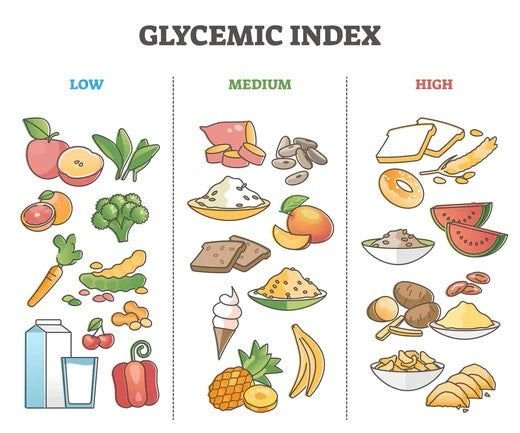
The glycemic index ranks carbohydrate-containing foods on a scale of 0 to 100 based on how quickly they raise blood sugar compared to pure glucose (GI = 100).
The three categories:
| Category | GI Range | Blood Sugar Effect |
|---|---|---|
| Low GI | 55 or less | Slow, gentle rise — best choice |
| Medium GI | 56–69 | Moderate rise — eat in moderation |
| High GI | 70 or above | Rapid spike — limit or avoid |
Why it matters: High-GI foods cause sharp blood sugar spikes followed by crashes. Over time, repeated spikes worsen insulin resistance, promote fat storage (especially belly fat), increase hunger, and raise diabetes risk. Low-GI foods produce gentle, sustained energy. If you are managing diabetes, our complete diabetes nutrition guide explains how GI fits into an overall blood sugar strategy.
Important nuance: GI measures speed, not amount. A food can have high GI but contain very little carbohydrate (watermelon is the classic example — GI 76, but a normal serving has minimal carbs). This is where glycemic load (GL) comes in:
Glycemic Load = (GI × grams of carbohydrate per serving) ÷ 100
| GL Category | Range |
|---|---|
| Low GL | 10 or less |
| Medium GL | 11–19 |
| High GL | 20 or above |
For practical purposes, focus on GI for choosing foods and portion size for controlling total impact. A small portion of a medium-GI food is often fine.
Factors That Change a Food’s GI

GI values are not fixed — they shift based on preparation and context:
- Ripeness: A green banana has GI ~30; a fully ripe spotted banana has GI ~60. Starch converts to sugar as fruit ripens.
- Processing: Steel-cut oats (GI ~42) vs. instant oats (GI ~65). Less processing = lower GI.
- Cooking time: Al dente pasta has lower GI than overcooked pasta. Similarly, firmer rice has slightly lower GI.
- Cooling: Cooked then cooled potatoes, rice, or pasta develop resistant starch, lowering effective GI by 10–15 points.
- Fiber content: More fiber = slower digestion = lower GI.
- Fat and protein in the meal: Eating carbs with fat, protein, or fiber lowers the overall meal GI significantly.
- Acidity: Vinegar or lemon juice with a meal can reduce the glycemic response by 20–30%.
Practical takeaway: You do not need to memorize every number. The patterns matter more: whole > refined, intact > processed, fibrous > starchy, and mixed meals > carb-only meals.
Complete Glycemic Index Chart

Use this glycemic index chart as your quick reference. Foods are grouped by category with their GI values and ratings.
Breads and Rotis
| Food | GI | Category |
|---|---|---|
| White bread | 75 | High |
| Whole wheat bread | 62 | Medium |
| Multigrain bread | 53 | Low |
| White naan | 70 | High |
| Whole wheat roti/chapati | 55 | Low |
| Bajra (pearl millet) roti | 55 | Low |
| Jowar (sorghum) roti | 62 | Medium |
| Makki (corn) roti | 60 | Medium |
| Pita bread (whole wheat) | 57 | Medium |
| Paratha (with oil) | 60 | Medium |
| Bhatura | 75 | High |
| Puri | 70 | High |
| Croissant | 67 | Medium |
| Bagel | 72 | High |
Key insight: Whole wheat roti (GI 55) sits right at the low-GI boundary, making it dramatically better than white bread (GI 75) or naan (GI 70). When you eat roti with daal and vegetables, the effective meal GI drops into the 40s.
Rice and Grains
| Food | GI | Category |
|---|---|---|
| White rice (long grain) | 64 | Medium |
| White rice (short grain/sticky) | 72 | High |
| Basmati rice (white) | 58 | Medium |
| Basmati rice (brown) | 50 | Low |
| Brown rice | 55 | Low |
| Barley (pearl) | 28 | Low |
| Quinoa | 53 | Low |
| Oats (steel-cut) | 42 | Low |
| Oats (rolled) | 55 | Low |
| Oats (instant) | 65 | Medium |
| Millet (foxtail) | 55 | Low |
| Couscous | 65 | Medium |
| Cornmeal | 68 | Medium |
| Semolina (suji/rava) | 60 | Medium |
| Tapioca/sabudana | 70 | High |
| Poha (flattened rice) | 60 | Medium |
Key insight: Barley (GI 28) is the champion — the lowest GI of any common grain. Replacing even half your white rice with barley dramatically improves the meal’s blood sugar impact. Brown basmati (GI 50) is an excellent compromise if you prefer rice.
Lentils, Beans, and Legumes
| Food | GI | Category |
|---|---|---|
| Red lentils (masoor daal) | 26 | Low |
| Green lentils | 30 | Low |
| Split peas (matar daal) | 32 | Low |
| Chickpeas (kabuli chana) | 28 | Low |
| Black chickpeas (kala chana) | 30 | Low |
| Kidney beans (rajma) | 29 | Low |
| Black beans | 30 | Low |
| Mung beans (moong) | 35 | Low |
| Black gram (urad daal) | 35 | Low |
| Soybeans | 18 | Low |
| Baked beans (canned, with sugar) | 48 | Low |
Key insight: This entire category is low-GI. Lentils and beans are the most blood-sugar-friendly carbohydrate source available — lower GI than most vegetables. If you eat daal daily, you are already doing one of the best things possible for blood sugar control.
Vegetables
| Food | GI | Category |
|---|---|---|
| Boiled potatoes | 78 | High |
| Baked potato | 85 | High |
| Sweet potato (boiled) | 46 | Low |
| Yam | 54 | Low |
| Carrots (raw) | 35 | Low |
| Carrots (cooked) | 47 | Low |
| Beetroot | 61 | Medium |
| Green peas | 48 | Low |
| Sweet corn | 55 | Low |
| Pumpkin | 66 | Medium |
| Butternut squash | 51 | Low |
| Parsnip | 52 | Low |
Most non-starchy vegetables (leafy greens, cauliflower, cabbage, broccoli, peppers, tomatoes, cucumbers, okra, eggplant, green beans, mushrooms, onions) have negligible GI because they contain very little digestible carbohydrate. Eat them freely.
Key insight: Potatoes are the outlier — one of the highest-GI foods. Sweet potatoes (GI 46) are a far better choice. If you love potatoes, eat them cooled (potato salad) to gain resistant starch benefits.
Fruits
| Food | GI | Category |
|---|---|---|
| Watermelon | 76 | High |
| Pineapple | 66 | Medium |
| Mango (ripe) | 55 | Low |
| Banana (ripe) | 62 | Medium |
| Banana (slightly green) | 42 | Low |
| Grapes | 53 | Low |
| Oranges | 43 | Low |
| Apples | 36 | Low |
| Pears | 38 | Low |
| Strawberries | 25 | Low |
| Blueberries | 25 | Low |
| Cherries | 22 | Low |
| Guava | 30 | Low |
| Jamun (black plum) | 25 | Low |
| Papaya | 60 | Medium |
| Pomegranate | 35 | Low |
| Kiwi | 30 | Low |
| Peaches | 42 | Low |
| Plums | 35 | Low |
| Dates (dried) | 70 | High |
| Raisins | 64 | Medium |
| Fruit juice (any) | 65–75 | Medium–High |
Key insight: Most whole fruits are low-GI because their fiber slows sugar absorption. The exceptions are watermelon (high GI but low GL per serving — a small amount is fine), dried fruits (concentrated sugar), and all juices (fiber removed). Jamun (GI 25) is exceptional — one of the lowest-GI fruits.
Dairy and Alternatives
| Food | GI | Category |
|---|---|---|
| Milk (whole) | 39 | Low |
| Milk (skimmed) | 37 | Low |
| Plain yoghurt/dahi | 35 | Low |
| Greek yoghurt | 30 | Low |
| Flavoured/sweetened yoghurt | 55–65 | Low–Medium |
| Ice cream | 51 | Low |
| Cottage cheese/paneer | 30 | Low |
| Soy milk (unsweetened) | 34 | Low |
| Oat milk | 55 | Low |
| Rice milk | 72 | High |
| Almond milk (unsweetened) | 25 | Low |
Key insight: Plain dairy is low-GI due to protein and fat content. But watch out for sweetened versions — flavoured yoghurt can have 20 g of added sugar. Ice cream’s low GI is misleading (high fat slows absorption, but it is still high-calorie sugar).
Nuts, Seeds, and Snacks
| Food | GI | Category |
|---|---|---|
| Peanuts | 14 | Low |
| Almonds | 15 | Low |
| Walnuts | 15 | Low |
| Cashews | 22 | Low |
| Pistachios | 28 | Low |
| Chia seeds | 15 | Low |
| Pumpkin seeds | 25 | Low |
| Popcorn (plain) | 55 | Low |
| Potato crisps/chips | 56 | Medium |
| Samosa | 65 | Medium |
| Pakora | 60 | Medium |
| Biscuits/cookies | 65–75 | Medium–High |
| Cake | 65–75 | Medium–High |
| Dark chocolate (70%+) | 25 | Low |
| Milk chocolate | 49 | Low |
Key insight: Nuts and seeds are among the lowest-GI foods — eat them freely (in portion-controlled amounts due to calories). Traditional fried snacks (samosa, pakora) are medium-GI but high in inflammatory oils — the GI is not the main problem with these.
Beverages
| Food | GI | Category |
|---|---|---|
| Water | 0 | — |
| Green tea (unsweetened) | 0 | — |
| Black coffee (unsweetened) | 0 | — |
| Soda/cola | 65 | Medium |
| Sweetened chai | 60 | Medium |
| Orange juice | 65 | Medium |
| Apple juice | 60 | Medium |
| Lassi (sweetened) | 55 | Low |
| Beer | 66 | Medium |
| Red wine | 0 | — |
Key insight: Unsweetened beverages have zero glycemic impact. Sugary drinks are the fastest way to spike blood sugar — liquid sugar absorbs almost instantly with no fiber to slow it.
South Asian Specific Foods
| Food | GI | Category |
|---|---|---|
| Idli | 60 | Medium |
| Dosa (plain) | 55 | Low |
| Upma (suji) | 60 | Medium |
| Upma (oats) | 50 | Low |
| Khichdi (rice + moong daal) | 55 | Low |
| Biryani | 60 | Medium |
| Pulao | 58 | Medium |
| Haleem | 45 | Low |
| Dhokla | 55 | Low |
| Khandvi | 50 | Low |
| Thepla | 55 | Low |
| Besan cheela | 40 | Low |
| Moong daal cheela | 35 | Low |
| Suji halwa | 65 | Medium |
| Kheer (rice pudding) | 60 | Medium |
| Gulab jamun | 70 | High |
| Jalebi | 75 | High |
| Rasmalai | 60 | Medium |
Key insight: Fermented foods (idli, dosa, dhokla) tend to have moderate GI — fermentation partially breaks down starches. Besan (chickpea flour) preparations are excellent low-GI choices. Traditional sweets (jalebi, gulab jamun) are high-GI and should be rare treats.
How to Use GI in Daily Meal Planning

Knowing the numbers is only half the battle. Here is how to turn this glycemic index chart into everyday eating habits.
The 5 Rules of Low-GI Eating
Rule 1: Build meals around low-GI foundations. Start with lentils, beans, vegetables, and whole grains. These should be the bulk of your plate.
Rule 2: Pair carbs with protein, fat, or fiber. Never eat high-GI carbs alone. Rice with daal and vegetables has a much lower effective GI than rice alone. Add a handful of nuts to fruit. Eat roti with sabzi, not jam.
Rule 3: Choose intact over processed. Steel-cut oats over instant. Brown rice over white. Whole fruit over juice. Whole wheat roti over white bread. Every step of processing raises GI.
Rule 4: Watch portions of medium and high-GI foods. You do not need to eliminate them entirely. A small portion of basmati rice (half cup) with lots of low-GI accompaniments is fine. A mountain of white rice is not.
Rule 5: Sequence your meals. Eat vegetables and protein first, carbs last. This simple reordering reduces the glucose spike by 30–40% regardless of the specific GI values.
Sample Low-GI Day
Breakfast (avg. GI ~40): Steel-cut oats porridge with chia seeds, walnuts, cinnamon, and half an apple.
Lunch (avg. GI ~35): Large bowl of masoor daal, mixed vegetable sabzi, 1 whole wheat roti, cucumber salad. Eat sabzi and daal first, roti last.
Snack (GI ~25): Small handful of almonds and a few strawberries.
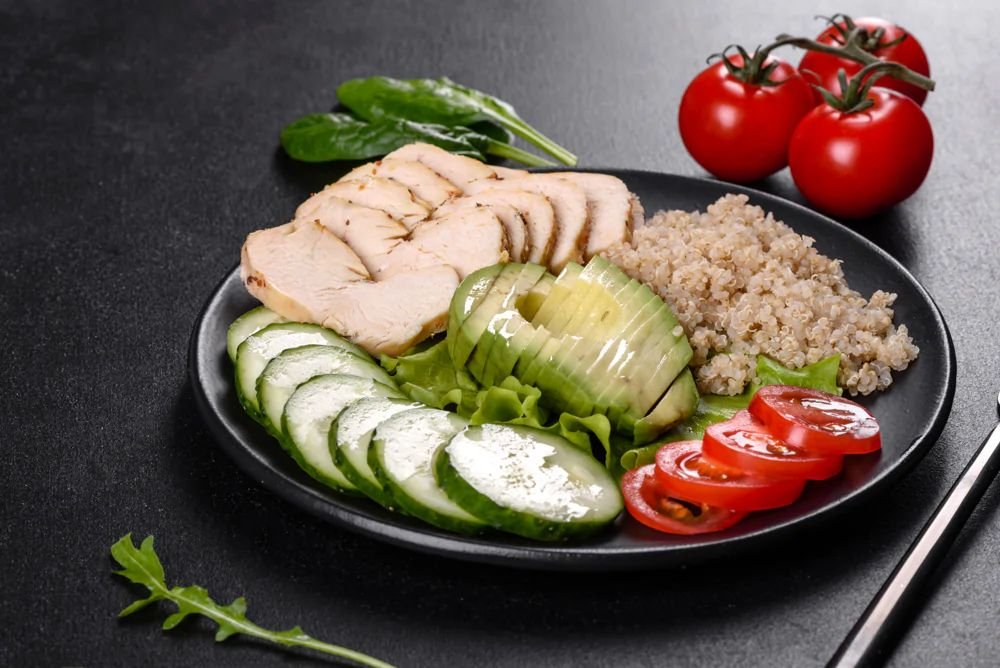
Dinner (avg. GI ~40): Grilled fish, large portion of sautéed greens, half cup of barley or quinoa.
Daily average GI: ~35 — firmly in the low range, producing stable blood sugar all day.
Low-GI Pakistani Breakfast Ideas
Breakfast sets the tone for your blood sugar all day. A high-GI breakfast (white bread with jam, sugary cereal, or sweetened chai with biscuits) spikes glucose early and triggers cravings by mid-morning. These desi-friendly alternatives keep you full and steady until lunch:
Besan cheela with vegetables (GI ~40). Chickpea flour pancakes with chopped onions, tomatoes, and spinach. High in protein and fiber, ready in 10 minutes. Serve with plain dahi for extra protein.
Steel-cut oats with nuts and cinnamon (GI ~42). Cook oats in milk or water, top with walnuts, almonds, a pinch of cinnamon, and half a sliced apple. Cinnamon adds natural sweetness without sugar and may modestly support healthy glucose metabolism.
Moong daal cheela (GI ~35). Soaked and ground moong daal made into thin pancakes. One of the lowest-GI breakfast options available, with around 12 g of protein per serving.
Vegetable omelette with 1 whole wheat roti (GI ~45). Two eggs with spinach, mushrooms, and tomatoes, plus a small roti. The protein and fat in eggs blunt the roti’s glycemic impact significantly.
Greek yoghurt with berries and chia (GI ~30). Plain Greek yoghurt topped with strawberries or jamun, a tablespoon of chia seeds, and a few crushed almonds. Prep it the night before for a grab-and-go option.
What to avoid at breakfast: Fruit juice (GI 65–75 with no fiber), white bread with jam (GI 75+), sugary cereals (GI 70+), and sweetened chai with 2–3 teaspoons of sugar (adds 8–12 g of fast sugar to an otherwise reasonable drink). If you love chai, try it with less sugar and a pinch of cinnamon — your taste buds adjust within two weeks.
Glycemic Index and Weight Loss
Can eating low-GI actually help you lose weight? The mechanism is straightforward. High-GI meals cause rapid glucose spikes followed by insulin surges and then crashes. That crash triggers hunger, cravings (especially for more carbs), and overeating at the next meal. Low-GI meals produce gentle, sustained energy, which means you feel full longer and naturally eat less.
In practice, this means a low-GI lunch of daal, sabzi, and roti keeps you satisfied until dinner, while a high-GI lunch of white rice and potatoes leaves you hunting for snacks by 4 pm. Over weeks and months, that difference in daily hunger adds up to a meaningful calorie gap — without conscious dieting.
That said, GI is not a magic weight-loss switch. Total calories still determine weight change. Nuts are very low-GI but calorie-dense — a handful is a great snack, but half a packet will stall weight loss. Similarly, you cannot out-eat a high-GI diet just by adding low-GI foods on top; the foundation of your meals needs to shift. For a complete strategy, see our weight loss nutrition guide and our article on how to lower blood sugar naturally.
The practical weight-loss takeaway: Make low-GI swaps at the meals where you currently eat the most refined carbs. Switch white rice to brown basmati or barley at dinner. Replace the morning white-bread toast with besan cheela or oats. Keep the foods you love, but upgrade their GI profile one meal at a time.
GI Is Not the Whole Story
While GI is useful, do not become obsessive. Keep these limitations in mind:
- GI does not measure nutrition. Ice cream has lower GI than watermelon, but watermelon is far healthier. GI is one tool, not the only criterion.
- Individual responses vary. Your personal glucose response to the same food may differ from published GI values due to gut bacteria, sleep, stress, and activity level.
- Mixed meals change everything. The GI of individual foods matters less than the overall meal composition. A balanced thali with daal, sabzi, roti, and dahi has a low effective GI even if one component is medium-GI.
- Do not ignore calories. Nuts are low-GI but calorie-dense. Portion control still matters for weight management.
Common GI myths worth dropping: Myth — “High-GI foods are always unhealthy.” Reality — watermelon and parsnips are high/medium GI but nutritious; context and portion matter. Myth — “Low-GI means you can eat unlimited amounts.” Reality — a large portion of even low-GI food raises blood sugar significantly; glycemic load captures this. Myth — “GI works the same for everyone.” Reality — two people can eat the same food and get different glucose responses. Use this glycemic index chart as a compass, not a GPS.
Frequently Asked Questions
Is basmati rice OK for diabetics?
Brown basmati (GI 50) is a reasonable choice in controlled portions (half to three-quarter cup cooked). White basmati (GI 58) is moderate — acceptable occasionally with plenty of vegetables and protein, but not as a daily staple in large amounts. Barley (GI 28) or quinoa (GI 53) are better regular alternatives. For more guidance, see our 15 best foods for diabetics.
Why does cooling rice or potatoes lower GI?
When starchy foods cool after cooking, some of the starch recrystallizes into “resistant starch” — a form your digestive enzymes cannot break down. This resistant starch feeds beneficial gut bacteria instead of raising blood sugar. Reheating does not fully reverse this effect, so cooked-then-cooled-then-reheated rice or potatoes have 10–15% lower glycemic impact.
Should I avoid all high-GI foods completely?
No. Total dietary pattern matters more than any single food. An occasional small portion of a high-GI food within an otherwise low-GI diet has minimal impact. The problem is habitual high-GI eating — daily large portions of white rice, white bread, sugary drinks, and processed snacks. Focus on making low-GI choices the default, not the exception.
Does the glycemic index apply to non-diabetics?
Absolutely. Everyone benefits from steadier blood sugar — it means more stable energy, better concentration, reduced cravings, less fat storage, and lower long-term disease risk. Athletes, students, office workers, and anyone seeking better health can use GI principles. You do not need diabetes to benefit from low-GI eating.
How accurate are published GI values?
They are reasonable averages but not precise for every individual. GI is measured in laboratories under controlled conditions. Your actual response depends on ripeness, cooking method, what else you eat, your gut microbiome, sleep quality, stress levels, and physical activity. Use GI as a directional guide (low is better than high), not as an exact prediction.
Can I eat rice every day on a low-GI diet?
Yes, with smart choices. Pick brown basmati (GI 50) or mix white rice half-and-half with barley. Keep the portion to about half to three-quarter cup cooked, always pair it with daal or beans plus vegetables, and eat the vegetables and protein first. Cooked-then-cooled rice (like in a rice salad or reheated leftovers) has a lower effective GI. What to avoid: large plates of freshly cooked sticky white rice eaten alone — that is the highest-impact way to eat rice.
Is honey better than sugar for blood sugar?
Only marginally. Honey has a GI of around 55–60 compared to table sugar’s 65 — a small difference that does not justify free use. Both are concentrated sugars that spike blood glucose. A teaspoon in chai occasionally is fine, but honey is not a “free” sweetener for diabetics. The best approach is to gradually reduce overall sweetness so your palate recalibrates.
Which cooking oil is best for low-GI meals?
Oil itself has no GI (pure fat contains no carbohydrate), but your choice of oil affects the meal’s overall health impact. For desi cooking, mustard oil and groundnut oil are reasonable for everyday use; use ghee sparingly for flavor rather than as the main cooking fat. What matters more for GI is what you cook in the oil — vegetables, daal, and lean proteins keep the meal low-GI regardless of the oil.
Your Low-GI Grocery List
Take this list to the market and stock a blood-sugar-friendly kitchen:
Grains and flours: Pearl barley, steel-cut oats, brown basmati rice, quinoa, whole wheat atta, besan (chickpea flour), bajra flour.
Lentils and beans: Masoor daal, moong daal (whole and split), kala chana, kabuli chana, rajma, lobia (black-eyed peas).
Vegetables: Spinach, cauliflower, cabbage, broccoli, okra, eggplant, bell peppers, cucumbers, tomatoes, green beans, mushrooms, sweet potatoes.
Fruits: Apples, pears, guava, jamun, oranges, strawberries, pomegranate, kiwi.
Protein and dairy: Eggs, fish, chicken breast, plain dahi/Greek yoghurt, paneer, unsweetened soy or almond milk.
Nuts and seeds: Almonds, walnuts, peanuts, chia seeds, pumpkin seeds, flaxseeds.
Pantry: Cinnamon, turmeric, apple cider vinegar or lemon (for the acidity trick), olive or mustard oil.
Limit or skip: White bread, sugary cereals, fruit juice, soda, biscuits, white sugar in bulk, instant oats.
The Bottom Line
The glycemic index is a practical, evidence-based tool for choosing foods that keep blood sugar stable. The key patterns from this glycemic index chart are simple: lentils and beans are the best carbs, whole grains beat refined ones, vegetables are nearly free, and how you combine foods matters as much as individual choices.
For South Asian eaters, the news is encouraging: traditional staples like daal, chickpeas, whole wheat roti, and most vegetables are naturally low-GI. The dietary problems come from modern additions — not from desi food itself.
Print or bookmark this chart. Refer to it when meal planning, grocery shopping, or eating out. Over time, low-GI choices become automatic. If you are working on reversing prediabetes, our prediabetes diet plan builds directly on these GI principles. As with all nutrition advice on this site, please read our health disclaimer — this article is educational and does not replace personalized medical advice.
For a personalized low-GI meal plan tailored to your health conditions and food preferences, book an online consultation with our nutritionists. We will analyze your current eating patterns and build a practical plan around the foods you enjoy.
References and Further Reading
The GI values in this chart are drawn from published glycemic index tables. For broader guidance on eating patterns that support healthy blood sugar, see the WHO healthy diet fact sheet and the resources at diabetes.org.