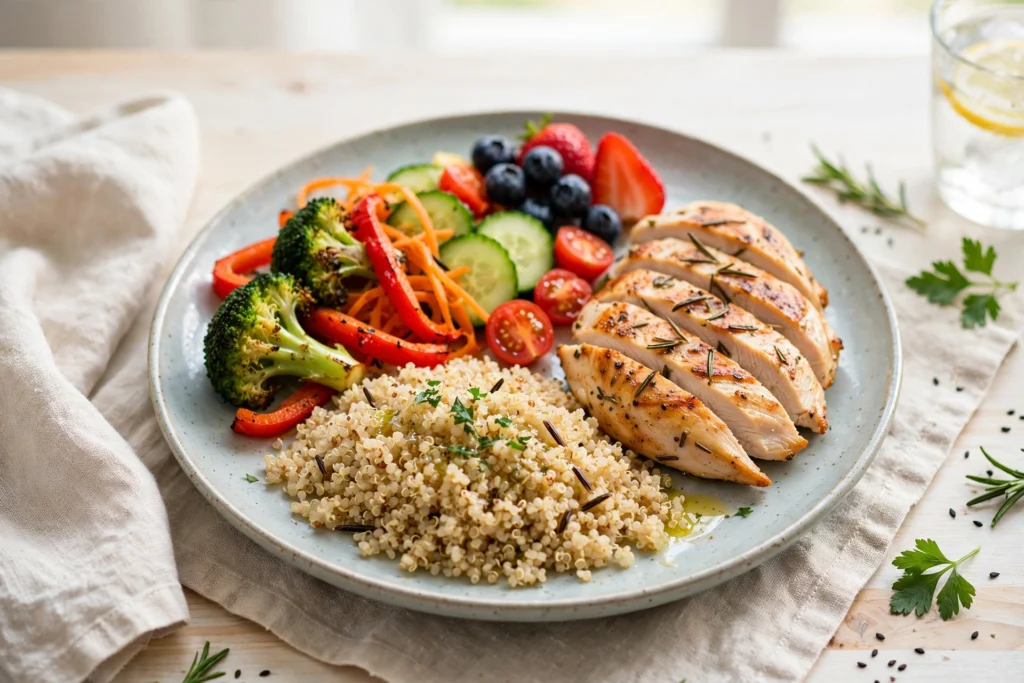
Prediabetes means your blood sugar is higher than normal but not yet in the diabetes range. Here is the critical fact most people do not hear clearly enough: prediabetes is reversible. With the right diet and lifestyle changes, the majority of people can return their blood sugar to normal and avoid developing type 2 diabetes entirely.
The landmark Diabetes Prevention Program — one of the largest clinical trials ever conducted — proved this conclusively. Participants who followed a structured lifestyle programme (modest weight loss, dietary changes, and 150 minutes of weekly activity) reduced their risk of progressing to diabetes by 58%. That was more effective than metformin, the standard preventive drug, which achieved only 31%.
This guide gives you a complete, practical prediabetes diet plan: what to eat, what to avoid, sample meal plans, and the lifestyle changes that multiply your results. For the bigger picture on eating for healthy blood sugar, see our complete Diabetes Nutrition Guide.
Important: If you have been diagnosed with prediabetes, work with your doctor to monitor your progress with regular HbA1c tests (every 3–6 months). If you take any blood sugar medication, dietary changes may require dosage adjustments — never change medication without medical guidance.
Understanding Prediabetes: Your Window of Opportunity

Prediabetes is defined by specific blood sugar ranges:
| Test | Normal | Prediabetes | Diabetes |
|---|---|---|---|
| Fasting glucose | Below 100 mg/dL | 100–125 mg/dL | 126+ mg/dL |
| HbA1c | Below 5.7% | 5.7–6.4% | 6.5%+ |
| 2-hour OGTT | Below 140 mg/dL | 140–199 mg/dL | 200+ mg/dL |
What is happening in your body: your cells are becoming resistant to insulin. Your pancreas compensates by producing extra insulin, but over time it cannot keep up. Blood sugar creeps upward.
The encouraging part: at the prediabetes stage, your pancreas is still functioning. Insulin resistance is highly responsive to diet, exercise, and weight loss. This is why reversal is possible now but becomes much harder once full diabetes develops and pancreatic function declines.
Your target: Lose 5–7% of body weight (if overweight), exercise 150 minutes weekly, and follow the prediabetes diet plan principles below. Most people who achieve these targets normalise their blood sugar within 3–6 months.
Core Principles of the Prediabetes Diet

Principle 1: Dramatically Reduce Refined Carbs and Added Sugar
This is the single highest-impact dietary change. Refined carbohydrates — white bread, white rice, pastries, sugary cereals, sodas, sweets, bakery items — digest almost instantly, demanding large insulin surges that worsen insulin resistance over time.
Eliminate or strictly minimise:
– Sugary drinks of all kinds (soda, sweetened chai, packaged juices, energy drinks, sweet lassi)
– White bread, naan made with refined flour, bakery products
– Cakes, pastries, biscuits, rusks, doughnuts
– Sugary breakfast cereals and flavoured oat sachets
– Mithai and desserts (save for rare occasions, tiny portions)
– Fruit juice (even “100% natural” — it is sugar water without the fibre)
The sugary drink rule: If you change nothing else, eliminating sugary drinks can drop your HbA1c by 0.3–0.5% on its own.
Principle 2: Choose Low-Glycaemic Carbohydrates
You do not need to eliminate carbs — you need to choose better carbs. The glycaemic index (GI) measures how quickly foods raise blood sugar. Favour foods with a GI below 55.
Best carbohydrate choices for prediabetes:
| High-GI (Limit) | Low-GI (Choose) |
|---|---|
| White rice | Brown rice, barley, quinoa |
| White bread | Whole wheat roti, multigrain bread |
| Cornflakes, instant oats | Steel-cut oats, porridge |
| Boiled/baked potatoes | Sweet potatoes, lentils |
| Watermelon (large portions) | Apples, pears, berries, oranges |
South Asian staples that are naturally excellent: All daals (lentils), chickpeas, kidney beans, and black chickpeas — these have GIs of 25–35, among the lowest of any staple food.
Principle 3: Fill Half Your Plate with Non-Starchy Vegetables
Vegetables provide fibre, vitamins, minerals, and antioxidants with minimal blood sugar impact. They fill you up for very few calories and blunt the glucose impact of the rest of your meal.
Prioritise: Leafy greens (spinach, kale, methi, mustard greens), cauliflower, cabbage, broccoli, bell peppers, tomatoes, cucumbers, and okra.
Target: At least 3–4 cups of vegetables daily, spread across meals. Start lunch and dinner with vegetables or a salad before touching the roti or rice.
Principle 4: Include Protein at Every Meal
Protein slows digestion, reduces the glycaemic impact of the overall meal, increases satiety, and helps preserve muscle while you lose weight.
Target: 1.2–1.6 g of protein per kg of body weight daily. For a 75 kg person, that is 90–120 g.
Best protein sources:
– Lentils and beans (18 g per cup cooked)
– Eggs (6 g each)
– Chicken breast (31 g per 100 g)
– Fish (20–25 g per 100 g)
– Greek yoghurt / plain dahi (15–20 g per cup)
– Paneer (18 g per 100 g, but watch portions — calorie-dense)
– Nuts and seeds (6–8 g per 30 g serving)
Principle 5: Eat Healthy Fats, Avoid Harmful Ones
Healthy fats improve insulin sensitivity and reduce inflammation. Replace harmful fats with beneficial ones.
Choose: Extra virgin olive oil (salads, drizzling), mustard oil (traditional cooking), nuts, seeds, fatty fish.
Limit: Ghee (small amounts for flavour are acceptable), butter, coconut oil (high in saturated fat).
Eliminate: Vanaspati/dalda (trans fats — directly worsen insulin resistance), deep-fried foods.
Principle 6: Master Meal Timing and Sequencing
When and in what order you eat significantly affects blood sugar:
Meal sequencing: Eat vegetables and protein before carbohydrates. This simple reordering reduces the post-meal glucose spike by 30–40% — confirmed in multiple clinical trials.
Meal timing:
– Eat 3 balanced meals daily; avoid skipping (especially breakfast — skippers have worse glucose control)
– If snacking, choose protein/fibre snacks (nuts, boiled eggs, vegetables with hummus), not carb-only snacks
– Finish dinner 2–3 hours before bed
– Consider a 12-hour overnight fast (e.g., dinner at 8 PM, breakfast at 8 AM) — a gentle form of time-restricted eating most people find easy to sustain
The 7-Day Prediabetes Meal Plan

This sample plan follows all the principles above. Adjust portions to your calorie needs (most adults need 1,600–2,200 kcal daily depending on size and activity).
Day 1
- Breakfast: Vegetable omelette (2 eggs, spinach, tomatoes, onions) + 1 small whole wheat roti
- Mid-morning: 1 apple + 10 almonds
- Lunch: 1.5 cups masoor daal + 1 cup mixed sabzi (cauliflower, peas, carrots) + 1 roti + cucumber raita
- Evening: Green tea + 1 small bowl roasted chickpeas
- Dinner: Grilled chicken (120 g) + large salad + half cup brown rice
Day 2
- Breakfast: Overnight oats (40 g rolled oats, milk, chia seeds, berries, cinnamon)
- Mid-morning: 1 boiled egg + 1 small orange
- Lunch: Rajma (1.5 cups) + 1 cup bhindi sabzi + 1 roti + plain dahi
- Evening: Buttermilk (chaas) with roasted cumin + 5 walnuts
- Dinner: Fish curry (light, tomato-based) + 1 cup sautéed greens + 1 small roti
Day 3
- Breakfast: Moong daal cheela (2, made with vegetables) + mint chutney + 1 cup dahi
- Mid-morning: 1 pear + 1 tablespoon peanut butter
- Lunch: 1.5 cups kala chana curry + 1 cup cabbage sabzi + 1 roti
- Evening: Vegetable soup (1 large bowl)
- Dinner: Paneer tikka (100 g, grilled) + large mixed salad + half cup quinoa
Day 4
- Breakfast: Porridge (40 g steel-cut oats) with flaxseed, walnuts, and half a banana
- Mid-morning: 1 cup papaya cubes
- Lunch: 1.5 cups arhar daal + 1 cup palak sabzi + 1 roti + salad
- Evening: Green tea + 2 tablespoons roasted pumpkin seeds
- Dinner: Chicken and vegetable stir-fry + half cup barley
Day 5
- Breakfast: 2 besan cheelas with vegetables + 1 cup plain dahi
- Mid-morning: 10 pistachios + 1 small guava
- Lunch: 1.5 cups moong daal + 1 cup baingan sabzi + 1 roti + cucumber salad
- Evening: 1 cup warm milk with turmeric (haldi doodh, no sugar)
- Dinner: Grilled fish (120 g) + roasted vegetables + small portion of sweet potato
Day 6
- Breakfast: Vegetable upma (made with oats instead of semolina) + 1 boiled egg
- Mid-morning: 1 orange + 8 almonds
- Lunch: 1.5 cups white chana curry + 1 cup mixed vegetable sabzi + 1 roti
- Evening: Coconut water (1 glass, unsweetened) + 1 small bowl sprouts chaat
- Dinner: Daal soup (large bowl) + 1 multigrain roti + steamed broccoli
Day 7
- Breakfast: Smoothie (spinach, banana half, Greek yoghurt, chia seeds, cinnamon, water/milk)
- Mid-morning: 1 apple + 1 tablespoon mixed seeds
- Lunch: 1.5 cups masoor daal + 1 cup gobhi matar + 1 roti + raita
- Evening: Herbal tea + 1 small handful trail mix (nuts and seeds, no added sugar)
- Dinner: Baked chicken with herbs + large salad + half cup brown rice
Meal prep tip: Cook a large batch of daal and one sabzi on Sunday. Cook brown rice or barley in bulk. Having components ready means a balanced plate in 10 minutes on busy weeknights.
Your Prediabetes Grocery List
Keep your kitchen stocked with these staples and this prediabetes diet plan becomes almost automatic to follow:
Proteins: Eggs, chicken breast, fish (rohu, salmon), masoor/moong/kala chana/rajma daals, chickpeas, Greek yoghurt or plain dahi, paneer, tofu.
Vegetables (fresh or frozen): Spinach, methi, mustard greens, cauliflower, cabbage, broccoli, bell peppers, tomatoes, cucumbers, okra, bitter gourd, eggplant.
Whole grains: Whole wheat atta, brown rice, barley, quinoa, steel-cut or rolled oats, multigrain bread.
Healthy fats: Almonds, walnuts, pistachios, peanuts, chia seeds, flaxseeds, pumpkin seeds, sesame seeds, extra virgin olive oil, mustard oil.
Fruits (whole, not juice): Apples, pears, oranges, guava, berries, papaya, jamun in season.
Flavour without sugar: Cinnamon, turmeric, fenugreek seeds, cumin, black pepper, garlic, ginger, fresh herbs, green chillies, lemons, vinegar.
Shop the perimeter of the store first — that is where the fresh produce, dairy, and protein live — and visit the inner aisles only for whole grains, lentils, and spices.
Eating Out and Social Events with Prediabetes
You do not have to become a hermit to reverse prediabetes. A few strategies keep restaurant meals and dawats blood-sugar friendly:
– Preview the menu and decide before you arrive — grilled, tandoori, or steamed dishes over fried or creamy ones.
– Start with salad or soup (the sequencing principle works at restaurants too).
– Ask for half portions of rice or naan, or swap them for an extra serving of vegetables or daal.
– Skip the sugary drinks — sparkling water with lemon, unsweetened iced tea, or plain chaas are safe choices.
– At dawats and weddings, fill your first plate with kebabs, salads, and sabzi; take small tastes of the rich dishes rather than full servings.
– Dessert: share one small portion, or choose fresh fruit. One sweet at an event will not undo weeks of good eating — it is the daily habit that matters.
Lifestyle Changes That Multiply Your Results

Diet is the foundation, but these lifestyle factors dramatically accelerate prediabetes reversal:
Exercise: The Insulin Sensitivity Superpower
Physical activity is the fastest way to improve insulin sensitivity — a single session improves glucose uptake for up to 24 hours.
The prescription:
– 150 minutes/week of moderate activity (brisk walking, cycling, swimming) — this is the evidence-based minimum from the Diabetes Prevention Program
– 2 sessions/week of resistance training (bodyweight exercises, resistance bands, or weights) — muscle is your glucose sink; more muscle means better blood sugar control
– Walk 10–15 minutes after meals — this single habit can reduce post-meal glucose spikes by 30%
Start where you are: If you are currently inactive, begin with 10-minute walks and build gradually. Consistency beats intensity.
Sleep: The Overlooked Blood Sugar Regulator
Sleeping less than 6 hours impairs insulin sensitivity as much as eating a high-sugar diet. Poor sleep also drives cravings for sugary foods the next day.
Target: 7–9 hours of quality sleep. Keep a consistent schedule, limit screens before bed, and keep your room cool and dark.
Stress Management
Chronic stress elevates cortisol, which directly raises blood sugar and promotes abdominal fat storage. Daily walks, deep breathing, prayer, or 10 minutes of quiet time help keep cortisol in check.
Weight Loss: The 5–7% Target
You do not need dramatic weight loss. The Diabetes Prevention Program showed that losing just 5–7% of body weight (3.5–5 kg for a 70 kg person) was sufficient for most participants to normalise blood sugar. This modest target is far more achievable than the dramatic transformations social media suggests.
How: The dietary principles above plus regular activity naturally produce 0.5 kg per week — reaching 5% in about 3–4 months for most people.
Foods That Specifically Help Reverse Prediabetes

Beyond the general principles, these foods have specific evidence for improving insulin sensitivity:
- Cinnamon: 1–2 g daily may improve insulin sensitivity. Add to oatmeal, smoothies, or chai.
- Fenugreek (methi): Seeds soaked overnight or methi powder. Strong traditional and clinical evidence for glucose lowering.
- Bitter gourd (karela): Contains insulin-mimicking compounds. Juice or sabzi 2–3 times weekly.
- Jamun: The seeds particularly have anti-diabetic properties. Eat the fruit in season.
- Vinegar: 1 tablespoon of apple cider vinegar in water before meals may reduce post-meal glucose by 20–30%.
- Green tea: Contains EGCG, which may improve insulin sensitivity. 2–3 cups daily.
- Turmeric: Curcumin has anti-inflammatory effects that support insulin function. Use in cooking with black pepper to boost absorption.
What to Avoid: The Prediabetes Danger List
These foods and habits actively push you toward diabetes:
- Sugary beverages — the #1 dietary driver of diabetes progression
- Refined breakfast cereals — most are dessert in disguise
- White rice in large portions — especially as the meal centrepiece
- Bakery and confectionery — refined flour + sugar + trans fats
- Deep-fried snacks — inflammatory oils + refined carbs
- Processed meats — linked to 30–40% increased diabetes risk
- Alcohol in excess — disrupts blood sugar for 24+ hours; if you drink, strictly moderate
- Skipping meals then overeating — causes extreme glucose swings
- Late-night heavy eating — impairs overnight glucose regulation
- “Diet” products with artificial sweeteners — may disrupt gut bacteria and glucose tolerance
Monitoring Your Progress
Every 3 months: HbA1c test — this is your primary reversal metric. Target: below 5.7%.
Weekly (optional but helpful): Fasting glucose with a home glucometer. Target: below 100 mg/dL. Seeing numbers improve is powerfully motivating — our guide to lowering blood sugar naturally explains which daily habits move the needle fastest.
Monthly: Weight and waist circumference. Waist is more important than weight — abdominal fat is the most metabolically harmful.
What success looks like:
– Month 1–2: Post-meal spikes reduce, energy improves, weight starts dropping
– Month 3: HbA1c drops 0.3–0.5%, fasting glucose trending down
– Month 6: Many people reach normal ranges (HbA1c below 5.7%)
– Month 12: Sustained normal blood sugar = prediabetes reversed
If you are not improving after 3 months of genuine effort, consult your doctor. Some people need medication support alongside lifestyle changes, and that is okay — the goal is healthy blood sugar, whatever combination gets you there safely.
Frequently Asked Questions
How long does it take to reverse prediabetes?
Most people see meaningful improvement within 3 months and full reversal (normal HbA1c below 5.7%) within 6–12 months of consistent effort.
Can I eat fruit if I have prediabetes?
Yes. Whole, low-GI fruits (berries, apples, pears, oranges, guava, jamun) are nutritious and their fibre slows sugar absorption. Keep portions to 1–2 servings daily and eat fruit with meals rather than alone.
Is rice completely off-limits with prediabetes?
No, but portion control and type matter enormously. A small portion (half cup cooked) of brown rice paired with daal, vegetables, and protein is very different from two heaped plates of white rice. Keep rice to a quarter of your plate.
Do I need to count calories to reverse prediabetes?
Not necessarily. The plate method (half vegetables, quarter protein, quarter whole grains) naturally controls portions and calories for most people. Count calories only if your weight stalls for more than a month.
Can prediabetes come back after reversal?
Yes, if you return to old habits. Reversal is not a one-time cure — it requires maintaining the lifestyle that reversed it. The good news: by then these habits usually feel normal, not restrictive.
Should I try intermittent fasting for prediabetes?
A gentle 12-hour overnight fast suits most people with prediabetes. Longer fasts like 16:8 can help some, but they are not essential — see our beginner’s guide to 16:8 fasting before trying. If you take blood sugar medication, discuss fasting with your doctor first.
Are artificial sweeteners safe for prediabetes?
They do not raise blood sugar directly, but they may disrupt gut bacteria and keep sweet cravings alive, making the diet harder to sustain. Small amounts in tea or coffee are unlikely to cause harm, but retraining your palate to enjoy less sweetness works better long-term.
Can I follow this plan if I am vegetarian?
Absolutely — this plan is already heavily plant-based. Daals, chickpeas, rajma, paneer, dahi, eggs (if you eat them), nuts, and seeds cover your protein needs. Pair a cereal (roti, rice) with a pulse (daal) at meals to get complete protein.
When to See a Doctor
Diet and lifestyle reverse prediabetes for most people, but get medical advice promptly if you notice excessive thirst, frequent urination, unexplained fatigue, blurred vision, or slow-healing wounds — these can signal progression toward type 2 diabetes. Also see your doctor before starting if you are pregnant, take glucose-lowering medication, or have kidney or heart disease, since your plan may need adjustments. This article is educational and is not a substitute for personalised medical advice — please read our Health Disclaimer.
Your First-Week Action Plan
Do not try to change everything on day one. Follow this sequence to put the prediabetes diet plan into action:
| Day | One change to make |
|---|---|
| 1 | Remove all sugary drinks from your daily routine |
| 2 | Walk 15 minutes after dinner |
| 3 | Fill half your lunch and dinner plates with vegetables |
| 4 | Swap white rice/bread for brown rice or whole wheat roti |
| 5 | Add protein to your breakfast (eggs, dahi, or daal cheela) |
| 6 | Cook one big batch of daal and sabzi for the week ahead |
| 7 | Weigh yourself and note your waist measurement as a baseline |
The Bottom Line
Prediabetes is your body’s warning — and its gift. It tells you exactly what to fix while there is still time to fix it easily.
You do not need perfection. You need consistency. Start with three changes this week: cut sugary drinks, walk 15 minutes after dinner, and fill half your plate with vegetables.
For a personalised prediabetes reversal plan built around your lab results, food preferences, and lifestyle, book an online consultation with our nutritionists. We will create a step-by-step programme designed to normalise your blood sugar safely.
Keep reading: our Diabetes Nutrition Guide, 13 Proven Ways to Lower Blood Sugar Naturally, 15 Best Foods for Diabetics to Eat Daily, and the WHO healthy diet fact sheet.
Your Daily Prediabetes Checklist
Pin this list to your fridge or save it on your phone. Tick off each item daily — on most days, aim for 7 out of 8:
- Half my plate at lunch and dinner was non-starchy vegetables
- Every grain I ate was whole (roti, brown rice, oats — no refined flour)
- Each meal included a protein source (daal, eggs, chicken, fish, or dahi)
- I drank only water, unsweetened tea, or black coffee — no sugary drinks
- I walked 10–15 minutes after at least one meal
- My eating window was roughly 12 hours (for example, 8 AM to 8 PM)
- I slept at least 7 hours last night
- I took any prescribed medication exactly as directed
Score yourself weekly: 7–8 daily ticks means your plan is working. Five or six means you are on track but slipping — pick the missed habit and fix it next week. Below five, revisit the action plan above and shrink your goals until they feel easy. Small, repeated wins reverse prediabetes; heroic weeks followed by burnout do not.