Joint pain is one of the most common reasons people walk into a nutrition clinic. Whether it is knee pain that flares up on the stairs, stiff fingers in the morning, or an athlete whose knees ache after every training session, the question eventually comes up: “Should I take collagen?” This collagen for joints guide reviews the clinical trials, compares collagen peptides with UC-II, covers desi food sources and safety, and sets realistic expectations.
Collagen supplements are now a billion-dollar industry. Powders, capsules, gummies, and drinks all promise smoother, healthier, more comfortable joints. But marketing claims and human biology are two different things. As nutrition scientists, our job is to separate what the evidence actually shows from what the advertisements want you to believe.
This article is an honest, university-level review of the research on collagen for joints. We will look at what collagen is, the different forms sold as supplements, the clinical trials that matter, the proposed mechanisms, realistic expectations, traditional Pakistani food sources of collagen, and who should think twice before supplementing.
In this guide, you will learn:
- What collagen is and why type II matters for joints
- The difference between hydrolyzed collagen peptides and undenatured type II collagen (UC-II)
- What the key clinical trials actually found — and what they did not find
- How collagen might work at the biological level
- Realistic expectations: dose, timeline, and effect size
- Why vitamin C matters for your body’s own collagen production
- Traditional South Asian food sources of collagen versus supplements
- The safety profile of collagen and who should skip it
What Is Collagen?
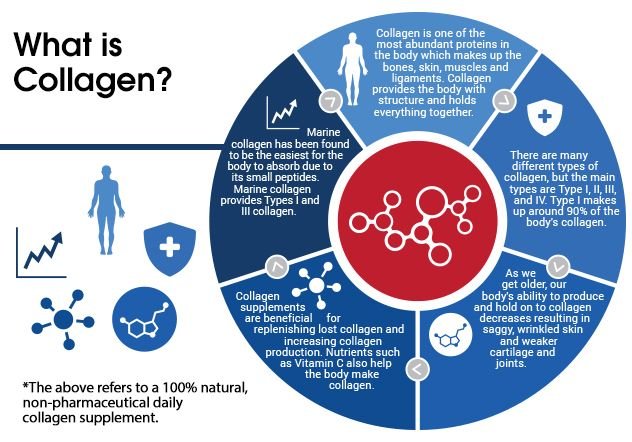
Collagen is the most abundant protein in the human body, making up roughly one-third of total protein mass. It is the structural scaffold of skin, bones, tendons, ligaments, and — critically for this discussion — cartilage.
Chemically, collagen is distinctive. It is rich in three amino acids: glycine (about one-third of its residues), proline, and hydroxyproline. Hydroxyproline is almost unique to collagen; when scientists want to measure how much collagen is in a tissue, they measure hydroxyproline. The protein folds into a characteristic triple helix — three chains wound around each other like a rope — which gives it tremendous tensile strength.
The body produces at least 28 types of collagen, but five dominate, and three matter most for this conversation:
Collagen Type I: Skin, Bone, and Tendon
Type I is the most abundant collagen in the body — around 90% of total collagen. It forms the dense, organized fibers of skin, bone, tendons, and ligaments. When a supplement label says “collagen peptides” or “hydrolyzed collagen” without specifying a type, it is almost always derived from type I (and some type III) sourced from bovine hides or fish skin.
Collagen Type II: The Cartilage Collagen
Type II is the principal collagen of articular cartilage — the smooth, slippery tissue that caps the ends of bones in joints and lets them glide. Unlike type I’s thick parallel fibers, type II forms a finer, more hydrated network interwoven with proteoglycans (large molecules that trap water and give cartilage its shock-absorbing quality). This distinction matters: type II is the collagen form most directly tied to joint structure, and it is the form that has been studied most specifically for joint health.
Collagen Type III: The Supporting Player
Type III often appears alongside type I in skin, blood vessels, and connective tissues. Most “multi-collagen” products include it, though it has little direct research behind it for joints specifically.
Why Collagen Declines With Age
From roughly the mid-20s onward, the body’s collagen synthesis gradually slows while breakdown (driven by enzymes called matrix metalloproteinases, or MMPs) continues. The result is a net loss over decades. In cartilage, this imbalance is part of the story of osteoarthritis: the cartilage matrix thins, loses its water-binding capacity, and becomes less able to cushion the joint. Less collagen in tendons and ligaments likewise means less resilience. This age-related decline is the biological rationale behind supplementation — the idea that supplying collagen’s building blocks might tilt the balance back toward maintenance and repair.
Hydrolyzed Collagen vs Undenatured Type II (UC-II): Two Very Different Products
One of the most important things to understand is that “collagen for joints” actually refers to two fundamentally different supplement categories, with different proposed mechanisms and different doses.
Hydrolyzed Collagen Peptides
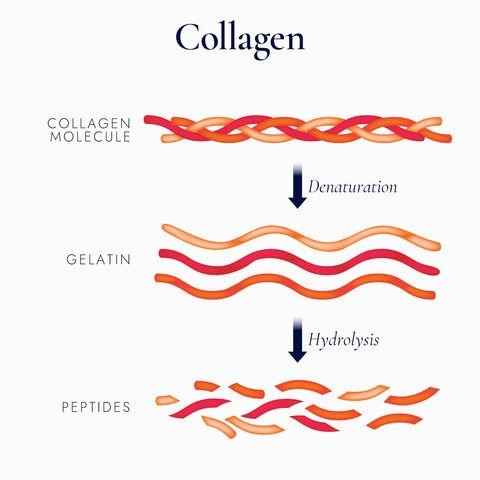
Hydrolyzed collagen — also called collagen peptides or collagen hydrolysate — is collagen that has been broken down by enzymes or heat into short peptide chains (typically 2–20 amino acids long, with molecular weights mostly under 10 kilodaltons). This processing makes it highly digestible and soluble; it dissolves in hot or cold liquid and is absorbed as di- and tri-peptides, notably proline-hydroxyproline and glycine-proline-hydroxyproline, which can be detected in human blood after ingestion.
Standard doses in joint studies: 5–15 grams per day, most commonly 10 g/day. These products are usually derived from bovine hide or fish skin (predominantly type I/III collagen) and are the powders you see in large tubs.
Undenatured Type II Collagen (UC-II)
UC-II is a completely different proposition. It is type II collagen extracted from chicken sternum cartilage using low-temperature processing that preserves its native triple-helix structure — “undenatured” means the protein has not been broken apart. The key point: UC-II is taken in tiny doses, typically 40 mg per day, because its proposed mechanism is not about supplying building blocks at all.
UC-II’s hypothesized mechanism is oral tolerance — a process studied in immunology. The idea is that small amounts of intact type II collagen interact with immune tissue in the gut (Peyer’s patches), training the immune system to be less reactive toward the body’s own type II collagen in joint cartilage. Since part of osteoarthritis involves low-grade immune and inflammatory activity against cartilage components, dampening that reactivity could reduce pain and slow degradation. This is an elegant theory, and it means UC-II and hydrolyzed collagen should never be lumped together when evaluating evidence.
The Key Clinical Trials: What the Evidence Actually Shows
Let us look at the human trials that carry the most weight. We will present them honestly — including their limitations.
The Athlete Trial: 10 g/day Hydrolyzed Collagen
One of the most cited studies in this field is the 2008 randomized controlled trial by Clark and colleagues, published in Current Medical Research and Opinion. The trial enrolled 147 athletes (72 in the collagen group, 75 in the placebo group) who had activity-related joint pain but no diagnosed joint disease. Participants took 10 grams per day of a collagen hydrolysate (a specific product) or a liquid placebo for 24 weeks.
The result: the collagen group reported significantly greater improvement in joint pain scores than the placebo group, with the difference becoming statistically significant at the 24-week mark. Secondary measures — including pain during activity and at rest — also favored collagen.
Important context: this was a single trial in a specific population (young athletes with activity-related pain, not osteoarthritis patients), funded by the product manufacturer, and the effect emerged only after six months. It is encouraging, not conclusive.
Collagen and Osteoarthritis: The Mixed Picture
Several randomized trials have tested collagen hydrolysate in people with knee osteoarthritis. A notable 24-week trial (Benito-Ruiz et al., 2009) gave 10 g/day of collagen hydrolysate to patients with knee OA and found improvements in pain scores versus placebo, with the clearest benefit in participants with more severe baseline symptoms.
However, the overall OA literature is genuinely mixed. Systematic reviews and meta-analyses of collagen for osteoarthritis (including reviews published in the late 2010s and early 2020s) have generally concluded that collagen supplementation is associated with small to moderate reductions in joint pain and stiffness, but the quality of evidence is rated low to moderate. Recurring limitations: small sample sizes, short durations, industry funding, heterogeneous products and doses, and inconsistent outcome measures. This is the classic pattern of a “promising but not proven” intervention.
UC-II Trials in Osteoarthritis
UC-II has its own trial base. A well-known 2009 randomized trial (Crowley et al.) compared 40 mg/day of UC-II against a combination of glucosamine and chondroitin in 52 adults with knee osteoarthritis over 90 days, and reported greater improvements in pain and function scores with UC-II. A later trial (Lugo et al., 2013/2016) compared UC-II against placebo and against glucosamine-chondroitin in knee OA patients and found UC-II improved WOMAC scores (a standard OA symptom scale) more than placebo, with benefits apparent by 90–180 days.
As with hydrolyzed collagen, caveats apply: these trials are small, and several were funded by the UC-II manufacturer. The effect sizes are modest — meaningful to some patients, but not transformative.
Trials in Healthy Adults and Exercising Populations
Beyond athletes and OA patients, a few trials have tested collagen in generally healthy adults with mild joint discomfort. A 2021 randomized trial (Zdzieblik et al.) gave 5 g/day of specific collagen peptides to active adults with activity-related knee pain for 12 weeks and reported reduced pain scores versus placebo. These studies suggest the benefit is not limited to diagnosed disease, though again, effects are modest and product-specific.
What the Trials Did Not Show
Honesty requires stating the negative space:
- No high-quality trial has shown that collagen rebuilds cartilage in humans. Some animal and in vitro studies suggest collagen peptides can stimulate chondrocytes (cartilage cells), but human imaging evidence of cartilage regeneration is essentially absent.
- No trial has shown collagen to be superior to standard OA treatments such as exercise therapy, weight management, or anti-inflammatory medications in head-to-head comparisons.
- Effects on structural progression of osteoarthritis (joint space narrowing on X-ray, for example) have not been convincingly demonstrated.
- Many positive trials are industry-funded, which does not invalidate them but does warrant caution, since funding source correlates with positive outcomes across supplement research generally.
How Collagen Might Work: The Proposed Mechanisms
Understanding the proposed mechanisms helps set realistic expectations, because each mechanism implies a different timeline and magnitude of benefit.
Mechanism 1: Amino Acid Supply
The simplest hypothesis: hydrolyzed collagen delivers glycine, proline, and hydroxyproline — the exact amino acids cartilage and connective tissue need — in a highly bioavailable form. Studies using labeled collagen peptides have shown that proline-hydroxyproline dipeptides survive digestion, enter the bloodstream, and accumulate in cartilage tissue in animal models. The idea is that flooding the system with the right raw materials supports the body’s ongoing collagen synthesis and repair.
Critique: the body can synthesize glycine and proline from other amino acids, and a protein-adequate diet already supplies them. Whether extra collagen-derived amino acids meaningfully accelerate tissue repair beyond what adequate total protein provides remains unproven. This mechanism predicts slow, modest effects — which is consistent with trials showing benefits only after months.
Mechanism 2: Bioactive Peptide Signaling
A more interesting hypothesis is that specific collagen-derived peptides act as signaling molecules, not just building blocks. In cell culture studies, certain collagen peptides (particularly proline-hydroxyproline) appear to stimulate fibroblasts and chondrocytes to increase their own collagen production. If this occurs in humans, collagen peptides would be nudging the body’s repair machinery rather than merely supplying bricks. This remains largely a laboratory finding awaiting human confirmation.
Mechanism 3: Oral Tolerance (UC-II)
As described earlier, UC-II’s proposed mechanism is immunological rather than nutritional. By exposing gut immune tissue to intact type II collagen, UC-II may induce regulatory T cells that calm the immune system’s low-grade attack on joint cartilage. This mechanism is biologically plausible — oral tolerance is a well-established immunological phenomenon — and it explains why UC-II works at milligram rather than gram doses. Direct human evidence for the mechanism (such as measured changes in regulatory T cells in UC-II trials) is still limited.
Realistic Expectations: Dose, Timeline, and Effect Size
If you decide to try collagen for your joints, here is what the evidence suggests you should realistically expect.
Dose
- Hydrolyzed collagen peptides: 10 g/day is the most studied dose; the range in trials is 5–15 g/day. Less than 5 g/day has little trial support for joints.
- UC-II: 40 mg/day, taken on an empty stomach (this recommendation comes from the trials and the oral-tolerance theory, which requires the intact protein to reach gut immune tissue without being broken down by a full meal’s digestive activity).
Timeline
Do not expect results in two weeks. In the positive trials, benefits typically emerged at 12 weeks at the earliest, more commonly 24 weeks (about 6 months). Anyone selling a “30-day joint transformation” is selling marketing, not science. A reasonable personal trial is 3–6 months of consistent daily use before judging.
Effect Size
Meta-analyses suggest small to moderate reductions in pain scores — the kind of improvement that might move a daily pain rating from, say, 6 out of 10 to 4 or 5 out of 10. Some individuals report larger benefits; some notice nothing. Collagen is not in the same league as, for example, a well-structured quadriceps strengthening program for knee OA, which has larger and better-established effects.
What Collagen Cannot Do
Collagen will not reverse advanced osteoarthritis, regrow cartilage visible on an X-ray, fix a torn meniscus, or substitute for weight management and exercise — the two interventions with the strongest evidence for joint health. Anyone with severe, worsening, or injury-related joint pain should see a doctor or orthopedic specialist rather than self-treating with supplements.
Vitamin C: The Essential Co-factor
Here is a detail that supplement marketing often omits: your body cannot make collagen without vitamin C. The enzymes that stabilize the collagen triple helix (prolyl and lysyl hydroxylases) require vitamin C as a co-factor. In scurvy — the classic vitamin C deficiency disease — one of the hallmark symptoms is joint pain and bleeding gums, precisely because new collagen cannot be properly formed.
Practical implications:
- Taking collagen peptides while being vitamin C deficient is like delivering bricks to a construction site with no masons. Ensure adequate vitamin C intake (citrus fruits, guava/amrood, bell peppers, tomatoes) alongside any collagen strategy.
- Some collagen products add vitamin C to the formulation. This is one of the more sensible formulation choices in the industry, though you can equally get it from food.
- For endogenous collagen synthesis generally — the collagen your body makes for itself every day — vitamin C adequacy matters more than any supplement. Smokers, in particular, need more vitamin C, as smoking depletes it and impairs collagen formation.
Food Sources of Collagen: Yakhni, Payein, and Tradition

Long before collagen powders existed, South Asian cooking had collagen-rich foods. If you prefer a food-first approach — which, as nutritionists, we generally recommend — these traditional options deserve attention.
Yakhni (Bone Broth)
Yakhni — bones simmered slowly for hours, often with whole spices — is Pakistan’s traditional bone broth. Long simmering extracts collagen from bones, cartilage, and connective tissue into the broth as gelatin (cooked collagen). A well-made yakhni, simmered 8–12 hours or pressure-cooked, is genuinely rich in gelatin-derived amino acids: glycine, proline, and hydroxyproline. It will not deliver the standardized peptide doses used in trials, but as a regular dietary source of collagen’s building blocks, it is legitimate.
Payein (Trotters)
Payein — slow-cooked trotters (feet of cow, goat, or buffalo) — are among the most collagen-dense foods in Pakistani cuisine. Trotters are essentially skin, tendons, cartilage, and bone; slow cooking converts their abundant collagen into rich gelatin. Culturally, payein are already eaten partly for perceived joint and strength benefits, and that folk wisdom has a real biochemical basis: you are eating concentrated connective tissue. The honest caveat is that payein are also rich in fat, so portion awareness matters, particularly for anyone managing weight or cholesterol — both relevant to joint health.
Chicken Feet and Fish Head Curry
Chicken feet (murghi ke panjay), popular in many Pakistani households, are similarly collagen-rich — mostly skin, tendons, and small bones. Fish head curry and dishes using fish skin provide marine collagen; fish collagen is notable for being well-absorbed, and most “marine collagen” supplements are simply processed fish skin. Eating the whole fish, head included, is the traditional version.
Food vs Supplements: An Honest Comparison
Traditional foods provide collagen in its cooked (gelatin) form along with minerals and other nutrients, and they fit naturally into the diet. What they cannot provide is the standardized dose used in clinical trials: 10 g of specific hydrolyzed peptides daily, or 40 mg of intact UC-II. A bowl of yakhni a few times a week is excellent nutrition, but it is not equivalent to the trial protocols. Conversely, supplements provide standardized doses but none of the culinary, cultural, or broader nutritional value of real food. A sensible approach: build the food foundation first, and consider supplements only if you want to replicate trial conditions.
Collagen and Exercise: A Combination Worth Noting
One genuinely interesting line of research combines collagen with exercise timing. A 2017 study (Lis and Baar, well known in sports nutrition circles) found that taking 15 g of gelatin with vitamin C about an hour before jumping-rope exercise doubled markers of collagen synthesis compared to exercise alone. The proposed application: targeted support for tendon and ligament adaptation in athletes.
This is a single-mechanism study (it measured blood markers of collagen synthesis, not injury rates or pain), so it does not prove fewer injuries or better joints. But the logic is sound enough that sports dietitians increasingly discuss timed gelatin-plus-vitamin-C around training for athletes with tendon issues. For the general joint-pain sufferer, the takeaway is simpler: collagen without movement is unlikely to do much; the tissues you want to support adapt in response to loading.
Safety Profile: What We Know

Collagen has a reassuring safety record, which is one reason it is widely recommended as a “worth trying” supplement.
- General tolerability: In trials, side effects are uncommon and mild — occasional digestive discomfort, bloating, or a feeling of fullness, particularly at 10–15 g doses. Allergic reactions are rare.
- Regulatory status: Hydrolyzed collagen is Generally Recognized as Safe (GRAS) for food use in the United States and is sold as a food supplement in the EU and Pakistan.
- Heavy metals: Because collagen is derived from animal hides, bones, and fish, quality matters. Independent testing organizations have occasionally found trace heavy metals (lead, cadmium) in some protein and collagen powders. Choosing products from reputable manufacturers with third-party testing (NSF, Informed-Sport, or equivalent certification) is prudent.
- Protein load: 10 g of collagen is 10 g of protein — relevant for anyone tracking protein intake or managing kidney disease (see below).
- No serious adverse events have been attributed to collagen peptides in the clinical trial literature at standard doses.
Who Should Skip Collagen or Talk to a Doctor First
Collagen is low-risk, but “natural” does not mean “right for everyone.”
- Kidney disease: Extra protein of any kind warrants a doctor’s input when kidney function is impaired.
- Allergies: Fish-derived (marine) collagen is unsuitable for people with fish allergy; bovine collagen for those with beef allergy; UC-II (chicken sternum) for those with egg or poultry allergy — cross-reactivity is possible.
- Pregnancy and breastfeeding: There are no adequate safety trials in pregnancy. Food sources like yakhni are fine; concentrated supplements are best discussed with your doctor.
- Gout or high uric acid: Collagen is protein, and very high protein intakes can raise uric acid. Moderate supplemental doses are unlikely to be an issue, but anyone with gout should mention it to their physician.
- Anyone with undiagnosed joint pain: Pain with swelling, redness, warmth, locking, or giving way — or pain after an injury — needs medical evaluation, not a supplement. Collagen is not a treatment for rheumatoid arthritis, gout flares, fractures, or ligament tears.
- People on blood thinners or with scheduled surgery: No strong interaction is documented for collagen, but disclose all supplements to your doctor as standard practice.
How to Choose a Collagen Product (If You Try One)
The supplement market is crowded and uneven. If you decide on a personal trial:
- Match the product to the evidence. For joint pain, look for hydrolyzed collagen peptides (type I/III, bovine or marine) at 10 g/day, or UC-II at 40 mg/day. “Multi-collagen blends” with five types at sprinkle doses have no trial support.
- Check the dose per serving. Many gummies and “beauty” collagens provide 1–2 g per serving — far below studied doses for joints.
- Look for third-party testing. NSF Certified for Sport, Informed-Sport, or equivalent marks indicate the product was independently tested for contaminants and label accuracy.
- Be skeptical of extras. Hyaluronic acid, turmeric, or MSM added to collagen blends are each separate interventions with their own evidence (or lack thereof). A combination product makes it impossible to know what helped.
- Give it time. Commit to 3–6 months of daily use before judging, and keep other variables (exercise, weight, medication) as stable as you reasonably can so you can assess fairly.
Frequently Asked Questions
Does collagen actually rebuild cartilage?
There is no convincing human evidence that oral collagen rebuilds cartilage. Laboratory and animal studies show collagen peptides can reach cartilage tissue and stimulate cartilage cells, but no human trial has demonstrated cartilage regrowth on imaging. The benefits seen in trials are best understood as symptom improvement — less pain and stiffness — not structural repair.
How long does collagen take to work for joints?
Based on clinical trials, allow 3 to 6 months of consistent daily use. Benefits in the positive studies typically appeared at 12 weeks at the earliest and more reliably at 24 weeks. If you notice nothing after six months of proper dosing, it is reasonable to conclude it does not work for you and stop.
Is UC-II better than regular collagen peptides?
They are different interventions, not directly comparable. UC-II (40 mg/day) has a small set of OA trials supporting modest symptom improvement via a proposed immune mechanism; hydrolyzed collagen (10 g/day) has a broader but mixed trial base. Neither has clearly superior evidence. UC-II’s tiny dose is more convenient; hydrolyzed collagen’s evidence base is larger. There is no strong basis for combining them.
Can I get enough collagen from yakhni and payein instead of supplements?
Traditional foods like yakhni, payein, chicken feet, and fish head curry are genuinely good dietary sources of gelatin and collagen amino acids, and we recommend them as part of a joint-friendly diet. However, they do not replicate the standardized doses used in clinical trials. Think of foods as the foundation and supplements as an optional, time-limited experiment — not the other way around.
Are there any side effects of taking collagen daily?
For most people, no significant ones. Mild digestive symptoms (bloating, fullness) occur in a minority, usually at higher doses. The main quality concern is contamination with heavy metals in poorly manufactured powders, which is why third-party testing matters. People with kidney disease, relevant allergies, or who are pregnant should consult a doctor first.
Conclusion: Promising, Not Miraculous

So — collagen for joints: does it work? The honest answer is a qualified yes. The clinical evidence suggests that hydrolyzed collagen peptides (around 10 g/day) and UC-II (40 mg/day) can produce small to moderate improvements in joint pain and stiffness over 3 to 6 months, with a reassuring safety profile. That is genuinely promising.
But “promising” is not “miraculous.” The effect sizes are modest, the evidence quality is low to moderate, much of the research is industry-funded, and collagen has not been shown to rebuild cartilage or outperform the fundamentals: maintaining a healthy weight, strengthening the muscles around your joints, staying active, and eating a protein- and vitamin C–adequate diet — including traditional collagen-rich foods like yakhni and payein.
Our professional recommendation: build the foundation first — food, movement, weight, vitamin C. If joint discomfort persists, a 3- to 6-month trial of a quality-tested collagen product is a reasonable, low-risk experiment. And if your joint pain is severe, worsening, or injury-related, skip the supplement aisle and get a proper medical evaluation.
Medical disclaimer: This article is for educational purposes only and is not medical advice. It does not establish a practitioner–patient relationship. Always consult a qualified healthcare professional before starting any supplement, especially if you are pregnant, breastfeeding, managing a medical condition, or taking medication.
If you would like personalized guidance on joint health — including whether collagen makes sense for your specific situation, your diet, and your training — book a consultation with our nutrition team and we will build a plan around the evidence, not the hype.
Keep Reading
- Bones and Joints Nutrition: The Complete Guide to Strong Bones and Joints — the pillar page for this topic cluster
- Foods for Joint Pain Relief and Arthritis: What the Science Actually Says — the anti-inflammatory eating guide that pairs with this review
- Collagen-Rich Foods for Skin: An Evidence-Based Guide — the skin-side companion to this joint review
- Best Foods for Bone Health and Density: A Complete Nutrition Guide — the wider bone-health food guide this joint article belongs with
- Health Disclaimer — please read before acting on any nutrition advice on this site
References
- World Health Organization. Healthy diet, fact sheet. https://www.who.int/news-room/fact-sheets/detail/healthy-diet