Joint pain has a way of quietly shrinking your world. First you stop climbing stairs two at a time. Then you shorten your morning walk. Eventually, getting up from a chair becomes a negotiation with your own knees. Arthritis — whether it’s the wear-and-tear of osteoarthritis or the autoimmune fire of rheumatoid arthritis — affects hundreds of millions of people worldwide, and in South Asia, where floor sitting, squatting toilets, and long hours standing in kitchens are the norm, stiff, aching joints arrive earlier and stay longer. This foods for joint pain relief and arthritis guide explains the science, the 21 best desi foods for aching joints, and a 7-day sample meal plan for easier movement.
Here’s what most people don’t hear: while no food can cure arthritis or regrow cartilage, the evidence that diet can meaningfully influence joint pain is stronger than many expect. Randomized trials have shown that omega-3 fatty acids, turmeric’s curcumin, ginger, and the Mediterranean dietary pattern can reduce pain scores and inflammatory markers in arthritis patients. And several of the best-supported foods — haldi, adrak, sarson ka tel, seasonal fruits — are already sitting in a typical Pakistani kitchen.
In this guide, you will learn:
- How inflammation drives joint pain, and the difference between osteoarthritis and rheumatoid arthritis
- 21 evidence-based foods that may ease arthritis symptoms, with the research behind each
- The desi kitchen staples (haldi doodh, adrak chai, methi dana) that double as joint-supportive foods
- The nightshade myth, the desi ghee debate, and other honest answers to common questions
- What to limit or avoid, including sugar, refined oils, and excess alcohol
- How weight loss multiplies its benefits for knee joints — roughly 4 kilograms less load per kilogram lost
- A practical daily eating pattern and a 7-day sample plan for joint-friendly meals
Medical disclaimer: The foods in this guide support joint health and may help manage symptoms. They do not replace medical treatment for arthritis. If you have arthritis, consult your doctor or rheumatologist before making major dietary changes — especially if you take blood thinners, diabetes medication, or immunosuppressants, because several natural compounds (notably turmeric/curcumin and high-dose omega-3s) can interact with these drugs. Nothing here is a promise of a cure.
Understanding Arthritis: Osteoarthritis vs Rheumatoid Arthritis

Before talking about food, it helps to know what kind of joint problem we’re addressing, because the two most common forms of arthritis have very different root causes — and diet touches each of them in different ways.
Osteoarthritis: the wear-and-repair problem
Osteoarthritis (OA) is the most common form of arthritis. It develops when the protective cartilage cushioning the ends of bones gradually wears down, and the joint tries to repair itself with bone growths (osteophytes) and thickened bone. The result: stiffness, pain, and reduced range of motion, most often in the knees, hips, hands, and spine.
The classic risk factors are age, previous joint injury, repetitive stress (think years of floor sitting, squatting, or carrying heavy loads — common in South Asian households), obesity, and genetics. Chronic low-grade inflammation and oxidative stress also contribute, which is why anti-inflammatory foods may help ease symptoms even though they can’t rebuild cartilage.
Rheumatoid arthritis: the autoimmune attack
Rheumatoid arthritis (RA) is an autoimmune disease: the immune system mistakenly attacks the synovium (the lining of the joints), causing inflammation, swelling, and eventually joint damage. It tends to affect smaller joints symmetrically — both hands, both wrists — and can come with fatigue, morning stiffness lasting more than 30 minutes, and systemic symptoms.
For RA, dietary evidence is arguably stronger. Randomized trials have found that the Mediterranean diet and omega-3 supplementation can reduce tender joint counts and inflammatory markers like C-reactive protein (CRP) in RA patients. Food works alongside — never instead of — disease-modifying drugs prescribed by a rheumatologist.
Where diet fits for both types
In both OA and RA, diet acts on three levers: (1) reducing systemic inflammation, (2) providing antioxidant protection for joint tissues, and (3) supporting healthy body weight, which directly reduces mechanical stress on weight-bearing joints. The foods below are grouped by the lever they act on most strongly.
How Food Influences Joint Inflammation
The inflammation connection
Inflammation is the body’s repair response — but when it smolders at a low level for years, it damages tissues including joints. Pro-inflammatory diets (high in refined sugar, refined vegetable oils, processed meats, and trans fats) are associated with higher levels of inflammatory markers such as CRP, interleukin-6 (IL-6), and tumor necrosis factor-alpha (TNF-α). These same markers are elevated in arthritis patients.
Anti-inflammatory eating patterns — the Mediterranean diet being the most studied — are associated with lower levels of these markers. A 2021 meta-analysis of trials in rheumatoid arthritis patients found the Mediterranean diet reduced pain and improved physical function. The effect is modest, not miraculous, but it is real and reproducible.
Antioxidants and joint tissues
Cartilage and synovial tissue are vulnerable to oxidative stress — damage from unstable molecules called free radicals. Antioxidants from fruits, vegetables, and spices neutralize free radicals. Vitamin C, for example, is not only an antioxidant but also essential for collagen synthesis — and collagen is a major structural protein in cartilage. People with low vitamin C intake have been observed to have a higher risk of developing knee osteoarthritis.
Body weight: the multiplier effect
This is one of the most powerful dietary levers of all. The knee bears roughly four times your body weight with every step during walking — so losing even 1 kilogram of body weight removes about 4 kilograms of load from each knee with every step. Over thousands of steps a day, that is an enormous reduction in mechanical stress. Clinical trials consistently show that modest weight loss (5–10% of body weight) significantly improves knee OA pain and function. Every dietary change that supports healthy weight is, indirectly, a joint-pain intervention.
21 Foods for Joint Pain Relief, Backed by Evidence

Fatty Fish: Omega-3 Powerhouses
Best choices: rohu, surmai (kingfish), salmon, sardines, mackerel (bangra), tuna
Why they help: Fatty fish are the richest dietary source of the long-chain omega-3 fatty acids EPA and DHA. These fats are converted in the body into resolvins and protectins — molecules that actively help resolve inflammation rather than just blocking it. Randomized trials in rheumatoid arthritis have found that omega-3 supplementation (at doses around 2–3 grams of combined EPA/DHA daily) reduces morning stiffness, tender joint counts, and the need for NSAID painkillers.
How much: Aim for two servings of fatty fish per week. In Pakistan, rohu and surmai are accessible, affordable choices; imported salmon is nutritionally excellent but unnecessary — sardines and bangra (Indian mackerel) are equally good sources at a fraction of the price.
Desi tip: Bake, grill, or steam fish rather than deep-frying it in refined oil. A light sarson-ka-tel or olive-oil masala rub with haldi and adrak turns a plain fish fillet into a genuinely joint-friendly meal.
Turmeric (Haldi): Curcumin and the Bioavailability Problem
Why it helps: Curcumin, the yellow pigment in turmeric, is one of the most-studied natural anti-inflammatory compounds. Multiple randomized trials have found curcumin extracts (typically 500–1000 mg/day of standardized extract) reduced pain in knee osteoarthritis to a degree comparable to some NSAIDs, with fewer gastrointestinal side effects.
The catch — bioavailability: Plain turmeric powder is only about 3% curcumin by weight, and curcumin is poorly absorbed on its own. Adding black pepper (piperine) can increase curcumin absorption by up to 2000% in studies, and fat (as in milk or oil) further improves uptake. This is exactly why the traditional haldi doodh (turmeric milk) recipe — warm milk with turmeric and a pinch of black pepper — is smarter than it looks: it instinctively combines all three absorption enhancers.
Practical guidance: Use ½–1 teaspoon of turmeric daily in cooking plus haldi doodh a few times a week. If you have significant arthritis, discuss a standardized curcumin supplement with your doctor — and if you take blood thinners (warfarin, aspirin therapy) or have gallbladder disease, do not start high-dose curcumin without medical advice, as curcumin can increase bleeding risk.
Ginger (Adrak): A Traditional Anti-Inflammatory
Why it helps: Ginger contains gingerols and shogaols, compounds with documented anti-inflammatory and analgesic effects. A meta-analysis of randomized trials found ginger supplementation reduced pain in osteoarthritis, and a well-known trial found ginger extract comparable to ibuprofen for short-term knee OA pain relief (with a gentler side-effect profile).
How to use it: Fresh adrak is the star of desi kitchens for a reason. Add grated fresh ginger to curries, dals, and sabzi; drink adrak chai (ginger tea) or adrak-qehwa daily; chew a small piece of fresh ginger with a pinch of salt before meals — an old desi digestive practice. For therapeutic doses, powdered ginger capsules (around 1–2 g/day in trials) should be discussed with a doctor.
Caution: Like turmeric, ginger in large medicinal doses can interact with blood thinners and diabetes medication. Culinary amounts in food are fine for most people.
Extra-Virgin Olive Oil: The Oleocanthal Effect
Why it helps: Extra-virgin olive oil contains oleocanthal, a compound that inhibits the COX-1 and COX-2 enzymes — the same enzymes targeted by ibuprofen. Researchers have described oleocanthal’s action as “ibuprofen-like,” and the throat-stinging sensation of good olive oil is literally the oleocanthal at work. Population studies link higher olive-oil consumption with lower inflammatory markers.
How to use it: Use extra-virgin (not “light”) olive oil as your daily finishing oil — drizzled over salads, dals, and cooked vegetables. It’s excellent for light sautéing; for high-heat desi tarka, it is less ideal than mustard oil (see below).
Mustard Oil (Sarson Ka Tel): The Desi Omega-3 Source
Why it helps: Cold-pressed mustard oil is one of the few common cooking oils with a meaningful omega-3 (ALA) content — around 6–10% of its fatty acids — along with monounsaturated fats and allyl isothiocyanate, a pungent compound with anti-inflammatory properties studied in laboratory models. For households that cook desi food daily, switching the primary cooking oil from refined soybean or palm blends to mustard oil is one of the highest-impact single changes available.
Honest note: Mustard oil’s erucic acid content has been debated for decades; the oil used traditionally in South Asia (from Brassica juncea) is the same oil generations grew up on. Heating it to smoking point before cooking — the traditional method — is recommended anyway to mellow its pungency.
Berries: Anthocyanin Antioxidants
Best choices: strawberries, blueberries, blackberries, jamun (black plum), falsa, mulberries (shahtoot)
Why they help: Berries are rich in anthocyanins, the pigments that give them their deep red, blue, and purple colors. These compounds reduce inflammatory markers in trials and protect cartilage cells from oxidative damage in laboratory studies. Regular berry consumption is associated with lower CRP levels.
Desi angle: You don’t need imported blueberries. Jamun, falsa, and shahtoot are outstanding local anthocyanin sources — eat them in season generously. Frozen berries retain their antioxidants well when fresh ones aren’t available.
Cruciferous Vegetables: Broccoli and Sulforaphane
Best choices: broccoli, cauliflower (gobhi), cabbage (band gobhi), kale, Brussels sprouts
Why it helps: Broccoli contains sulforaphane, a compound that in laboratory studies blocks the enzymes that damage cartilage in osteoarthritis and switches on the body’s own antioxidant defenses. Cruciferous vegetables are also rich in vitamin C and vitamin K — both relevant to joint health.
How to eat them: Light steaming preserves sulforaphane better than prolonged boiling. In desi cooking, a quick gobhi sabzi, band gobhi in soups, or lightly steamed broccoli with olive oil and lemon keeps the benefits intact. Avoid overcooking into mush — the classic desi tendency to boil vegetables to death destroys the most useful compounds.
Leafy Greens: Vitamin K and Folate
Best choices: spinach (palak), mustard greens (sarson ka saag), fenugreek leaves (methi), moringa leaves
Why it helps: Leafy greens provide vitamin K, which regulates proteins involved in bone and cartilage health; low vitamin K intake has been linked to higher OA risk in observational studies. They also supply folate, magnesium, and a spectrum of antioxidants. Methi leaves deserve special mention — fenugreek has a long traditional use for joint complaints, and early studies support anti-inflammatory activity, though more trials are needed.
Citrus Fruits and Vitamin C: Collagen’s Building Block
Best choices: oranges (kinno/malta), lemons, guava (amrood), amla (Indian gooseberry)
Why it helps: Vitamin C is required for collagen synthesis — the scaffolding protein of cartilage, tendons, and ligaments. Long-term observational research (notably the Framingham Osteoarthritis Study) found that higher vitamin C intake was associated with reduced risk of knee OA progression. Guava and amla are among the richest vitamin C sources on earth — a single amla can exceed an entire day’s requirement many times over.
Practical tip: Add lemon to dals and salads, eat seasonal kinno in winter, and try amla murabba or fresh amla juice (diluted) — all effortless additions.
Nuts and Seeds: ALA and Micronutrients
Best choices: walnuts (akhrot), almonds (badam), flaxseeds (alsi), chia seeds, sesame seeds (til)
Why they help: Walnuts and flaxseeds are among the best plant sources of ALA, the plant omega-3 that the body partially converts to EPA and DHA. Nuts also provide vitamin E, magnesium, and healthy monounsaturated fats. Trials show regular nut consumption lowers inflammatory markers.
How much: A small handful (about 30 g) of mixed nuts daily. Soak almonds overnight — the traditional desi way — if you prefer them softer; it doesn’t change the nutrition much, but it does no harm either.
Garlic and Onions: Sulfur Compounds
Why they help: Garlic’s allicin and related sulfur compounds have demonstrated anti-inflammatory and antioxidant effects in studies. Observational research has linked higher garlic consumption with a lower risk of hip osteoarthritis. Onions provide quercetin, a flavonoid with anti-inflammatory activity.
How to use: Desi cooking already uses both generously — the tarka base of garlic, onion, ginger, and turmeric is arguably one of the world’s great anti-inflammatory food combinations. Just don’t burn the garlic; burnt alliums lose their beneficial compounds.
Lentils and Beans: Daal Varieties
Best choices: masoor daal (red lentils), moong daal, chana (chickpeas), lobia (black-eyed peas), rajma (kidney beans)
Why they help: Legumes are rich in fiber, plant protein, folate, magnesium, and polyphenols. High-fiber diets are consistently associated with lower inflammatory markers. Masoor and moong daal are easy to digest and cook quickly; chana and rajma add variety and sustained energy. Replacing some meat-based meals with daal-based ones also shifts the diet toward a more plant-forward, anti-inflammatory pattern.
Green Tea: EGCG for Joints
Why it helps: Green tea’s epigallocatechin-3-gallate (EGCG) has been shown in laboratory studies to block the production of molecules that damage cartilage in arthritis and to suppress inflammatory pathways relevant to rheumatoid arthritis. Population studies associate regular green-tea drinking with lower inflammatory markers.
How to drink it: Two to three cups daily, brewed (not boiled) for 2–3 minutes. Traditional qehwa (green tea) in Pakistan counts — just go easy on added sugar.
Bone Broth and Collagen-Rich Foods
Why it helps: Slow-simmered bone broth (yakhni — the desi version) provides collagen-derived amino acids (glycine, proline) plus minerals. The evidence here is softer than for omega-3s or turmeric: small trials of collagen supplements show modest improvements in OA pain, but broth itself hasn’t been rigorously tested. Still, a warm bowl of yakhni is hydrating, protein-rich, and comforting for stiff joints — reasonable as a supportive food, not a treatment.
Yogurt and Fermented Foods: The Gut-Joint Axis
Best choices: plain dahi, lassi (unsweetened), kefir, homemade pickles (achar in moderation)
Why it helps: Emerging research links gut microbiome health with rheumatoid arthritis — certain gut bacteria patterns are associated with RA onset and activity. Fermented foods like dahi provide live probiotic cultures that support a healthy gut. Dahi is also a good calcium and protein source, important because arthritis patients (especially those on steroids) face higher osteoporosis risk.
Note: Choose plain, unsweetened dahi. Sweetened flavored yogurts add sugar that works against your goals.
Whole Grains: Fiber Against Inflammation
Best choices: whole wheat (chakki atta), oats, brown rice, barley (jau)
Why they help: Whole grains’ fiber feeds beneficial gut bacteria, producing short-chain fatty acids that calm inflammation. Trials show whole-grain diets lower CRP compared with refined-grain diets. In desi terms: choose whole-wheat roti over white naan, brown or parboiled rice over polished white rice where acceptable, and add oats or jau porridge (dalia) at breakfast.
Methi Dana (Fenugreek Seeds): Traditional Joint Support
Why it helps: Fenugreek seeds contain diosgenin and anti-inflammatory polysaccharides. Animal and early human studies suggest anti-inflammatory and blood-sugar-lowering effects. The traditional desi remedy — soaking a teaspoon of methi dana overnight and drinking the water (or chewing the seeds) in the morning — is widely used for joint stiffness. Human trial evidence is still limited, so treat it as a promising traditional practice rather than a proven therapy, but it’s inexpensive and safe in culinary amounts.
Ajwain (Carom Seeds): Digestive and Anti-Inflammatory Tradition
Why it helps: Ajwain’s thymol has documented anti-inflammatory and antispasmodic properties in laboratory studies. In desi households, ajwain is a go-to for digestive comfort, and better digestion means better nutrient absorption from all the joint-friendly foods above. Ajwain water or a pinch of ajwain in paratha dough are easy daily habits. As with methi, large medicinal doses lack strong trial evidence — culinary use is the sensible approach.
Cherries and Tart Cherry Juice
Why they help: Tart cherries are among the most studied fruits for joint pain. Small randomized trials found tart cherry juice reduced OA pain and lowered inflammatory markers. The anthocyanin content rivals berries. Fresh cherries are seasonal and expensive in Pakistan, but frozen cherries and unsweetened tart cherry juice are reasonable options when available.
Dark Chocolate (in Moderation)
Why it helps: Cocoa flavanols have mild anti-inflammatory effects and improve blood-vessel function, which supports nutrient delivery to joint tissues. The key is choosing dark chocolate with at least 70% cocoa and keeping portions small (about 20–30 g), since the sugar in milk chocolate cancels the benefit.
The Nightshade Myth: Should Arthritis Patients Avoid Tomatoes, Potatoes, and Brinjals?
This deserves honest myth-busting, because it’s one of the most persistent claims in arthritis circles: that nightshade vegetables (tomatoes, potatoes, brinjal/eggplant, peppers) worsen joint pain because they contain solanine.
What the evidence says: There is no strong clinical evidence that nightshades worsen arthritis. The claim traces back to anecdotal reports and a popular book from the 1990s, not to controlled trials. Tomatoes, in fact, are rich in lycopene — an antioxidant associated with lower inflammatory markers. Potatoes provide vitamin C and potassium. Brinjal contains nasunin, an antioxidant that protects cell membranes.
The honest bottom line: If you personally notice that a specific food consistently triggers your symptoms, it’s reasonable to test removing it for 2–3 weeks and reintroducing it to check — individual sensitivities do exist. But there is no scientific basis for arthritis patients as a group to avoid nightshades, and cutting out tomatoes, potatoes, and peppers would remove valuable nutrients from a desi diet built around them. Don’t sacrifice proven nutrition for an unproven fear.
The Desi Ghee Debate: An Honest Answer
Few topics divide South Asian kitchens like desi ghee. Advocates call it healing; critics call it heart-clogging. Here’s the balanced view for joint health specifically:
What’s true: Ghee is mostly saturated fat, and high saturated-fat intake is associated with higher inflammatory markers and cardiovascular risk. No credible evidence shows ghee directly relieves arthritis pain or lubricates joints — the popular claim that “ghee greases the joints” is a metaphor, not a mechanism. Joints are lubricated by synovial fluid, which is not made from dietary fat.
What’s also true: In small culinary amounts (1–2 teaspoons daily), ghee is unlikely to harm most people, and it carries fat-soluble vitamins A, D, E, and K plus butyrate, a short-chain fatty acid with anti-inflammatory properties. The traditional practice of cooking haldi in ghee does improve curcumin absorption, since curcumin is fat-soluble.
The verdict: Use ghee sparingly as a flavor and cooking medium, not as a medicine. Your primary cooking fats for joint health should be mustard oil and extra-virgin olive oil. Don’t fear the occasional teaspoon of ghee on daal — but don’t expect it to fix your knees either.
Foods to Limit or Avoid with Arthritis
Just as important as what to add is what to cut back on. These foods are associated with higher inflammation and worse arthritis outcomes:
Refined sugar and sugary drinks
Excess sugar raises inflammatory markers and drives weight gain — a double hit for joints. Sweetened chai (multiple cups daily), fizzy drinks, mithai, and packaged juices are the biggest sources in desi diets. Cutting sugary drinks alone is one of the highest-impact changes you can make.
Refined vegetable oils and trans fats
Highly refined soybean, corn, and palm oils — especially reused deep-frying oil — are rich in omega-6 fatty acids that, in excess relative to omega-3s, promote inflammatory pathways. Vanaspati ghee (hydrogenated) contains trans fats, which are frankly the worst fats for inflammation. Switch primary cooking to mustard oil; never reuse frying oil repeatedly.
Processed and red meats
Processed meats (sausages, salami, packaged kebabs) contain advanced glycation end products (AGEs) and preservatives linked to inflammation. High red-meat intake is associated with higher RA risk in some studies. You don’t need to give up meat — just favor fish, chicken, and daal more often, and keep red meat to a few times a week.
Excess alcohol
Heavy alcohol intake increases inflammation and interacts dangerously with methotrexate and NSAIDs commonly used in arthritis. If you drink, keep it minimal and discuss it with your doctor.
Ultra-processed snacks and refined flour
Chips, packaged biscuits, white bread, and bakery items combine refined flour, sugar, and unhealthy fats — the full inflammatory trifecta. Whole-food snacks (nuts, fruit, roasted chana) are the joint-friendly swap.
Weight Management: The 4x Rule for Knee Joints
This section deserves emphasis because it’s the single most evidence-backed dietary strategy for knee osteoarthritis.
The biomechanics: During normal walking, each knee experiences forces equal to roughly 3–4 times body weight with every step. Lose 1 kg, and you unload about 4 kg of force from each knee, thousands of times per day. A landmark trial (the IDEA study) found that overweight adults with knee OA who lost around 10% of body weight through diet and exercise had significantly less pain and better function — with diet-driven weight loss mattering more than exercise alone for pain relief.
What this means practically: You don’t need dramatic weight loss. A gradual 5–10% reduction — achieved through the anti-inflammatory eating pattern described in this guide (more vegetables, daal, and fish; less sugar, refined oil, and ultra-processed food) plus regular low-impact movement like walking or swimming — is a realistic, joint-transforming goal. Crash diets are counterproductive; slow and steady protects muscle, which itself stabilizes joints.
A Practical Daily Eating Pattern for Joint Health

The joint-friendly plate
Build each main meal around this template:
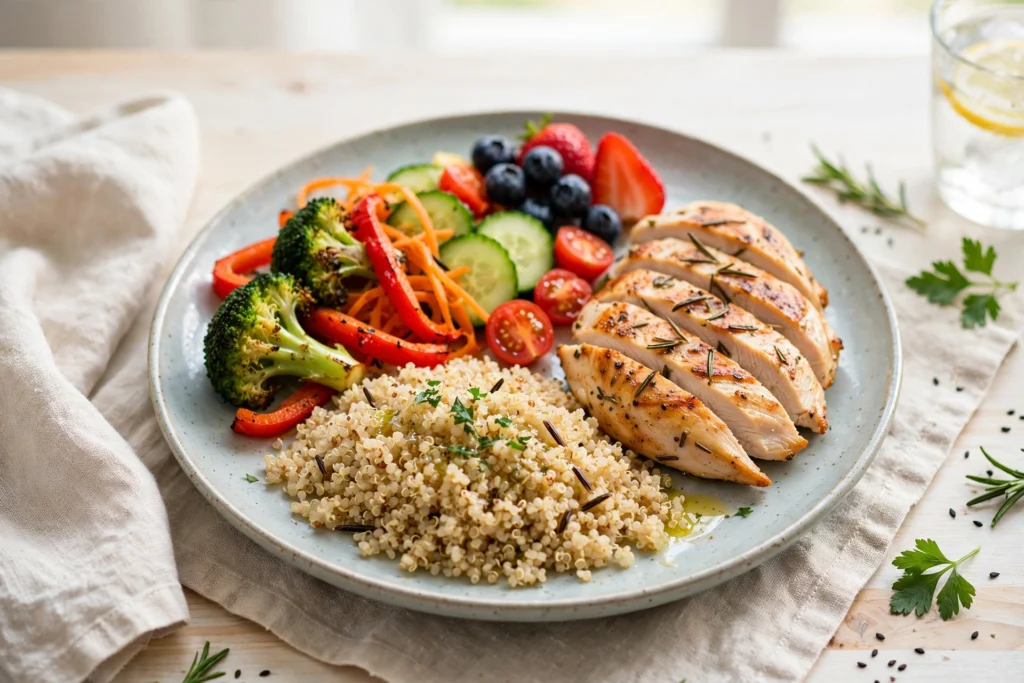
- Half the plate: vegetables — sabzi, salads, steamed greens (palak, gobhi, band gobhi, bhindi)
- Quarter: protein — fish twice a week, chicken, eggs, or daal/chana/rajma
- Quarter: whole grains — 1–2 whole-wheat rotis, brown rice, or oats
- Plus: a drizzle of mustard oil or extra-virgin olive oil, haldi + kali mirch in the cooking, fresh lemon or amla on the side
- Drink: water, adrak qehwa, or green tea; haldi doodh a few evenings a week
7-day sample plan (desi-friendly)
Day 1: Breakfast — oats porridge with walnuts and sliced guava. Lunch — masoor daal, 2 whole-wheat rotis, palak sabzi, lemon. Dinner — grilled surmai with haldi-adrak rub, steamed broccoli, salad. Evening — haldi doodh.
Day 2: Breakfast — vegetable omelet with ajwain paratha (1). Lunch — chana chaat with onions, tomatoes, lemon. Dinner — chicken yakhni soup with band gobhi, 1 roti. Drink — adrak qehwa.
Day 3: Breakfast — dahi with alsi (flaxseed) powder and shahtoot. Lunch — moong daal, brown rice, bhindi sabzi. Dinner — baked rohu, mixed salad with olive oil. Evening — green tea.
Day 4: Breakfast — jau (barley) dalia with almonds. Lunch — rajma, 2 rotis, cucumber-tomato salad. Dinner — palak chicken (light oil), 1 roti. Drink — adrak chai.
Day 5: Breakfast — besan cheela with vegetables. Lunch — lobia curry, brown rice, lemon pickle (small). Dinner — sardines/bangra curry (light mustard oil), steamed gobhi. Evening — haldi doodh.
Day 6: Breakfast — fruit bowl (kinno, amrood, falsa in season) with walnuts. Lunch — mixed daal, 2 rotis, methi sabzi. Dinner — chicken and vegetable soup (yakhni style). Drink — green tea.
Day 7: Breakfast — vegetable dalia with peanuts. Lunch — grilled fish or chana masala, salad, 1–2 rotis. Dinner — light khichdi (moong daal + brown rice) with dahi. Evening — haldi doodh.
Adjust portions to your calorie needs; this is a pattern, not a prescription.
Supplements vs Food: What to Know

Food should be the foundation, but supplements come up often in arthritis care. A few evidence notes:
- Fish oil capsules: Reasonable if you rarely eat fish; look for products specifying EPA/DHA content (trials used ~2–3 g combined daily). Can interact with blood thinners — inform your doctor.
- Curcumin extracts: The trial evidence is genuinely promising for knee OA pain, but products vary wildly in quality. Discuss with your doctor, especially with gallbladder disease or anticoagulant use.
- Glucosamine/chondroitin: Large trials (including the GAIT trial) found little benefit for most OA patients, though a subset with moderate-to-severe pain reported some relief. Not a first-line choice.
- Vitamin D: Worth testing if you’re deficient — common in South Asia despite the sunshine, due to indoor lifestyles and covered clothing. Deficiency is linked to worse OA outcomes; supplementation helps if you’re low, not if you’re already sufficient.
- Collagen peptides: Small trials show modest OA pain benefit; harmless for most, but expensive for what it delivers.
Rule of thumb: No supplement replaces the dietary pattern, the weight management, or the prescribed medication. Buy from reputable brands, and always tell your rheumatologist what you’re taking.
When to See a Doctor
Diet supports joint health, but certain signs need medical evaluation promptly:
- Joint swelling, redness, or warmth that persists
- Morning stiffness lasting more than 30–60 minutes (suggests inflammatory arthritis)
- Symmetrical small-joint pain (both hands/wrists)
- Fever, fatigue, or rash alongside joint pain
- Pain after injury, or joints that lock, buckle, or deform
- Any arthritis pain that worsens despite lifestyle measures
A rheumatologist can distinguish OA from RA and other conditions (gout, psoriatic arthritis, lupus) that need specific treatment. Early treatment of RA, in particular, prevents irreversible joint damage — diet alone cannot do that.
Frequently Asked Questions
Can diet cure arthritis?
No. No food, spice, or diet has been shown to cure osteoarthritis or rheumatoid arthritis or to regrow damaged cartilage. What diet can do — with solid evidence — is reduce inflammation, ease pain, support healthy weight, and possibly reduce reliance on painkillers. Think of food as a powerful supporting therapy alongside medical care, not a replacement for it.
Is haldi doodh actually effective for joint pain, or just a tradition?
It’s both. Turmeric’s curcumin has genuine anti-inflammatory effects demonstrated in clinical trials for knee osteoarthritis. Haldi doodh is a smart delivery method because warm milk (fat) and black pepper (piperine) both improve curcumin absorption — the traditional recipe accidentally solved the bioavailability problem. But a nightly cup contains far less curcumin than trial doses, so expect gentle support, not dramatic pain relief. For significant arthritis, discuss standardized curcumin extracts with your doctor.
Should I avoid tomatoes, potatoes, and brinjal if I have arthritis?
There is no strong scientific evidence that nightshade vegetables worsen arthritis for most people. Tomatoes provide lycopene, potatoes provide vitamin C, and brinjal provides antioxidants — all beneficial. The nightshade-avoidance claim comes from anecdote, not clinical trials. If you personally observe a consistent flare after eating one of them, test a short elimination and reintroduction — but don’t remove nutritious staples of desi cooking based on a myth.
How much fish should I eat for joint benefits?
Aim for at least two servings of fatty fish per week — rohu, surmai, sardines, or bangra are excellent local choices. Trials showing arthritis benefits generally used omega-3 doses equivalent to eating fatty fish several times weekly or supplementing ~2–3 g of EPA/DHA daily. If you don’t eat fish, walnuts, alsi (flaxseed), and mustard oil provide plant omega-3s (ALA), though conversion to EPA/DHA is limited — a fish-oil supplement discussed with your doctor is the fallback.
Can turmeric and ginger interact with my arthritis medicines?
Yes, potentially. Turmeric/curcumin in medicinal doses can increase bleeding risk when combined with blood thinners (warfarin, aspirin, clopidogrel) and may affect blood sugar — relevant if you take diabetes medication. High-dose ginger has similar cautions. Normal culinary amounts in food are generally safe, but concentrated supplements should always be cleared with your doctor or rheumatologist, especially alongside NSAIDs, methotrexate, or anticoagulants. Bring a list of everything you take — including “natural” products — to every appointment.
Conclusion: Eat for Your Joints, Starting Today

Joint pain doesn’t have to dictate the size of your life. The science is clear on the fundamentals: an anti-inflammatory eating pattern rich in fatty fish, colorful fruits and vegetables, olive and mustard oils, nuts, daal, and time-tested spices like haldi and adrak may reduce inflammation, ease pain, and protect the joints you have. Shedding even modest excess weight multiplies the benefit for your knees with every single step. And just as importantly, the myths — nightshade fear, ghee-as-medicine, miracle cures — deserve to be left behind in favor of what evidence actually supports.
You don’t need imported superfoods or expensive supplements to start. Your kitchen already holds most of what matters: haldi, adrak, lehsan, sarson ka tel, daal, palak, dahi, and seasonal fruit. Begin with one change — fish twice a week, haldi doodh in the evening, sugary drinks out — and build from there.
If joint pain is limiting your daily life, don’t navigate it alone. Book a personalized nutrition consultation with our team, and we’ll build a joint-friendly eating plan around your diagnosis, medications, and the foods your family actually eats — because the best diet for arthritis is the one you can live with.
Keep Reading
- Bones and Joints Nutrition: The Complete Guide to Strong Bones and Joints — the pillar page for this topic cluster
- Best Foods for Bone Health and Density: A Complete Nutrition Guide — the wider bone-health food guide this joint article belongs with
- Calcium-Rich Foods for Strong Bones: A Complete, Evidence-Based Guide — calcium, the mineral your joints’ bones depend on
- Vitamin K2 Foods for Bones: The Missing Nutrient Your Skeleton Needs — why calcium needs its vitamin K2 partner
- Foods for Bone Density After 60: A Nutritionist’s Guide to Eating for Stronger Bones — bone and joint nutrition for older adults
- Health Disclaimer — please read before acting on any nutrition advice on this site
References
- World Health Organization. Healthy diet, fact sheet. https://www.who.int/news-room/fact-sheets/detail/healthy-diet