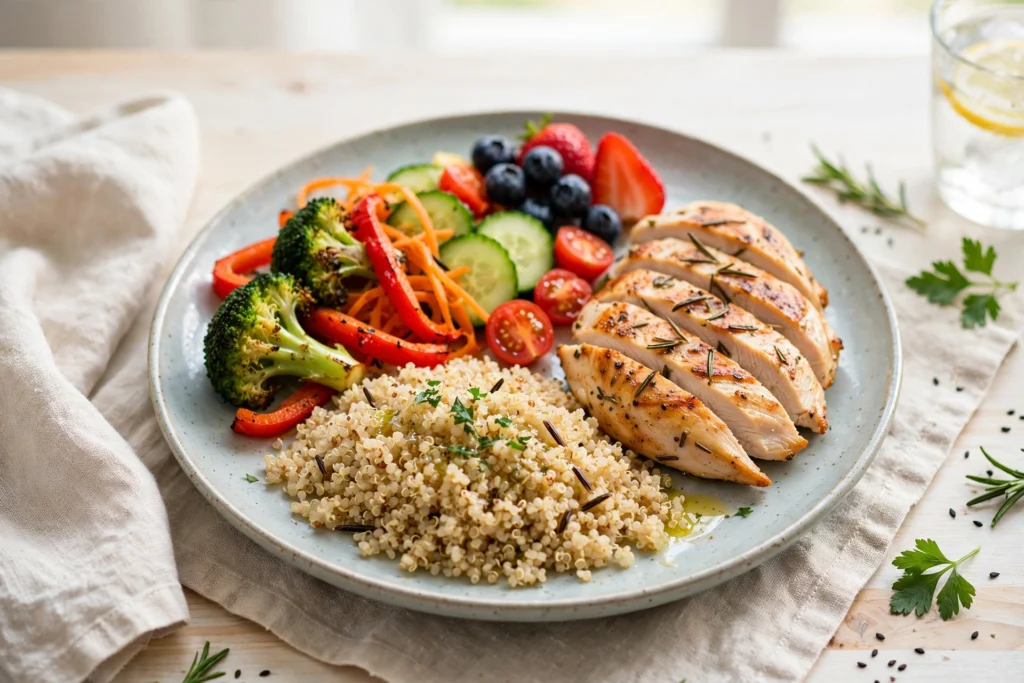
If you have ever stood in the supplement aisle, staring at expensive collagen powder tubs promising glowing, wrinkle-free skin, you are not alone. Collagen has become one of the most marketed beauty nutrients of the decade. But before you spend your money, it is worth asking a simpler question: can the foods on your plate support your skin’s collagen as well — or better? This collagen-rich foods for skin guide explains the science, the best desi foods for firm skin, and a sample day of eating for a healthy glow.
The honest answer is more interesting than the marketing suggests. In this guide, you will learn:
- What collagen actually is and why your body makes less of it as you age
- The honest, evidence-based truth about collagen-rich foods versus collagen supplements
- The top 15 foods that provide collagen-building nutrients — with a South Asian twist
- The key vitamins, minerals, and amino acids your skin needs to manufacture collagen
- Habits that actively destroy collagen (and how to avoid them)
- Practical options for vegetarians
- A full sample day of eating designed to support skin health
- Chronological ageing — the baseline decline everyone experiences
- Menopause — oestrogen levels drop, and with them, collagen production (studies suggest women may lose up to 30% of skin collagen in the first five years after menopause)
- UV radiation — sun exposure breaks down collagen fibres faster than ageing alone
- Lifestyle factors — smoking, excessive sugar intake, and chronic stress all speed up collagen breakdown
- The overall quality of evidence is low to moderate at best
- Many studies are small (under 100 participants) and of short duration
- Industry funding is common, which is a recognised source of bias
- Effects are modest, not transformative
- Protein: lentils, chickpeas, beans, soya, paneer, milk, yoghurt, eggs (for lacto-ovo vegetarians)
- Vitamin C: amla, guava, citrus, bell peppers, tomatoes, leafy greens
- Copper: cashews, sesame seeds, chickpeas, whole grains, mushrooms
- Zinc: chickpeas, lentils, pumpkin seeds, cashews, dairy
- Proline and glycine: dairy, eggs, legumes, soy products, nuts
- 2 boiled eggs (or a besan/egg omelette) with spinach and tomatoes
- 1 kinnoo or a small glass of fresh orange juice
- A small handful of almonds (about 20g)
- A cup of homemade chicken yakhni (or vegetable soup for vegetarians)
- 1 amla or a few strawberries
- Grilled rohu fish or chicken breast (palm-sized portion)
- 1 cup cooked masoor daal or mixed sabzi with sarson ka saag
- 1–2 whole-wheat rotis
- Fresh salad: cucumber, tomatoes, red bell pepper, lemon juice
- A small bowl of dahi (yoghurt)
- A small handful of cashews and pumpkin seeds (about 30g total)
- Green tea
- Chicken yakhni-based soup with vegetables, or chickpea and vegetable curry
- 1–2 rotis or a small portion of brown rice
- Side salad with lemon dressing
- Warm milk with a pinch of turmeric (haldi doodh) — comforting, and dairy provides proline
- Eat enough protein — your body cannot build collagen without amino acids.
- Get vitamin C daily — without it, collagen synthesis stalls. Amla, kinnoo, citrus, and bell peppers make this easy.
- Include zinc and copper — chickpeas, lentils, cashews, and seeds have you covered.
- Protect what you have — sunscreen, less sugar, no smoking, and good sleep preserve collagen better than any food builds it.
- Be patient and sceptical — of dramatic claims, expensive powders, and before-and-after photos in advertisements.
- Skin and Hair Nutrition Guide — the pillar page for this topic cluster.
- Vitamin C Foods for Skin Health: What to Eat for Firm, Bright, Resilient Skin
- Best Foods for Glowing Skin: What a Nutritionist Recommends
- Best Anti-Aging Foods for Skin and Body
- Health Disclaimer — please read before acting on any nutrition advice on this site.
- World Health Organization. Healthy diet (fact sheet).
Let us separate the science from the sales pitch.
1. What Is Collagen, and Why Does It Matter for Your Skin?

Collagen is the most abundant protein in the human body, making up roughly one-third of all your protein. Think of it as the scaffolding that holds your skin, tendons, ligaments, and cartilage together. In the skin’s middle layer — the dermis — collagen forms a dense mesh of fibres that gives skin its strength, structure, and elasticity.
There are at least 28 types of collagen identified in the body, but Type I collagen dominates in skin, accounting for roughly 80–90% of the skin’s collagen content. It is essentially long chains of amino acids wound into a triple-helix structure — imagine three strands of rope twisted tightly together.
Why Collagen Declines With Age
From around the age of 25, your body’s collagen production begins to fall by approximately 1% per year. This is a natural, biological process — not a deficiency you can entirely “fix.” By the age of 50, you may have lost up to half of the skin collagen you had at 25.
This gradual decline contributes to the visible signs of ageing: fine lines, wrinkles, sagging skin, and slower wound healing. Several factors accelerate it:
The key point: you cannot stop collagen decline entirely. But you can support your body’s ability to keep producing it — and that is where food comes in.
2. Collagen-Rich Foods vs Collagen Supplements: An Honest Review
This is the question most articles dodge. Here is the straight answer.
The Theory Behind Collagen Foods
When you eat collagen-containing foods (like slow-cooked bone broth, chicken skin, or fish), your digestive system does not absorb that collagen whole and deliver it to your skin. Like all dietary protein, collagen is broken down in the stomach and small intestine into individual amino acids and small peptides. Those building blocks enter the bloodstream and can be used by the body to build new collagen — but also to build muscle, enzymes, or whatever else the body needs at that moment.
So the mechanism is indirect: collagen-rich foods supply the raw materials (especially glycine, proline, and hydroxyproline), and your body decides what to build with them.
What the Supplement Research Actually Shows
Collagen peptide (hydrolysed collagen) supplements have been studied in several randomised controlled trials. Some trials — typically small, short-term, and often funded by supplement manufacturers — have reported modest improvements in skin elasticity, hydration, and wrinkle depth at doses of roughly 2.5–10 grams per day over 8–12 weeks.
However:
In other words: collagen supplements might offer small benefits, but the evidence does not support the dramatic claims on the packaging.
The Case for Food First
Whole foods provide the same amino acids alongside the co-factors collagen synthesis requires — vitamin C, zinc, and copper among them. A supplement gives you peptides; a balanced meal gives you peptides plus the vitamins and minerals that tell your body to actually use them. There is also no food-based evidence gap: a diet rich in protein and vitamin C is unambiguously good for skin and health generally, whether or not it specifically raises collagen.
Bottom line: Spend your money on a nutrient-dense diet before you spend it on collagen powder. If you choose a supplement, treat it as optional, not essential.
3. Nutrients That Drive Collagen Production
Collagen does not appear from thin air. Your body needs specific raw materials and helpers to manufacture it. Understanding these makes food choices far more logical.
Vitamin C — The Non-Negotiable
Vitamin C (ascorbic acid) is a required co-factor for two enzymes — prolyl hydroxylase and lysyl hydroxylase — that stabilise the collagen triple helix. Without adequate vitamin C, your body literally cannot build stable collagen. This is why scurvy (severe vitamin C deficiency) causes bleeding gums, poor wound healing, and loose teeth: the connective tissue falls apart.
Daily target: 75–90 mg for most adults, easily achievable from food. Smokers need roughly 35 mg more per day.
Proline and Glycine — The Building Blocks
Collagen is unusual: roughly one-third of its amino acids are glycine, and about one-quarter are proline and hydroxyproline. These amino acids are abundant in collagen-rich animal foods (meat, bone broth, fish, eggs) and are also synthesised by the body. You do not need exotic supplements — regular protein-rich foods supply them.
Copper — The Cross-Linker
Copper activates lysyl oxidase, the enzyme that cross-links collagen fibres, giving them tensile strength. Good sources include cashews, sesame seeds, chickpeas, lentils, and whole grains.
Zinc — The Repair Mineral
Zinc supports the cells (fibroblasts) that produce collagen and is involved in skin repair. Sources: meat, shellfish, chickpeas, lentils, pumpkin seeds, and cashews.
Antioxidants — The Protectors
Collagen is degraded by free radicals from UV exposure and pollution. Antioxidant-rich foods — berries, citrus, leafy greens, green tea — help protect existing collagen from breakdown.
4. Top 15 Collagen-Supporting Foods
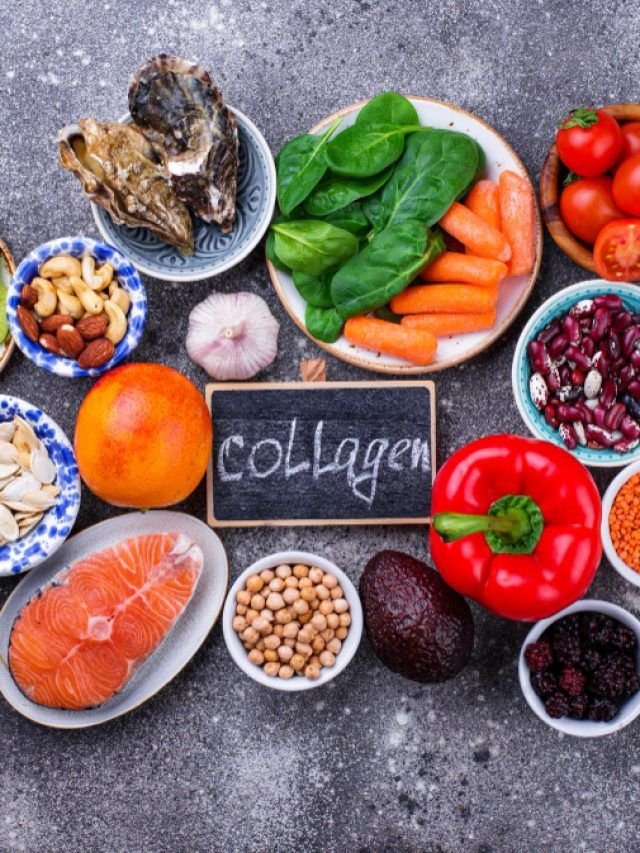
Here is the practical core of this guide. Each food is included for a specific, evidence-based reason — not marketing hype.
1. Bone Broth (Yakhni)
Slow-simmered bone broth, known across South Asia as yakhni, is the most direct food source of dietary collagen. Long cooking (8–24 hours) extracts gelatin — partially broken-down collagen — from bones, cartilage, and connective tissue. It also provides glycine, proline, and minerals.
How to use it: Drink a cup as a warming snack, use it as the base for soups, daal, or biryani, or cook rice in it. A homemade yakhni made from chicken bones or mutton paya is nutritionally equivalent to any premium “bone broth” sold in fancy packaging.
Honest note: broth collagen is still digested into amino acids like any other protein. Its advantage is that it is rich in glycine and proline — not that it delivers collagen directly to your skin.
2. Paya (Trotters)
Paya — slow-cooked goat or cow trotters — is essentially a concentrated form of yakhni. Trotters are rich in cartilage and connective tissue, which release gelatin and amino acids during long cooking. A traditional winter dish across Pakistan and North India, it is one of the most collagen-dense foods in any cuisine.
3. Chicken (Especially With Skin and Bones)
Chicken is an excellent all-round protein source, and collagen is concentrated in the parts many people discard: the skin, feet, and the cartilage on bones. Chicken feet, in particular, are remarkably high in collagen — commonly eaten in soups across Asia, though less popular in South Asia. Even regular chicken breast provides the amino acids your body needs.
Tip: Roast a whole chicken and simmer the carcass afterwards for a collagen-rich stock.
4. Fish (Rohu, Salmon, Sardines)
Fish provides high-quality protein plus omega-3 fatty acids, which may help protect skin from UV-related damage. Marine collagen peptides are among the most studied supplement forms, largely because fish collagen is efficiently digested. Eating the fish itself — rohu, salmon, sardines, or mackerel — gives you the same amino acids with bonus nutrients.
Tip: Where edible, small fish eaten with bones (like sardines) add extra collagen-building minerals.
5. Egg Whites
Egg whites are nearly pure protein, rich in proline — one of the two key amino acids in collagen. They also contain some of the sulphur needed for collagen structure. Whole eggs are even better, since the yolk adds vitamin A, biotin, and other skin-supporting nutrients.
6. Citrus Fruits (Oranges, Kinnoo, Lemons)
Kinnoo — Pakistan’s beloved mandarin — is a vitamin C powerhouse, with one fruit providing roughly half your daily needs. Oranges, lemons, grapefruit, and sweet lime are equally good. Since vitamin C is required to build collagen, citrus is arguably as important for skin as any collagen-containing food. Add lemon to water, eat kinnoo in winter, or squeeze citrus over salads.
7. Amla (Indian Gooseberry)
Amla deserves special mention. It is one of the richest natural sources of vitamin C known — a single small fruit can contain 300–600 mg, several times your daily requirement. It also contains tannins and polyphenols with antioxidant activity. Fresh amla, amla juice, or dried amla powder (murabba is tasty but high in sugar) all deliver the goods.
8. Berries (Strawberries, Blueberries, Mulberries/Shahtoot)
Berries combine vitamin C with anthocyanins — potent antioxidants that may help protect collagen from free-radical damage. Strawberries are particularly high in vitamin C. In South Asia, shahtoot (mulberries) are a seasonal, affordable alternative.
9. Garlic (Lehsun)
Garlic contains sulphur compounds and has been linked in preliminary research to supporting collagen production — sulphur is needed for the cross-linking that stabilises collagen fibres. It also has general antioxidant and anti-inflammatory properties. Fresh, raw-ish garlic (lightly cooked or crushed and rested) preserves the most active compounds.
10. Leafy Greens (Saag, Spinach, Methi)
Dark leafy greens — spinach, sarson ka saag, methi, kale — provide vitamin C, vitamin A (as beta-carotene), and chlorophyll, which early research suggests may support the precursors of collagen in skin. They are also rich in the antioxidants that protect existing collagen.
11. Beans and Lentils (Chana, Masoor, Moong)
Chickpeas (kala chana and safed chana), lentils, and beans provide protein, zinc, and copper — the mineral co-factors of collagen synthesis. They are also high in fibre, which supports gut health and indirectly benefits skin. For vegetarians, legumes are among the most important collagen-supporting foods.
12. Cashews (Kaju)
Cashews are notably rich in copper and zinc — two minerals directly involved in collagen production. A small handful (about 30g) makes an excellent skin-supporting snack. They also provide healthy fats and protein.
13. Bell Peppers (Shimla Mirch)
Red and yellow bell peppers are among the very highest food sources of vitamin C — a single large red pepper can provide over 150 mg, nearly double the daily requirement. They also contain vitamin A. Add them raw to salads or lightly stir-fry to preserve the vitamin C.
14. Tomatoes
Tomatoes provide vitamin C and lycopene, a carotenoid antioxidant studied for its potential to protect skin from UV damage. Interestingly, cooking tomatoes increases lycopene availability — so that tomato-based salan is doing your skin a favour.
15. Nuts and Seeds (Almonds, Pumpkin Seeds, Sesame)
Almonds provide vitamin E, which protects skin cell membranes. Pumpkin seeds are rich in zinc. Sesame seeds (til) provide copper and calcium. A mixed handful daily covers multiple collagen co-factors at once.
5. What Destroys Collagen: Habits to Avoid
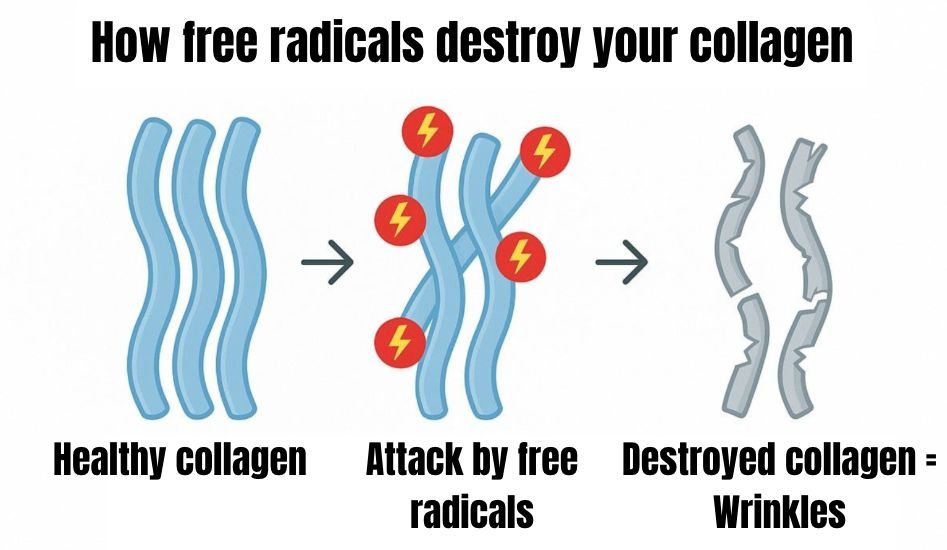
Building collagen is only half the story. These habits actively tear it down:
Sugar and Glycation
Excess dietary sugar triggers glycation — sugar molecules attach to collagen fibres, forming harmful compounds called AGEs (advanced glycation end products). Glycated collagen becomes stiff, brittle, and prone to breaking. This is one of the most evidence-backed links between diet and skin ageing. Cutting back on sugary chai, mithai, fizzy drinks, and refined sweets is one of the most effective skin-friendly dietary changes you can make.
Smoking and Tobacco
Smoking dramatically accelerates collagen breakdown and impairs its production. Tobacco chemicals constrict blood vessels, reducing nutrient delivery to skin, and increase enzymes (matrix metalloproteinases) that chew through collagen. Gutka, paan with tobacco, and shisha carry similar risks.
Excessive Sun (UV) Exposure
UV radiation is the single biggest environmental cause of collagen loss — a process called photoageing. Up to 80% of visible facial ageing is attributed to sun exposure rather than time itself. Sunscreen, shade, and protective clothing matter more for collagen preservation than any food or supplement.
Chronic Stress and Poor Sleep
Chronic stress raises cortisol, which has been linked to reduced collagen synthesis. Poor sleep impairs the overnight repair processes during which skin regenerates. Seven to eight hours of sleep is a genuine beauty treatment — and it is free.
6. Vegetarian Options for Collagen Support
A common concern: “I don’t eat meat — can I still support my collagen?” Yes. While vegetarians miss out on direct dietary collagen (found only in animal foods), the body manufactures collagen from amino acids, and all the co-factors are available from plants:
The body synthesises proline and glycine from other amino acids when dietary intake is adequate in total protein. A vegetarian eating sufficient protein plus plenty of vitamin C is well equipped for collagen production.
7. Sample Day Meal Plan for Skin Health

Here is a practical, South Asian–friendly day of eating designed around collagen-supporting nutrients. It provides roughly 70–80g of protein and abundant vitamin C, zinc, and copper.
Breakfast
Mid-Morning Snack
Lunch
Evening Snack
Dinner
Before Bed (Optional)
Note: this is a template, not a prescription. Adjust portions to your energy needs, and consult a nutritionist for personalised advice — you can book an appointment here.
8. Collagen and Your Age: What Changes in Your 30s, 40s, and 50s
Collagen loss is not the same at every age — and what you eat matters more at some stages than others.
Your 30s: prevention beats repair
In your 30s, collagen declines gradually (roughly 1% per year). You may not see wrinkles yet, but the fibres are already weakening. This is the decade where diet has the most leverage: adequate protein, daily vitamin C, and sun protection now pay off far more than expensive creams later. Think of it as saving for retirement — small, consistent deposits.
Your 40s: visible change begins
By your 40s, the decline accelerates and shows: fine lines around the eyes and mouth, skin that bounces back more slowly when pinched. Eating enough protein becomes harder than it sounds — appetite and muscle mass both decline, so many people unconsciously eat less. Make protein a priority at every meal: eggs or dahi at breakfast, daal or chicken at lunch, fish or chickpeas at dinner.
Your 50s and beyond: protect the factory
After menopause (or the male equivalent, andropause), hormonal shifts accelerate collagen loss further. At this stage, no diet will rebuild what is gone — but the right nutrition keeps the remaining factory running. Prioritise vitamin C-rich foods (tissue saturation matters more when synthesis slows), zinc for repair, and omega-3s for skin barrier support. Adequate protein also protects muscle, which supports the skin’s scaffolding from underneath.
One principle for every age
Whatever your decade, the single most evidence-based dietary move for collagen is boring but true: eat enough protein and enough vitamin C, every single day. Everything else is optimisation.
9. Frequently Asked Questions
Do collagen-rich foods really improve skin, or is it a myth?
It is neither pure myth nor proven miracle. Foods rich in collagen (like yakhni) and its co-factors (vitamin C, zinc, copper) supply the building blocks your body needs to make collagen. What the foods cannot do is deliver collagen directly to your skin — digestion breaks it down first. A diet rich in these nutrients is genuinely good for skin, but no food will reverse deep wrinkles on its own. Think of food as supporting the factory, not shipping the finished product.
Is bone broth better than collagen powder?
Bone broth and collagen powder contain similar amino acids. Broth has the advantage of also providing minerals, hydration, and (if homemade) virtually no cost — plus it is a whole food. Collagen powder is more concentrated and convenient. The honest position: neither has strong clinical proof of dramatic skin benefits, so choose based on preference, budget, and how much you enjoy the food itself.
How long does it take to see results from eating collagen-supporting foods?
Skin turns over slowly — a full cycle takes roughly 28 days in young adults and longer with age. Any dietary change needs at least 8–12 weeks of consistency before you could reasonably assess changes in skin texture or firmness. Anyone promising glowing skin in a week is selling you something.
Can vegetarians get enough collagen-building nutrients?
Yes. Your body makes collagen from amino acids, and the essential co-factors — vitamin C, copper, zinc — are abundant in plant foods. Amla, guava, citrus, bell peppers, chickpeas, lentils, cashews, and dairy (if consumed) cover everything needed. What vegetarians miss is pre-formed dietary collagen, but since the body breaks all dietary collagen down anyway, this is a smaller disadvantage than it sounds.
Does sugar really damage skin collagen?
Yes — this is one of the better-supported links between diet and skin ageing. Excess sugar drives glycation, producing AGEs that stiffen and weaken collagen fibres. You do not need to eliminate all sugar, but consistently high intake of sweets, sugary drinks, and refined carbohydrates is genuinely bad for skin over time.
9. The Bottom Line

Collagen matters for skin, and it declines with age — that part is solid science. What is less solid is the idea that you can eat or drink your way to youthful skin. The evidence-based position is this:
Your grandmother’s yakhni was never a bad idea. It just is not magic — and knowing that makes it easier to enjoy it for what it actually is: nourishing, traditional, sensible food.
Medical disclaimer: This article is for general educational purposes only and is not medical advice. It does not replace professional diagnosis or treatment. If you have a skin condition, a nutrient deficiency, or are considering supplements, please consult a qualified healthcare professional or registered nutritionist.
Want personalised guidance? Every body — and every skin — is different. If you would like a nutrition plan tailored to your goals, health conditions, and food preferences, book an appointment with our UK-Registered Associate Nutritionist today.