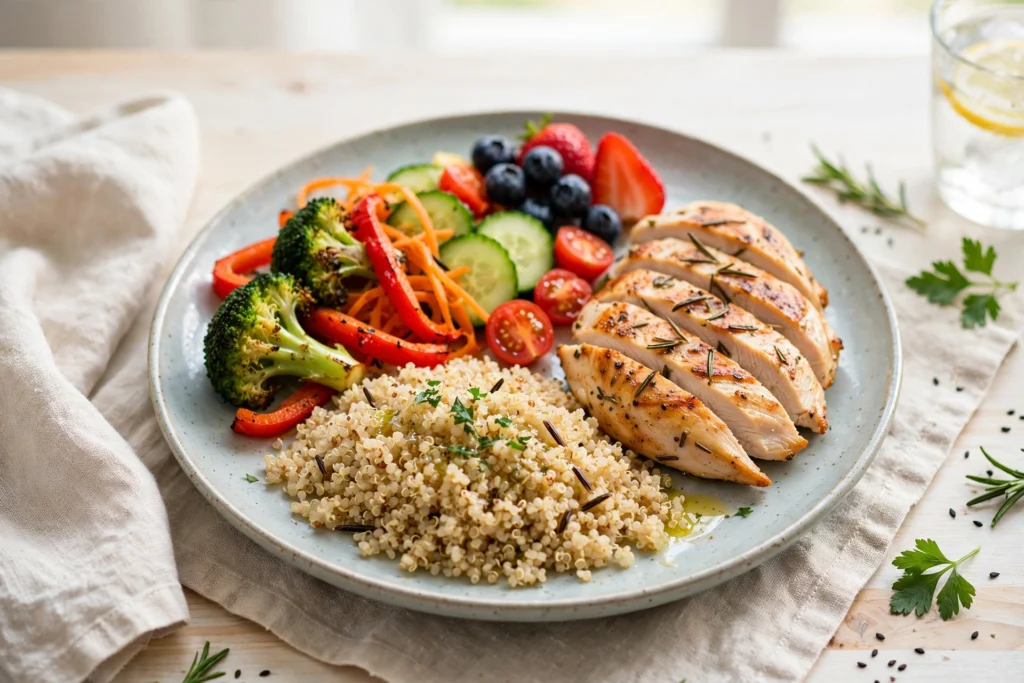
You have probably heard that the Mediterranean diet is the healthiest way to eat. It has topped nutrition rankings for years, and unlike most diets, it is not about starving yourself or cutting out entire food groups. It is simply the traditional eating pattern of countries around the Mediterranean Sea — Greece, Italy, Spain, and their neighbours — where people have been eating this way for generations and enjoying some of the longest, healthiest lives in the world. This Mediterranean diet for beginners guide covers the science, the foods, a 7-day meal plan, and how to make it work in a Pakistani kitchen.
The best part? It is not really a “diet” at all. There are no points to count, no banned foods, and no tiny portions. You eat vegetables, fruit, beans, lentils, whole grains, nuts, olive oil, and fish — foods that taste good and keep you full. If you are just getting started, this guide gives you everything you need: the science behind it, exactly what to eat, a full 7-day meal plan, and how to adapt it if you eat a South Asian diet at home.
In this guide, you will learn:
- What the Mediterranean diet actually is (and what it is not)
- What the research says about heart health, diabetes, and longevity
- The Mediterranean diet food pyramid explained in plain language
- Exactly what to eat daily, weekly, and rarely
- A complete 7-day beginner meal plan with realistic portions
- How to adapt it for a Pakistani/South Asian kitchen
- A practical shopping list for your first week
- How to eat out without derailing your progress
- The most common beginner mistakes (and how to avoid them)
- A 5-step plan to start this week
What Is the Mediterranean Diet, Really?
The Mediterranean diet is based on how people in southern Europe traditionally ate in the mid-20th century, particularly in Crete, Greece, and southern Italy. Researchers noticed that people in these regions had remarkably low rates of heart disease despite not eating “low fat” — and that observation changed nutrition science.
It is important to understand that there is no single official Mediterranean diet. It is a pattern of eating with consistent features: lots of plant foods, olive oil as the main fat, fish and poultry eaten regularly, red meat eaten rarely, and meals enjoyed slowly, often with family. Think of it as a framework, not a rulebook. Two people can follow it differently and both get the benefits.
What it is not: it is not a low-carb diet, a high-protein diet, or a detox. It is not about eating pizza and pasta from a restaurant and calling it Mediterranean. And it is certainly not about supplements or “Mediterranean diet pills” — those do not exist in any legitimate form.
Why It Works: The Evidence
The Mediterranean diet is one of the most studied eating patterns in the world. Here is what the strongest research tells us.
The PREDIMED Trial: Heart Disease Prevention
The most important study is called PREDIMED, a large randomised controlled trial conducted in Spain and published in 2013. It followed over 7,000 people at high risk of cardiovascular disease for nearly five years. Participants were assigned to either a Mediterranean diet supplemented with extra-virgin olive oil, a Mediterranean diet supplemented with mixed nuts, or a low-fat control diet.
The result was striking: both Mediterranean diet groups had roughly 30% fewer major cardiovascular events (heart attacks, strokes, and cardiovascular deaths) compared with the low-fat group. The olive oil group consumed about 4 tablespoons of extra-virgin olive oil per day, and the nut group ate about 30 grams of mixed nuts per day (walnuts, almonds, and hazelnuts).
This was a landmark finding because it came from a randomised trial — the gold standard of evidence — not just an observational study. A re-analysis and follow-up publication confirmed the result, and it remains one of the strongest pieces of evidence that a dietary pattern can prevent heart disease.
Type 2 Diabetes and Blood Sugar
PREDIMED also found that the Mediterranean diet reduced the risk of developing type 2 diabetes. In participants who did not have diabetes at the start, the Mediterranean diet groups had about a 40% lower risk of developing diabetes over the follow-up period compared with the control group. Other trials have shown it improves blood sugar control (HbA1c) in people who already have diabetes.
The mechanism is straightforward: the diet is high in fibre from vegetables, beans, lentils, and whole grains, which slows down the absorption of sugar into the blood. It is also rich in healthy monounsaturated fats from olive oil and nuts, which improve how the body responds to insulin.
Brain Health and Longevity
Observational studies have consistently linked Mediterranean-style eating with slower cognitive decline and lower risk of Alzheimer’s disease, though this evidence is less definitive than the heart disease data. Large cohort studies also associate it with lower overall mortality — people who eat this way tend to live longer. The benefits likely come from the combination of anti-inflammatory foods, antioxidants from colourful vegetables and fruit, and healthy fats that support blood vessel function everywhere in the body, including the brain.
One honest note: no diet can guarantee you will never get sick. The Mediterranean diet lowers risk — it does not eliminate it. And if you take medication for blood pressure, cholesterol, or diabetes, this way of eating works alongside your medication, not instead of it. Always talk to your doctor before making major dietary changes, especially if you take medicines that affect blood sugar or blood pressure.
The Mediterranean Diet Pyramid in Plain Terms
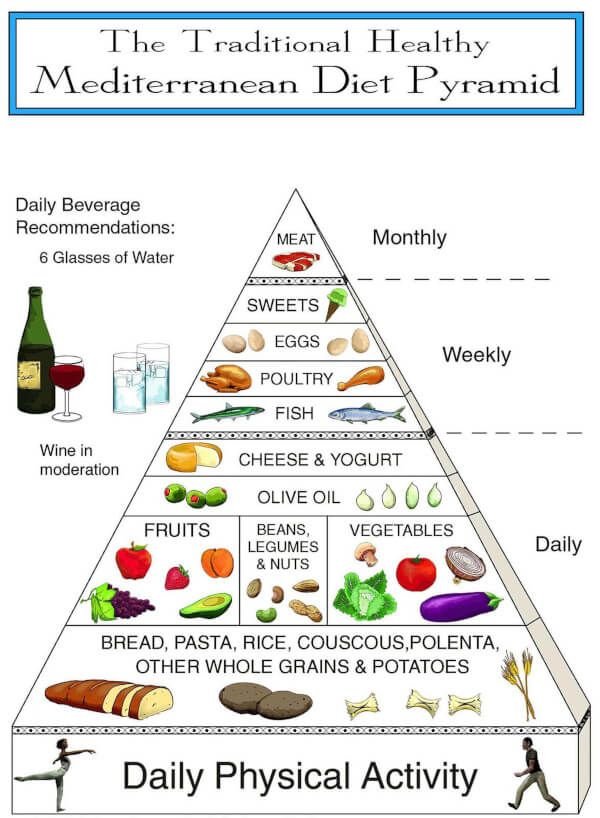
The Mediterranean Diet Foundation created a food pyramid that summarises the pattern. Here is what it means in everyday language, from the base (eat most often) to the top (eat least often).
Base of the Pyramid: Every Meal
Vegetables, fruit, whole grains, olive oil, beans, lentils, nuts, seeds, herbs, and spices form the foundation. These appear at every meal. A typical plate is about half vegetables, a quarter whole grains or starchy foods, and a quarter protein — with olive oil used in cooking or as a dressing.
Middle of the Pyramid: Daily to Weekly
Fish and seafood appear at least twice a week. Poultry, eggs, cheese, and yogurt are eaten in moderate amounts — a few times a week rather than daily. This is where the Mediterranean pattern differs most from a typical Western diet: meat is not the centre of the plate.
Top of the Pyramid: Rarely
Red meat and sweets sit at the very top, meaning they are eaten only occasionally — a few times a month. This does not mean never. A small portion of red meat or a traditional dessert at a family gathering fits perfectly well within the pattern.
The Lifestyle Base
Uniquely, this pyramid includes lifestyle habits at its base: regular physical activity, adequate rest, cooking and eating with others, and drinking plenty of water. The social and active lifestyle is considered part of the pattern, not an add-on.
What to Eat Every Day
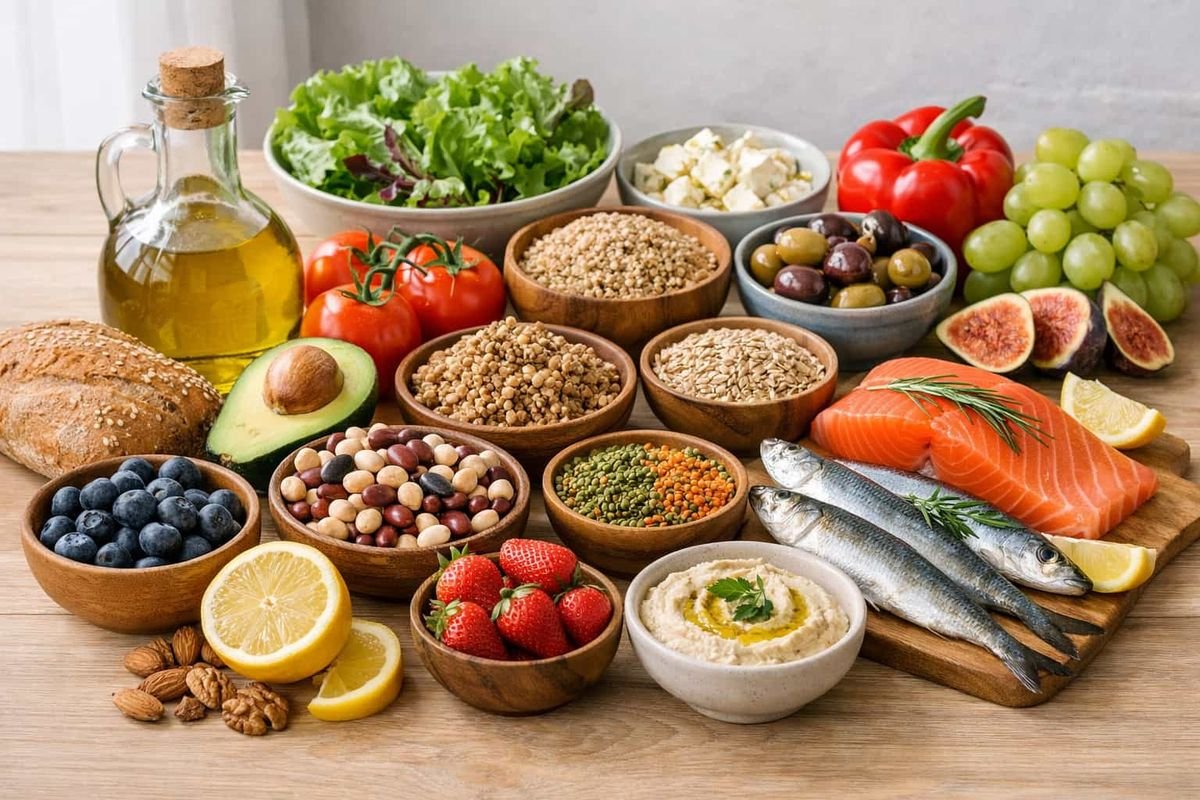
Let us make this concrete. Here is what belongs on your plate every day.
Vegetables and Fruit
Aim for at least 4–5 servings of vegetables and 2–3 servings of fruit daily. Variety matters more than any single “superfood.” Tomatoes, leafy greens, peppers, cucumbers, onions, garlic, carrots, broccoli, and aubergines are all staples. Eat fruit as your default dessert — a bowl of berries, an orange, or sliced melon.
Whole Grains
Choose whole grains over refined ones most of the time: whole wheat bread, brown rice, oats, barley, quinoa, bulgur, and whole wheat pasta. Fibre keeps you full and feeds the beneficial bacteria in your gut.
Healthy Fats: Olive Oil and Nuts
Extra-virgin olive oil is the primary fat — used for cooking, salads, and drizzling. A small handful of nuts (about 30 grams, roughly what the PREDIMED trial used) makes an excellent daily snack. Walnuts, almonds, pistachios, and hazelnuts are all good choices.
Herbs, Spices, Garlic, and Lemon
These are used generously instead of salt to flavour food. Garlic, oregano, basil, rosemary, thyme, cumin, turmeric, black pepper, and fresh lemon juice are all central to Mediterranean cooking. This matters more than it sounds: flavourful food is satisfying food, which makes the pattern sustainable.
What to Eat Weekly
Some foods are eaten a few times a week rather than daily.
Fish and Seafood (At Least Twice a Week)
Oily fish such as salmon, sardines, mackerel, and trout are especially valuable because of their omega-3 fatty acids. White fish like cod, haddock, and sea bass are also excellent. In the trials, fish was typically eaten at least twice a week.
Poultry, Eggs, and Dairy
Chicken and turkey a few times a week. Eggs — up to about one a day is fine for most people, though older guidance was more restrictive. Fermented dairy is traditional: plain yogurt and small amounts of cheese such as feta, parmesan, or halloumi. Choose plain yogurt over sweetened versions.
Beans, Lentils, and Chickpeas (Several Times a Week)
These are workhorse foods in the Mediterranean pattern — cheap, filling, and rich in fibre and protein. Chickpeas, lentils, kidney beans, cannellini beans, and peas appear in soups, salads, and stews several times a week.
What to Eat Rarely
Red meat (beef, lamb, mutton) is eaten only a few times a month, in small portions — think of it as a flavouring or a side rather than the main event. Processed meats like sausages, bacon, and salami are eaten even less often. Sweets, sugary drinks, and highly processed snacks are occasional treats, not daily habits. Butter and cream are replaced by olive oil in most cooking.
A Note on Red Wine
You may have heard that red wine is part of the Mediterranean diet. Traditionally, small amounts were consumed with meals in some regions. However, current public health guidance is clear: you do not need alcohol for health, and starting to drink for health reasons is not recommended. If you already drink, keep it moderate and with meals; if you do not drink, there is no reason to start. All the benefits of the Mediterranean pattern can be achieved without a drop of alcohol.
Your 7-Day Beginner Meal Plan
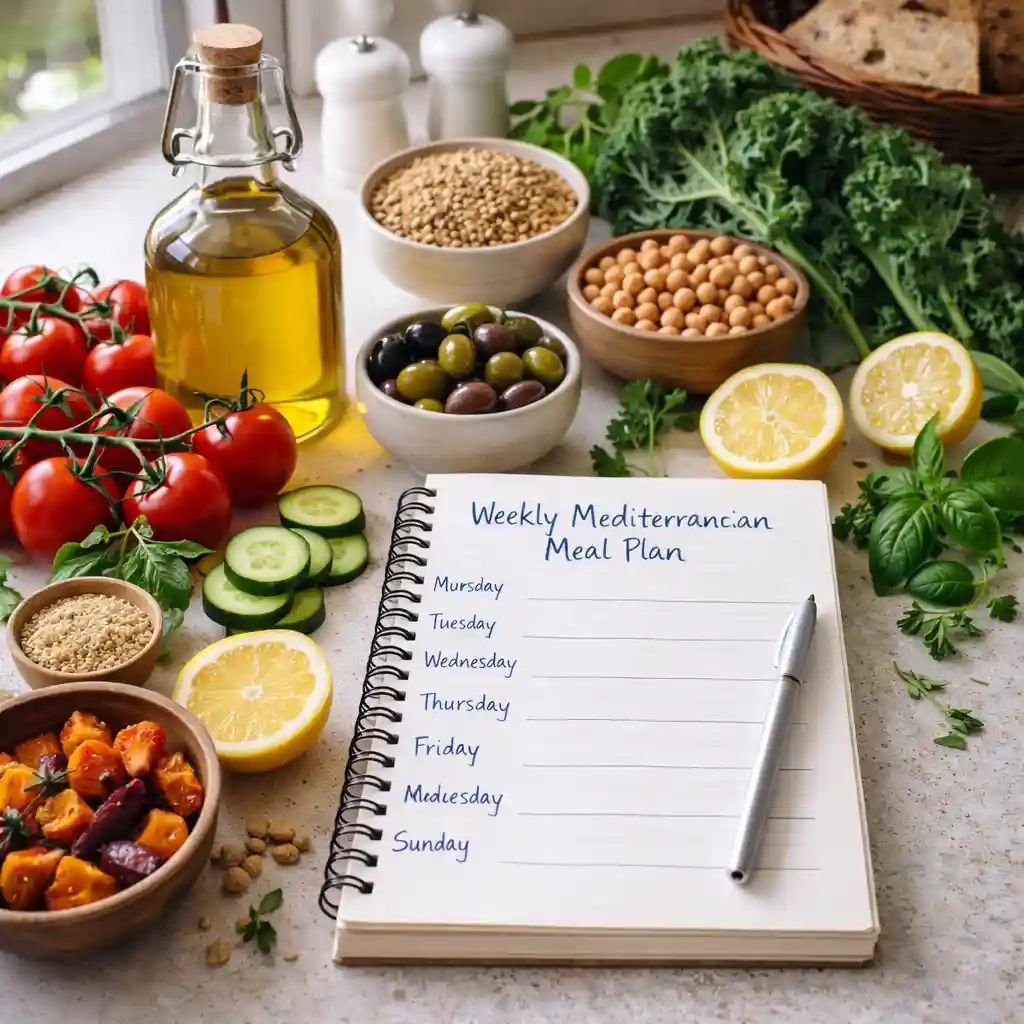
This plan is realistic: simple meals, repeated ingredients to keep shopping easy, and portions for one adult. Adjust quantities to your appetite and activity level. Each day includes three meals and a snack.
Day 1
- Breakfast: Greek yogurt with mixed berries, a drizzle of honey, and a tablespoon of chopped walnuts; whole wheat toast.
- Lunch: Large Greek salad — tomatoes, cucumber, red onion, olives, feta cheese, olive oil and lemon dressing; whole wheat pita on the side.
- Snack: An apple and a small handful (30g) of almonds.
- Dinner: Baked salmon with roasted vegetables (peppers, courgette, red onion) in olive oil and herbs; small portion of brown rice.
Day 2
- Breakfast: Oatmeal cooked with milk, topped with sliced banana, ground flaxseed, and cinnamon.
- Lunch: Lentil soup with carrots, celery, onion, garlic, and cumin; whole wheat bread for dipping.
- Snack: Carrot and cucumber sticks with hummus.
- Dinner: Grilled chicken breast with a lemon-oregano marinade, served with a big mixed salad and quinoa.
Day 3
- Breakfast: Whole wheat toast with mashed avocado, a squeeze of lemon, black pepper, and a boiled egg.
- Lunch: Chickpea and tuna salad with tomatoes, red onion, parsley, olive oil, and lemon juice.
- Snack: Plain yogurt with a few dried apricots and pistachios.
- Dinner: Whole wheat pasta with tomato sauce, garlic, basil, and white beans; side of steamed broccoli with olive oil.
Day 4
- Breakfast: Vegetable omelette (spinach, tomatoes, mushrooms) cooked in olive oil; whole wheat toast.
- Lunch: Leftover lentil soup or a falafel wrap in whole wheat pita with salad and tahini.
- Snack: A pear and a small handful of walnuts.
- Dinner: Baked mackerel or sardines with roasted sweet potatoes and a green salad.
Day 5
- Breakfast: Greek yogurt with oats, grated apple, cinnamon, and chopped almonds (like overnight oats).
- Lunch: Quinoa tabbouleh-style salad with parsley, tomatoes, cucumber, mint, olive oil, and lemon; topped with grilled halloumi.
- Snack: Hummus with whole wheat crackers and cherry tomatoes.
- Dinner: Chicken and vegetable stir-fry in olive oil with garlic and herbs, served over brown rice.
Day 6
- Breakfast: Whole wheat toast with ricotta, sliced figs or berries, and a drizzle of honey.
- Lunch: White bean and vegetable soup with rosemary and garlic; side salad.
- Snack: A small handful of mixed nuts and an orange.
- Dinner: Homemade pizza night — whole wheat base, tomato sauce, vegetables, a little mozzarella, and a drizzle of olive oil.
Day 7
- Breakfast: Shakshuka — eggs poached in a spiced tomato and pepper sauce, with whole wheat bread.
- Lunch: Big Mediterranean grain bowl: bulgur or brown rice, roasted vegetables, chickpeas, olives, feta, and tahini-lemon dressing.
- Snack: Sliced cucumber, tomatoes, and olives with a little feta.
- Dinner: Grilled sea bass or any white fish with lemon and herbs, served with roasted new potatoes and steamed greens.
A note on portions: the Mediterranean pattern does not require strict calorie counting. Eat until comfortably satisfied, not stuffed. If you are trying to lose weight, the most effective lever is portion awareness at dinner and cutting back on refined snacks and sugary drinks — not skipping meals.
Adapting the Mediterranean Diet for a South Asian Kitchen
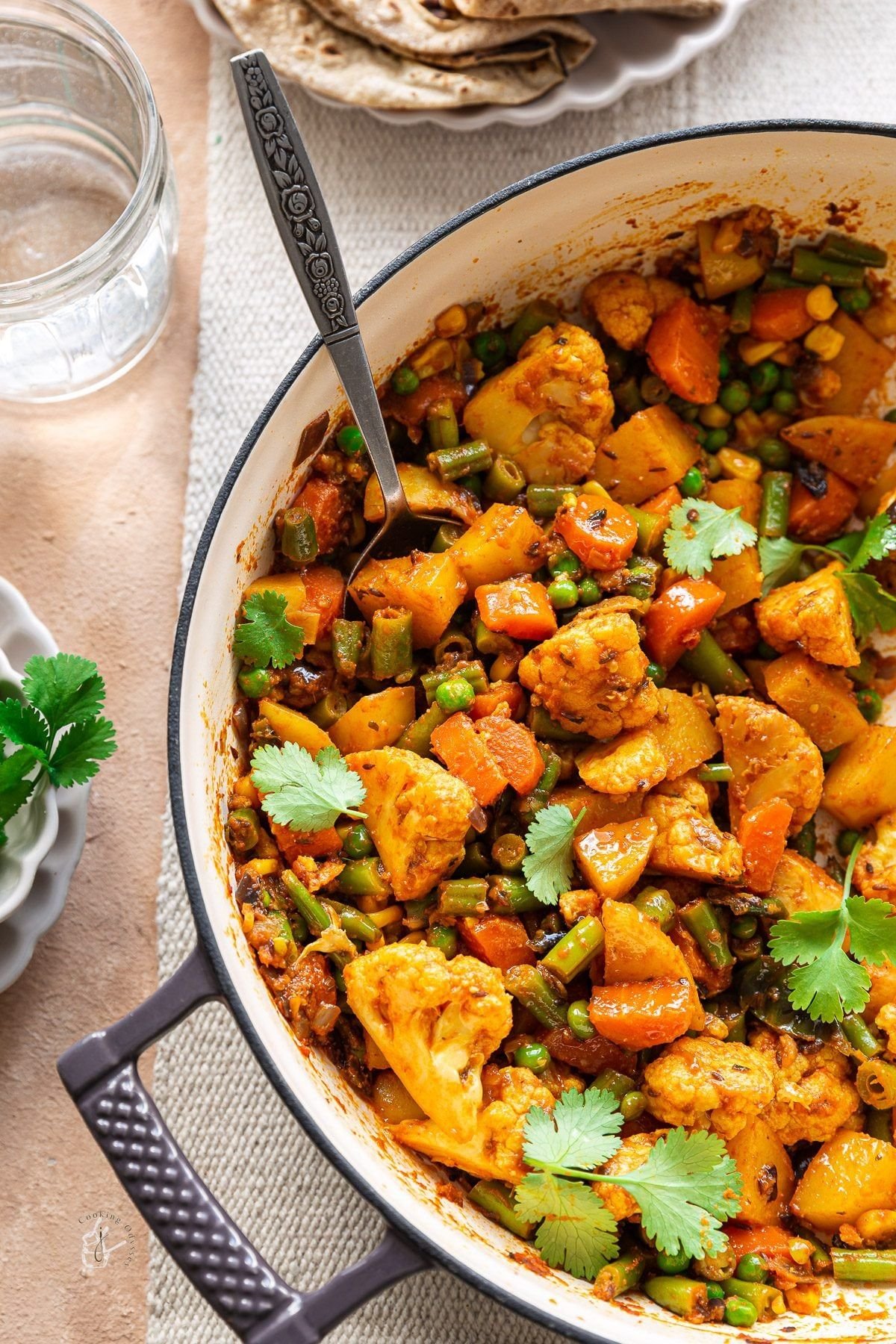
If you cook Pakistani or South Asian food at home, you are closer to the Mediterranean pattern than you might think. Lentils, chickpeas, vegetables, yogurt, and spices are already central to both. Here is how to bridge the two.
Olive Oil vs Mustard Oil
Extra-virgin olive oil is the signature fat of the Mediterranean diet, and the trial evidence (including the PREDIMED olive oil group) is specifically tied to it — about 4 tablespoons a day. That said, mustard oil, traditionally used in parts of Pakistan and India, is also rich in monounsaturated fats and has a reasonable fatty acid profile. A practical approach: use extra-virgin olive oil for salads, dressings, and light cooking, and use mustard oil (or olive oil) for higher-heat desi cooking. Avoid repeatedly reheating any oil until it smokes, and keep vanaspati ghee and partially hydrogenated fats out of the kitchen entirely.
Daal, Chana, and Rajma Fit Perfectly
This is the easiest win. Masoor daal, moong daal, chana (chickpeas), lobia (black-eyed peas), and rajma (kidney beans) are exactly the legumes the Mediterranean pattern emphasises. Cook them with less oil, add plenty of garlic, ginger, tomatoes, and turmeric, and serve with brown rice or whole wheat roti. A simple tarka daal with a teaspoon of olive oil instead of a heavy ghee tarka is a genuine Mediterranean-South Asian crossover dish.
Fish Options in Pakistan
Fresh sea fish can be hard to find or expensive inland, but options exist: Rohu and other river fish are widely available and nutritious, though lower in omega-3s than oily sea fish. Where available, sea fish like pomfret, mackerel (bangra), and sardines are excellent Mediterranean-aligned choices. Canned sardines and canned tuna (in water or olive oil, not brine-heavy) are affordable, practical alternatives. Aim for fish twice a week in whatever form is accessible to you.
Roti vs Bread: Making Smart Swaps
Whole wheat roti or chapati is already a whole grain — it fits the pattern well. The problems are portion size (three or four large rotis add up) and what goes with them (heavy curries, fried foods). Keep 1–2 medium whole wheat rotis per meal, load the plate with sabzi and daal, and treat white naan, paratha made with ghee, and puri as occasional foods — the equivalent of the Mediterranean pattern’s “rarely” category. Brown rice or mixed-grain atta are simple upgrades.
Yogurt, Spices, and Everyday Tweaks
Plain dahi is the South Asian equivalent of Mediterranean yogurt — eat it plain or as raita rather than sweetened lassi. Your spice box is an asset: turmeric, cumin, coriander, black pepper, and red chilli all fit the pattern’s emphasis on flavouring food with plants instead of excess salt. Cut back on salt gradually, use lemon juice and fresh herbs (dhania, podina) generously, and keep mithai and sugary chai as occasional treats rather than daily habits.
Your First-Week Shopping List
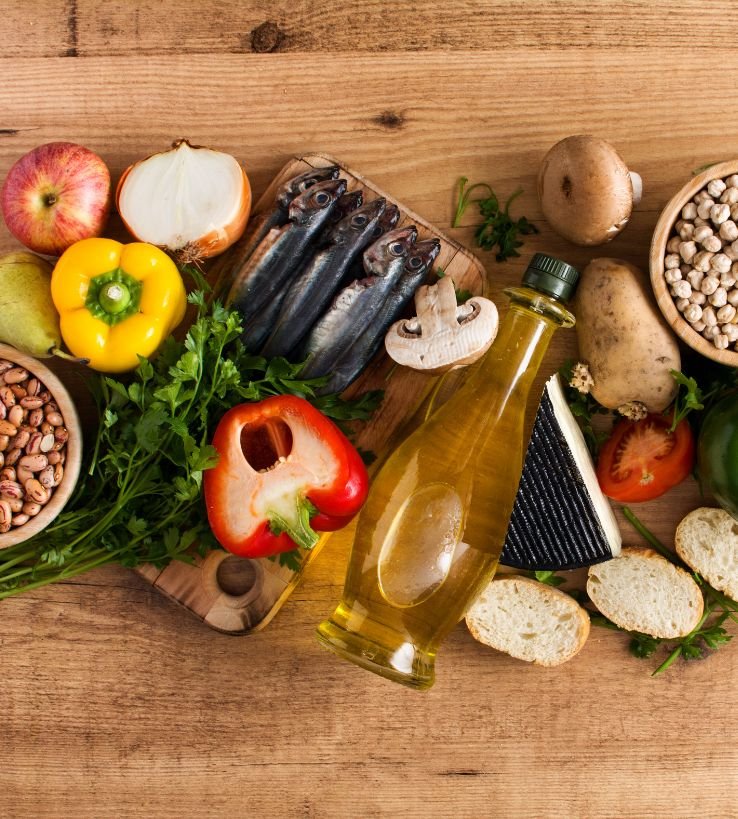
Shop once for the week using this list, and you will be able to cook most of the meal plan above.
Vegetables: tomatoes, cucumbers, red onions, garlic, lemons, spinach or mixed salad leaves, peppers, carrots, celery, courgettes, broccoli, mushrooms, fresh herbs (parsley, mint, basil if available).
Fruit: berries, apples, pears, oranges, bananas.
Whole grains: whole wheat bread and pita, oats, brown rice, quinoa or bulgur, whole wheat pasta.
Proteins: salmon or mackerel fillets, white fish, chicken breast, eggs, canned tuna and sardines.
Legumes: red lentils, chickpeas (dried or canned), white beans or kidney beans.
Dairy: plain Greek yogurt, feta cheese, small piece of parmesan or halloumi.
Fats and flavour: extra-virgin olive oil (one good bottle), mixed nuts (almonds, walnuts), tahini, olives, honey, dried apricots.
Pantry spices: oregano, basil, rosemary or thyme, cumin, black pepper, cinnamon, red pepper flakes.
Buy frozen vegetables and berries when fresh is expensive — they are nutritionally equivalent and reduce waste.
Eating Out the Mediterranean Way
You do not need to avoid restaurants. Use these strategies:
- Scan the menu for grilled, baked, or steamed fish, chicken, or vegetable dishes rather than fried or cream-based ones.
- Start with a salad or vegetable soup instead of bread-heavy appetisers; ask for olive oil and lemon on the side instead of creamy dressings.
- At Italian restaurants, choose tomato-based sauces over creamy ones, and add a side of vegetables.
- At Middle Eastern or Turkish restaurants, you are in luck: grilled kebabs, hummus, tabbouleh, fattoush, and lentil soup are naturally Mediterranean.
- At desi restaurants, order tandoori grilled items, daal, and mixed sabzi with one roti; skip the creamy karahis, fried starters, and sugary drinks most of the time.
- Portions: restaurant servings are often double what you need. Eat half, take the rest home, or share.
7 Common Beginner Mistakes
1. Drowning Everything in Olive Oil
Olive oil is healthy, but it is still calorie-dense — about 120 calories per tablespoon. The trials used around 4 tablespoons a day, measured, not poured freely. Use it generously in cooking and salads, but measure it while you are learning what a tablespoon looks like.
2. Treating It as a Pasta-and-Pizza Diet
“Mediterranean” on a restaurant menu often means refined white flour with lots of cheese. The real pattern is vegetable-heavy with modest portions of whole grains. Pasta can be part of it — whole wheat, with a vegetable-rich sauce — but it is not the centrepiece.
3. Ignoring Portions of Nuts and Cheese
Nuts are nutritious but energy-dense; the evidence-based amount is about 30 grams a day — a small handful, not a bowlful. Cheese is eaten in small amounts as a flavouring (a sprinkle of feta or parmesan), not in thick slices.
4. Keeping Sugary Drinks and Desserts Daily
Swapping to olive oil while still drinking two sodas a day will not deliver the benefits seen in the trials. Water should be your main drink; make sweets and sugary drinks genuinely occasional.
5. Skipping the Fish
Many beginners eat the vegetables and olive oil but never get around to fish twice a week. If fresh fish is inconvenient, keep canned sardines or tuna on hand — they count.
6. Expecting Overnight Results
The PREDIMED benefits built up over years. Blood pressure and cholesterol improvements can appear within weeks to months, but this is a long-term pattern, not a 30-day challenge. Judge it over seasons, not days.
7. Trying to Change Everything on Day One
Overhauling your entire kitchen in one weekend leads to burnout. Start with two or three swaps (olive oil for cooking, fruit for dessert, fish twice a week) and add more over the following weeks. Consistency beats intensity.
Start in 5 Small Steps
You can begin this week without a dramatic overhaul.
- Switch your main cooking fat to extra-virgin olive oil for salads, dressings, and most cooking. Keep one bottle on the counter so you actually use it.
- Add one extra vegetable serving to lunch and dinner. A side salad, extra sabzi, or raw vegetables with hummus — whatever is easiest.
- Eat fish twice this week. Buy it on your next shop: fresh, frozen, or canned all count.
- Make fruit your default dessert for the next seven days. Keep washed, ready-to-eat fruit visible in the kitchen.
- Cook one legume-based meal this week. A lentil soup, chana chaat, or white bean stew — pick the one your family will actually eat.
Once these feel normal — usually two to three weeks — add the next layer: whole grains at every meal, nuts as your daily snack, and red meat down to a few times a month.
Frequently Asked Questions
Is the Mediterranean diet good for weight loss?
It can support gradual, sustainable weight loss, mainly because it is high in fibre and satisfying fats that keep you full. However, it was not designed as a weight-loss diet, and the landmark trials focused on heart health rather than shedding kilos. If weight loss is your goal, you will still need an overall calorie deficit — the Mediterranean pattern simply makes that deficit easier to live with because the food tastes good and you are not constantly hungry. Avoid any version that promises dramatic rapid weight loss; that is not what the evidence supports.
Can I follow the Mediterranean diet as a vegetarian?
Yes, very comfortably. The pattern is already plant-heavy: vegetables, fruit, legumes, whole grains, nuts, and olive oil form its base. Vegetarians can get protein from lentils, chickpeas, beans, eggs, yogurt, and cheese. Vegans can follow it too, with attention to vitamin B12 (consider a supplement or fortified foods, and discuss this with a healthcare professional) and omega-3s from flaxseed, chia seeds, and walnuts.
How much olive oil should I use per day?
The PREDIMED trial’s olive oil group consumed roughly 4 tablespoons (about 60 ml) of extra-virgin olive oil per day, and that is a reasonable target. Spread it across cooking, salads, and drizzling over finished dishes. Choose extra-virgin rather than refined “light” olive oil, since the extra-virgin grade retains the polyphenols thought to contribute to the health effects. Store it away from heat and light.
Is the Mediterranean diet expensive?
It can be, if you buy imported speciality products — but it does not have to be. The cheapest foods in the pattern are also its foundation: lentils, chickpeas, seasonal vegetables, oats, brown rice, and eggs. Save money by buying frozen fish and vegetables, choosing seasonal produce, buying nuts in bulk, and cooking legumes from dried rather than canned. In Pakistan, daal, chana, seasonal sabzi, and local fish keep it very affordable.
Do I need to give up bread and rice?
No. Whole grains are a core part of the Mediterranean diet — bread, rice, and pasta all belong. The key is choosing whole grain versions most of the time and keeping portions moderate: roughly a quarter of your plate. Whole wheat roti, brown rice, oats, and whole wheat bread all fit. What the pattern limits is not grains themselves but refined, sugary products like pastries, biscuits, and sweetened cereals eaten daily.
Conclusion
The Mediterranean diet has earned its reputation the hard way: through large, rigorous trials showing real reductions in heart disease and diabetes, not through celebrity endorsements or dramatic before-and-after photos. It works because it is built on foods humans have enjoyed for centuries — vegetables, fruit, beans, whole grains, fish, nuts, and olive oil — and because it is flexible enough to fit a Greek village, an American suburb, or a Pakistani household.
Start small, be consistent, and give it time. Swap your cooking fat, add more vegetables, eat fish twice a week, and let the rest follow. Your heart, your blood sugar, and your taste buds will all benefit.
If you would like personalised guidance — for example, adapting this pattern to diabetes, high blood pressure, or cholesterol medication, or building a plan around your family’s South Asian meals — book an appointment for one-to-one nutrition counselling and get a plan built around your life.
Keep Reading
- Heart Health Nutrition: The Complete Guide to a Healthy Heart
- Mediterranean Diet for Heart Health: The Evidence-Based Guide
- Healthy Eating Habits for Beginners: A Simple Guide
- Health Disclaimer