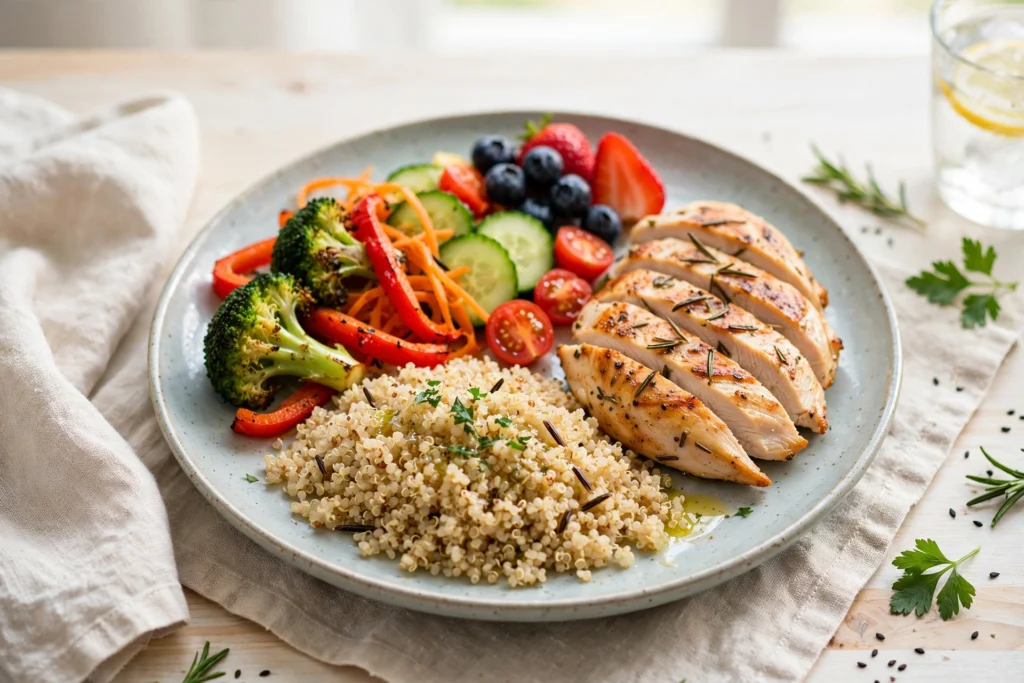
This guide to foods for bone density after 60 explains how calcium, vitamin D, vitamin K2, magnesium, and protein work together to keep bones strong, with South Asian meal ideas for adults over 60.
After the age of 60, bone loss quietly accelerates. Many adults notice nothing until a simple fall leads to a fracture of the wrist, hip, or spine — injuries that can take months to heal and sometimes permanently reduce independence. The good news is that nutrition plays a genuine, evidence-supported role in slowing this decline. While diet cannot reverse advanced osteoporosis on its own, the right foods can supply the building blocks your skeleton needs to stay as dense and resilient as possible.
In this guide, you will learn:
– Why bone density declines after 60 and who is most at risk
– How calcium, vitamin D, vitamin K2, magnesium, and protein work together for bone health
– The best calcium-rich foods, including dairy and South Asian staples like dahi, lassi, ragi, til, and sarson ka saag
– Which foods provide vitamin D, vitamin K2, and magnesium, and how to get enough from food and sunlight
– Why protein matters for bone — and how much older adults actually need
– Foods and habits that may weaken bones (excess salt, alcohol, cola, very low-calorie diets)
– The role of weight-bearing exercise, balance training, and fall prevention
– When to ask your doctor about a DEXA scan and bone medications
– A sample one-day meal plan for stronger bones
– Answers to five frequently asked questions about bone density after 60
Medical disclaimer: This article is for education only and is not medical advice. Bone health is a medical matter — speak to your doctor before starting supplements, changing medications, or beginning a new exercise programme, especially if you have osteoporosis, kidney disease, or take regular prescription medicines.
Why Bone Density Declines After 60
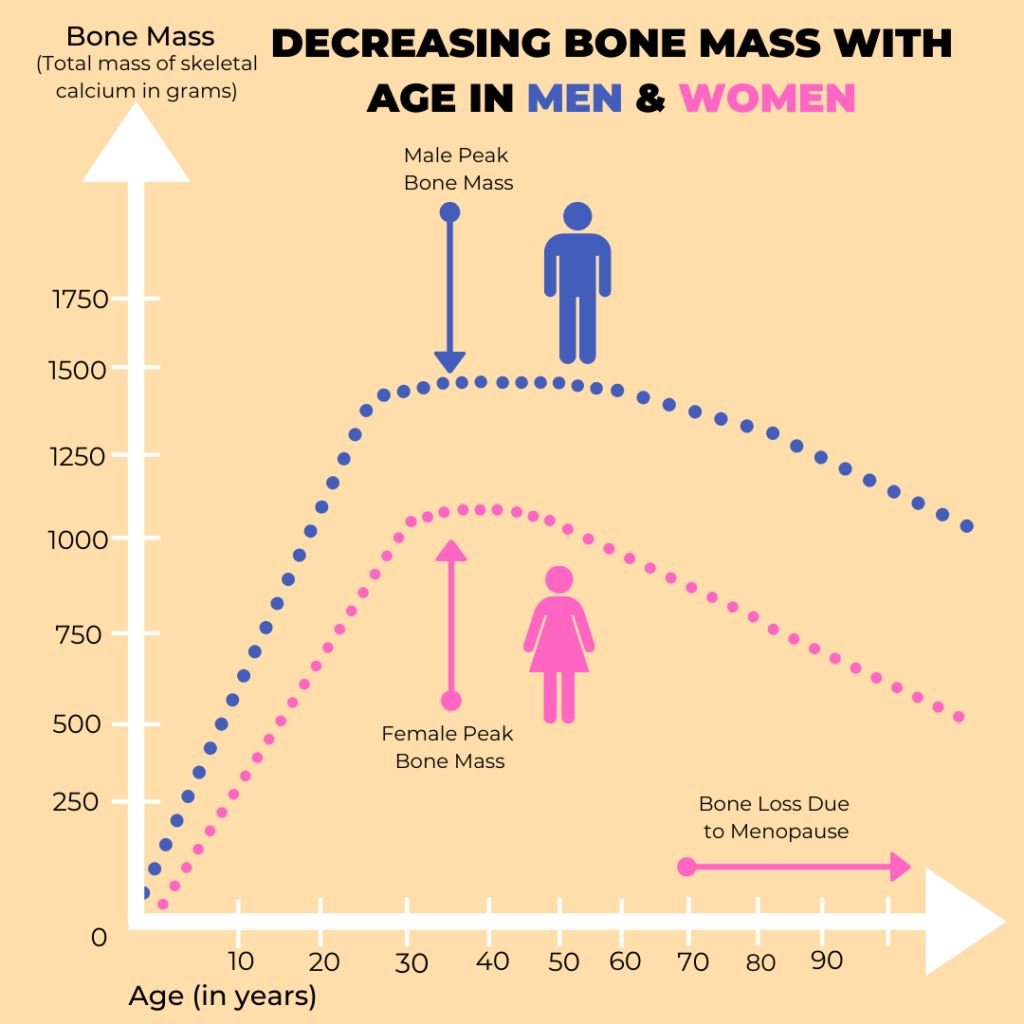
Bone is living tissue, constantly being broken down and rebuilt. Until about age 30, the body builds more bone than it removes. After that, the balance slowly tips the other way, and around the age of 60 the pace of loss becomes significant — particularly for women after menopause, when oestrogen (a hormone that protects bone) drops sharply.
Osteoporosis, literally “porous bone”, develops when bone mineral density falls far enough that bones become fragile. The World Health Organization estimates that osteoporosis affects a large proportion of adults over 60, and hip fractures in older adults carry serious consequences: research suggests that a substantial share of people who fracture a hip never fully regain their previous mobility.
Several factors raise the risk beyond age alone:
- Family history of hip fracture or osteoporosis
- Small body frame and low body weight, which means less bone mass to begin with
- Early menopause or long-term use of certain medicines (more on these below)
- Smoking and heavy alcohol use, both linked to lower bone density
- Prolonged inactivity, since bones need mechanical loading to stay strong
- Chronic low intake of calcium, vitamin D, and protein over many years
In South Asian populations, additional risk factors are common: many adults have limited direct sunlight exposure (staying indoors during peak heat, covering skin for cultural or sun-protection reasons), dairy intake often falls short of recommendations, and vitamin D deficiency is widespread even in sunny countries — a well-documented paradox in Pakistan and India, where studies repeatedly find a majority of adults with low vitamin D levels despite abundant sunshine.
The Bone-Building Nutrient Team: How They Work Together
Bones are not made of calcium alone. Think of bone health as a team effort, where several nutrients each play a distinct position. Research suggests that focusing on just one nutrient — most famously calcium — while ignoring the others may not deliver the expected benefit.
Calcium: The Primary Building Block
About 99% of the body’s calcium sits in the bones and teeth, where it forms hydroxyapatite crystals that give bone its hardness. Adults over 60 generally need around 1,000–1,200 mg of calcium per day. When dietary calcium runs short, the body draws calcium from bone to keep blood levels stable — a slow, silent drain on bone density.
Vitamin D: The Gatekeeper of Calcium Absorption
Calcium is useless to bones if it is not absorbed. Vitamin D controls how much calcium the gut absorbs — without enough vitamin D, absorption can fall to as little as 10–15% of intake, whereas adequate vitamin D may raise absorption to 30–40%. This is why calcium and vitamin D are so often discussed together. The main natural source of vitamin D is sunlight on skin, with food playing a supporting role.
Vitamin K2: The Traffic Controller
Vitamin K2 activates proteins (osteocalcin and matrix Gla protein) that direct calcium into bone and help keep it out of soft tissues such as arteries. Research on K2 and bone is still evolving, but observational studies suggest that people with higher K2 intake may have better bone mineral density. Fermented foods and some animal products are the main dietary sources.
Magnesium: The Quiet Partner
Roughly 60% of the body’s magnesium is stored in bone. Magnesium helps convert vitamin D into its active form and is involved in the structural development of bone. Low magnesium intake is common in older adults and may contribute to poorer bone outcomes.
Protein: The Scaffold
Bone is about 50% protein by volume (mostly collagen), which forms the flexible scaffold that minerals attach to. Older adults often eat too little protein, yet adequate protein intake is associated with better bone density and faster recovery after fractures. Concerns that protein “leaches calcium” are not supported by modern research when calcium intake is adequate.
The Synergy
These nutrients amplify each other: vitamin D improves calcium absorption, magnesium activates vitamin D, K2 directs calcium to bone, and protein provides the framework. A diet that supplies all five — alongside weight-bearing activity — is far more powerful than any single nutrient taken in isolation.
Calcium-Rich Foods: The Foundation
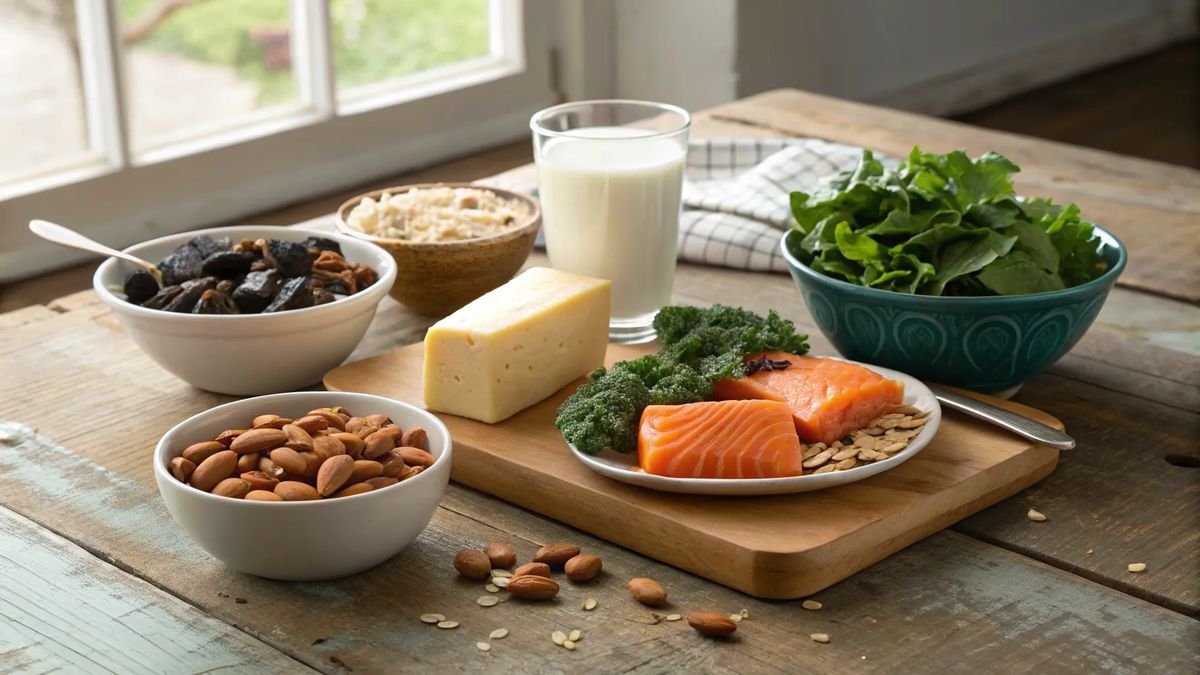
Food should be the first source of calcium for most people. Supplements have a place for those who cannot meet needs from food, but research suggests that calcium from food is preferable when possible, and excessive supplement doses have raised questions about cardiovascular effects in some studies.
Dairy: Doodh, Dahi, Lassi, and Paneer
Dairy is the most concentrated and bioavailable calcium source in most diets. A cup (about 240 ml) of milk (doodh) provides roughly 280–300 mg of calcium, and the calcium in dairy is absorbed at about 30% efficiency — among the highest of any food.
Practical South Asian options:
- Dahi (yogurt): A cup of plain dahi provides around 300 mg of calcium plus gut-friendly probiotics and protein. Choose plain dahi over sweetened varieties to keep added sugar low.
- Lassi: A traditional lassi made from dahi delivers similar calcium. Keep it lightly salted or unsweetened rather than loaded with sugar.
- Paneer: About 100 g of paneer supplies roughly 200–250 mg of calcium along with quality protein.
- Milk in chai: The milk added to doodh patti or chai counts — but note that very strong tea consumed in large amounts may slightly reduce calcium absorption from that meal, so moderation is wise.
For those who are lactose intolerant, hard aged cheeses and dahi are often better tolerated because fermentation reduces lactose. Lactose-free milk is another option with identical calcium content.
Leafy Greens: Sarson ka Saag, Methi, and Beyond
Leafy greens supply calcium, magnesium, vitamin K, and other bone-supportive nutrients. Sarson ka saag (mustard greens) and methi (fenugreek leaves) are excellent traditional choices. However, bioavailability matters enormously here: spinach contains plenty of calcium, but only about 5% is absorbed because spinach is high in oxalates, which bind calcium and block its uptake. Mustard greens, turnip greens, and kale have lower oxalate levels and considerably better calcium absorption than spinach — so favour sarson and methi over relying on spinach alone for calcium.
Ragi (Finger Millet): A Desi Calcium Powerhouse
Ragi (finger millet) deserves special mention: it contains roughly 340–350 mg of calcium per 100 g of dry grain — far more than wheat or rice. Ragi porridge (ragi ki kheer or ragi malt), ragi rotis, and ragi dosa are traditional ways to include it. For older adults in South Asia, swapping some wheat flour for ragi flour in rotis is a simple, culturally familiar upgrade.
Til (Sesame Seeds) and Other Seeds
Til (sesame seeds) are exceptionally calcium-dense: a tablespoon provides around 90 mg of calcium, and tahini (sesame paste) is similar. Sprinkle til over salads, add it to chutneys, or use it in til ke ladoo (in modest portions, given the sugar). Chia seeds, almonds, and flaxseeds also contribute calcium and magnesium.
Small Fish Eaten With Bones
Small fish eaten whole — with their soft, edible bones — are among the best non-dairy calcium sources. Options familiar in South Asia include small river fish, anchovies (kati machli), and sardines. Canned sardines with bones provide around 300–400 mg of calcium per serving plus vitamin D and omega-3 fats. If small whole fish are part of your local food culture, keeping them in the weekly rotation is a genuinely effective bone-health habit.
Fortified Foods and Other Sources
Calcium-fortified milk, fortified soy or oat milk, fortified orange juice, and tofu set with calcium sulphate can all contribute meaningfully. Tofu made with calcium salts provides roughly 300–400 mg per half-cup — a useful option for those who avoid dairy.
Vitamin D: Food Sources and the Sunlight Question
Vitamin D deserves its own section because deficiency is so common — and so consequential for bones.
Food Sources of Vitamin D
Food alone rarely supplies enough vitamin D, but these sources help:
- Fatty fish: Salmon, mackerel (bangda), and sardines are the richest food sources. Two servings of oily fish per week is a widely recommended target.
- Egg yolks: One yolk provides a modest amount; eggs from hens raised outdoors may contain more.
- Mushrooms exposed to sunlight: UV-exposed mushrooms (including some dried shiitake) contain meaningful vitamin D2.
- Fortified foods: Vitamin D-fortified milk, yogurt, and cereals are valuable where available.
- Cod liver oil: Traditional but potent — a teaspoon can meet the daily need, though vitamin A content means doses should stay modest.
Sunlight Exposure Habits
The skin makes vitamin D when exposed to UVB rays. For most South Asian adults, 15–30 minutes of midday sun on the face, arms, and hands, several times a week, may support vitamin D levels — though the exact need varies with skin tone (darker skin needs longer exposure), age (older skin makes vitamin D less efficiently), season, and latitude. Practical barriers are real: extreme summer heat pushes people indoors, and many women cover most of their skin outdoors. If getting regular sun is difficult, a vitamin D blood test and a supplement (under medical guidance) may be the pragmatic answer.
Adults over 60 are generally advised to aim for around 800 IU (20 mcg) of vitamin D daily from all sources combined, though your doctor may recommend more if you are deficient.
Vitamin K2 and Magnesium: The Overlooked Duo
Getting Enough Vitamin K2
Vitamin K2 is found in:
- Fermented dairy: Hard cheeses, aged cheeses, and curd/dahi contain modest amounts of K2 produced by bacterial fermentation.
- Natto: The richest known source, though uncommon in South Asian diets.
- Egg yolks and meat: Provide smaller amounts.
- Desi ghee: Contains small quantities of K2, though it should be used in moderation due to saturated fat.
Note that vitamin K1 (from leafy greens like sarson and methi) is abundant in traditional diets; the body converts a small fraction of K1 to K2, but dietary K2 sources remain valuable.
Magnesium-Rich Foods
Good sources include:
- Nuts and seeds: Almonds, peanuts, pumpkin seeds, and til.
- Whole grains: Ragi, brown rice, and whole wheat.
- Legumes: Lentils (dal), chickpeas (chana), and kidney beans (rajma).
- Leafy greens: Methi, sarson, and spinach (magnesium absorption is not blocked by oxalates the way calcium is).
- Bananas and dates: Modest magnesium plus potassium, which may also support bone.
Most adults need around 300–420 mg of magnesium daily; older adults frequently fall short, so including nuts, seeds, and legumes daily is worthwhile.
Protein for Bone Strength After 60
How Much Protein Do Older Adults Need?
Older adults need more protein than younger adults to maintain muscle and bone — research suggests around 1.0–1.2 g per kilogram of body weight per day, compared with the standard 0.8 g/kg. For a 65 kg adult, that is roughly 65–78 g of protein daily. Spreading protein across meals (rather than loading it all at dinner) appears to support muscle maintenance better.
Best Protein Sources for Bone Health
- Dairy: Dahi, milk, paneer, and lassi deliver protein alongside calcium — a natural bone-health combination.
- Eggs: Complete protein plus vitamin D in the yolk.
- Fish and chicken: Lean, high-quality protein; small fish add calcium too.
- Legumes: Dal, chana, rajma, and soybeans provide protein plus magnesium and potassium. Combining dal with rice or roti improves the amino acid profile.
- Nuts and seeds: Almonds, peanuts, and til contribute protein with healthy fats and minerals.
Adequate protein also protects against sarcopenia (age-related muscle loss), which matters for bones because strong muscles improve balance and reduce fall risk — the immediate cause of most fractures.
Foods and Habits That May Weaken Bones
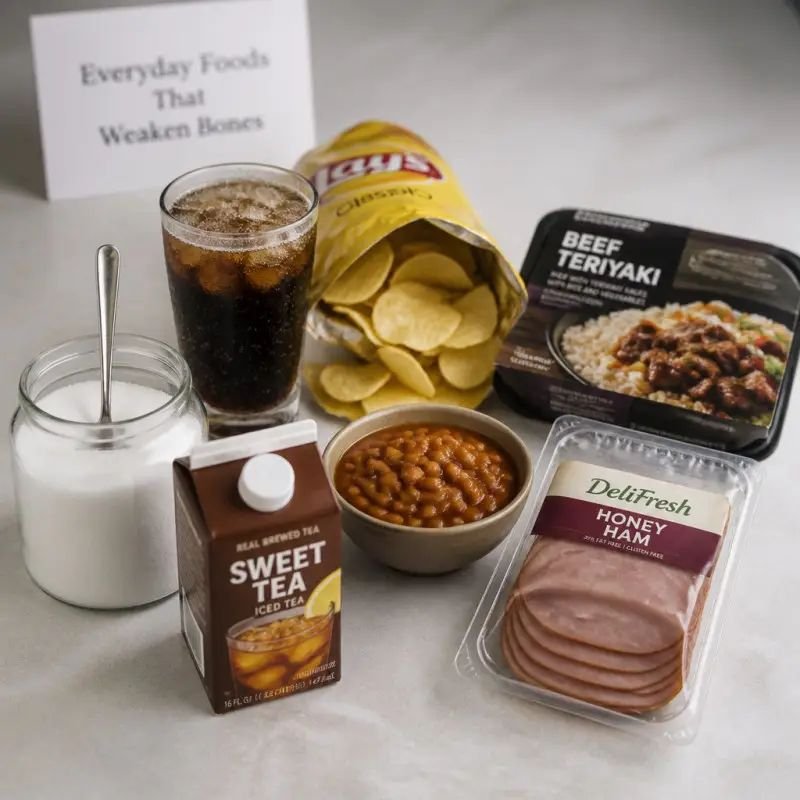
Bone health is not only about what you add; some dietary patterns may work against you:
- Excess salt: Very high sodium intake increases calcium loss in urine. Traditional diets with heavy salt in pickles (achar), papad, and processed snacks deserve moderation.
- Excess alcohol: Heavy drinking interferes with calcium absorption and bone formation, and raises fall risk. Keeping alcohol minimal or avoiding it is the safest choice.
- Cola and excessive caffeine: Some studies link high cola consumption to lower bone density (possibly due to phosphoric acid and displacement of milk). Moderate tea and coffee (1–3 cups daily) appear fine for most people.
- Very low-calorie or crash diets: Rapid weight loss accelerates bone loss — a real concern for older adults dieting without guidance.
- Smoking: A well-established risk factor for osteoporosis; quitting benefits bones at any age.
- Extreme vitamin A from supplements: Excessive retinol (not beta-carotene from foods) has been linked to weaker bones. Food sources of vitamin A are not a concern.
Weight-Bearing Exercise: Food’s Essential Partner
No diet can fully compensate for inactivity. Bones respond to mechanical stress by becoming denser — a principle called Wolff’s law. After 60, the most bone-protective activities include:
- Walking: Brisk walking for 30 minutes most days is the accessible foundation.
- Dancing, stair climbing, and low-impact aerobics: All load the skeleton rhythmically.
- Resistance training: Light weights, resistance bands, or bodyweight exercises (wall push-ups, chair squats) 2–3 times weekly help both bone and muscle.
- Balance training: Tai chi, yoga, and simple heel-to-toe walking reduce fall risk — research suggests tai chi in particular may cut fall rates meaningfully in older adults.
- Posture and back exercises: Gentle extension exercises support spinal bone health.
Start gradually, especially if you have diagnosed osteoporosis — high-impact or twisting movements (such as forceful spinal twists or toe-touch exercises) may be unsafe with very fragile vertebrae. A physiotherapist can tailor a safe programme.
Fall Prevention: Protecting Bones From the Inside Out
Most fractures after 60 happen because of a fall, not because bones spontaneously break. Nutrition and exercise build stronger bones, but preventing falls closes the loop:
- Keep vitamin D adequate: Deficiency is linked to muscle weakness, which raises fall risk.
- Review medicines with your doctor: Some drugs cause dizziness or low blood pressure on standing.
- Strengthen legs and practise balance as described above.
- Make the home safer: Good lighting, grab bars in bathrooms, non-slip mats, and clearing clutter.
- Check vision regularly and wear proper footwear — avoid loose slippers on smooth floors.
DEXA Scans: Knowing Your Bone Density
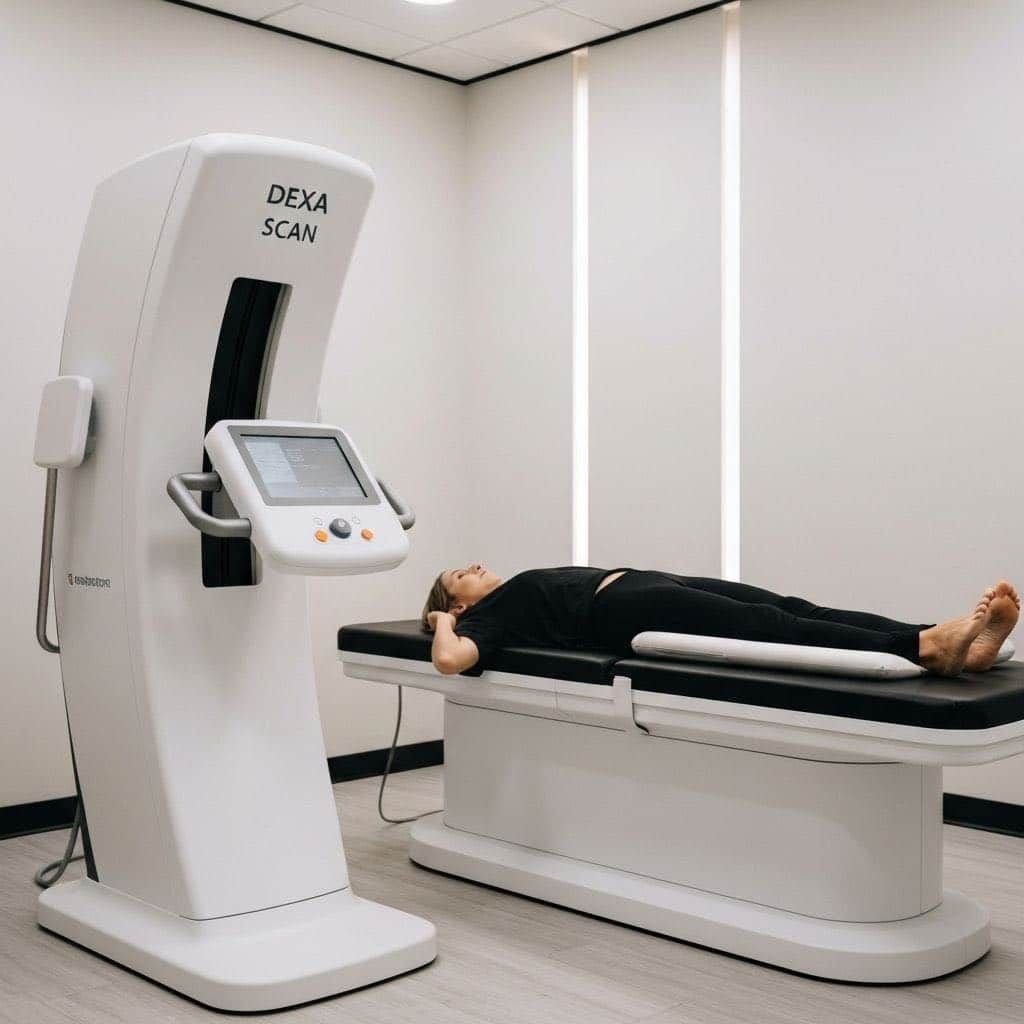
You cannot feel bone loss until a fracture occurs, which is why measurement matters. A DEXA (dual-energy X-ray absorptiometry) scan is the standard test for bone mineral density — quick, painless, and low-radiation.
- Who should consider one: Guidelines commonly suggest bone density testing for women over 65, men over 70, and younger adults with risk factors (fragility fracture, long-term steroid use, low body weight, family history).
- What the T-score means: A T-score of −1.0 or above is normal; between −1.0 and −2.5 indicates low bone mass (osteopenia); −2.5 or below indicates osteoporosis.
- How often: If results are normal, retesting every few years may be advised; your doctor will guide the interval.
In Pakistan, DEXA scans are available at major hospitals and diagnostic centres in larger cities; ask your doctor for a referral if you have risk factors.
Medication Cautions: Drugs That Affect Bone
Some common medicines can weaken bones with long-term use. Never stop a prescribed medicine on your own — but do discuss bone monitoring with your doctor if you take:
- Corticosteroids (such as prednisolone): Among the most significant drug causes of bone loss; even moderate doses over months can reduce density. Doctors may recommend calcium, vitamin D, and sometimes bone-protective treatment alongside steroids.
- Proton pump inhibitors (PPIs) (such as omeprazole): Long-term use has been associated with higher fracture risk, possibly through reduced calcium absorption.
- Certain diabetes, thyroid, epilepsy, and antidepressant medicines may also affect bone — worth a conversation with your doctor or pharmacist.
If you take any of these long-term, a DEXA scan and a nutrition review are sensible steps.
A Sample One-Day Bone-Healthy Meal Plan (South Asian Style)
Here is how the principles above can look on a plate:
- Breakfast: Ragi porridge made with milk, topped with chopped almonds and dates; one boiled egg.
- Mid-morning: A glass of lassi (lightly salted) and a small banana.
- Lunch: 2 ragi-wheat rotis, sarson ka saag cooked with a little desi ghee, a bowl of masoor dal, and a cup of dahi.
- Evening: A handful of roasted peanuts and til; a cup of doodh patti (moderate strength).
- Dinner: Grilled mackerel (bangda) or chicken, mixed vegetable sabzi with methi, brown rice, and a small bowl of dahi.
This pattern delivers calcium from multiple sources, protein at every meal, magnesium from legumes and nuts, vitamin K from greens, and vitamin D from fish, eggs, and (hopefully) some midday sun.
Frequently Asked Questions
Can food alone reverse osteoporosis after 60?
Food alone cannot reverse established osteoporosis, but nutrition plays an important supporting role. Research suggests that adequate calcium, vitamin D, protein, and other bone-supportive nutrients may slow further bone loss and support the effectiveness of medical treatment. If you have diagnosed osteoporosis, diet should complement — not replace — your doctor’s treatment plan, which may include medication and supervised exercise.
How much calcium do I need after 60, and is dairy necessary?
Adults over 60 generally need about 1,000–1,200 mg of calcium daily. Dairy is the most efficient source, but it is not mandatory: ragi, til, small fish with bones, calcium-set tofu, fortified foods, and low-oxalate greens can collectively meet needs. What matters is the total daily intake and the mix of nutrients, not any single food.
Should I take calcium supplements?
If your diet consistently falls short, a supplement may help — but discuss it with your doctor first, especially if you have kidney stones, kidney disease, or heart concerns. Research suggests food-first calcium is preferable, and supplements should fill the gap rather than overshoot it. Vitamin D status should usually be checked alongside.
Does the calcium in spinach count toward my daily intake?
Only a little. Spinach is high in oxalates, which bind calcium so tightly that only about 5% is absorbed, compared with roughly 30% from dairy. Spinach remains a nutritious vegetable, but for bone-building calcium, favour low-oxalate greens such as sarson (mustard greens), methi, or kale.
Is it too late to improve bone density after 60?
It is not too late to make a difference. While rebuilding large amounts of lost bone through diet alone is unlikely at this age, research suggests that good nutrition, weight-bearing exercise, fall prevention, and appropriate medical treatment together may slow loss, preserve strength and balance, and meaningfully reduce fracture risk. Every decade — including the 60s, 70s, and beyond — benefits from these steps.
Conclusion: Small Daily Choices, Stronger Bones
Protecting bone density after 60 is not about a single superfood — it is about a pattern: calcium-rich foods like doodh, dahi, ragi, til, and small fish with bones; vitamin D from fish, eggs, fortified foods, and sensible sunlight; magnesium and vitamin K from greens, legumes, and nuts; enough protein at every meal; regular walking and strength work; fewer falls; and timely medical checks like DEXA scans when risk factors apply. These habits work quietly, compounding over months and years into a skeleton better able to carry you through an active later life.
If you would like personalised guidance — a diet review, a bone-friendly meal plan built around your food preferences and health conditions, or help interpreting your DEXA results — consider speaking with a qualified nutritionist. Book an appointment with our team to get a plan tailored to your needs.
Keep Reading
For a deeper look at calcium, the nutrient this guide covers most, read Calcium-Rich Foods for Strong Bones next.
References
NIH Office of Dietary Supplements. Calcium – Health Professional Fact Sheet. Updated June 22, 2026.