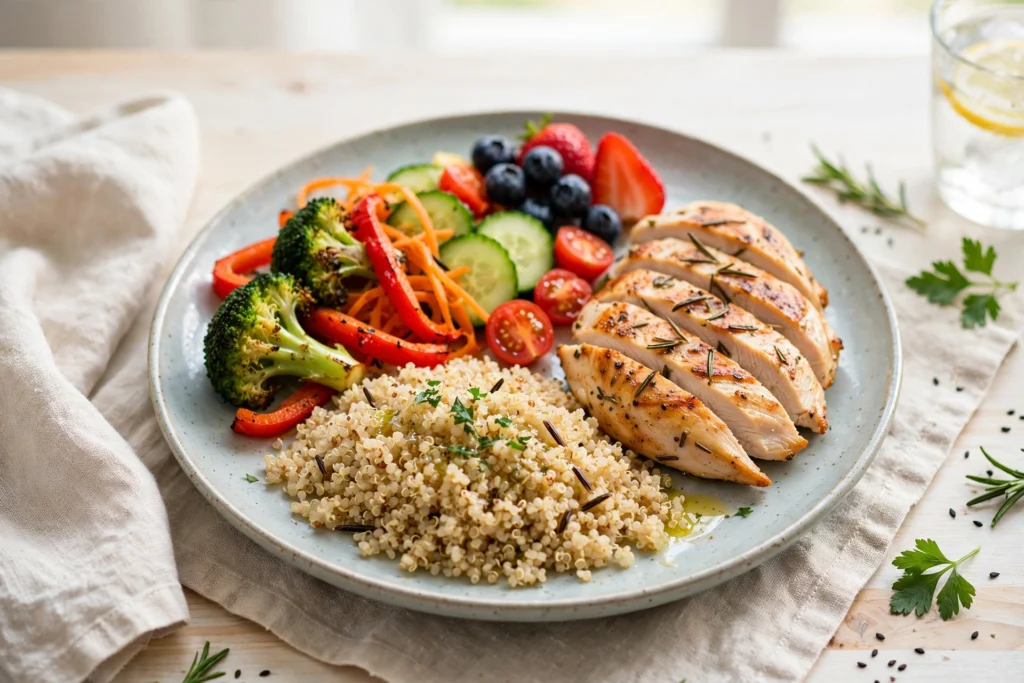
Winter foods can make the cold months easier, warmer, and more nourishing. When the days shorten, the temperature falls, and colds and flu start to circulate, many people in the United States and the United Kingdom begin to wonder whether their diet can help their immune system do its normal job. The honest answer is encouraging, but it is also measured. No single meal, juice, or supplement can make you immune to infection. What food can do is supply the vitamins, minerals, protein, fibre, and plant compounds that immune cells need to develop, communicate, and respond in a balanced way. When those supplies run low, your defences are more likely to struggle. When they are steady, your body is in a much better position to cope.
This guide focuses on practical winter eating in the US and the UK. It looks at foods that are widely available in supermarkets, grocery stores, and farmers markets during the colder months, and at simple ways to build them into everyday meals. It also explains why winter can be a difficult season for immunity, which seasonal produce is worth choosing, and which foods are best kept occasional rather than everyday. You will find a clear table of winter foods and their key nutrients, a detailed look at the strongest choices, a short seasonal produce guide, ideas for a balanced winter day, and answers to common questions.
Before we go further, it is worth setting the right expectation. Nutrition supports normal immune function. It does not replace vaccination, hand hygiene, sleep, or medical care. If you are frequently unwell, take regular medication, live with a condition that affects immunity, or are pregnant, talk to a clinician or a registered dietitian before making major changes or starting supplements. The rest of this guide is general information, not personal medical advice.
Why Does Immunity Dip in Winter?
Winter creates a combination of conditions that can put extra pressure on the immune system. People spend more time indoors, often in close contact with others, which makes it easier for respiratory viruses to spread. Cold, dry air can dry out the lining of the nose and throat, and that lining is one of your first defences. When it is dry or irritated, it may be less effective at trapping and clearing germs. Shorter days also change daily routines. Many people walk less, sleep less well, and feel lower in mood, and each of those changes can influence immune function over time.
Sunlight is another important winter factor, especially in northern latitudes. In much of the UK, and in the northern United States, sunlight from about October to March is too weak for the skin to make much vitamin D. Vitamin D is involved in normal immune function, and low levels are common in winter. That does not mean everyone needs a high-dose supplement, but it does explain why oily fish, eggs, fortified milk, fortified plant drinks, and fortified spreads appear so often in winter nutrition advice. In the UK, health authorities generally suggest that many adults consider a daily 10 microgram vitamin D supplement during autumn and winter. In the US, dietary guidance also points to vitamin D as a nutrient of concern for many people. If you are unsure about supplements, ask a pharmacist or clinician, particularly if you take other medicines.
Diet itself often changes in winter. Fresh salads and lighter meals may be replaced by heavier comfort food, takeaways, and sweet treats. Those foods are not forbidden, and comfort matters, but a pattern that is low in fruit, vegetables, whole grains, and protein can leave gaps. Vitamin C, vitamin A, zinc, selenium, iron, folate, and vitamin B12 all play roles in immune function, and they come mainly from a varied diet rather than from one hero ingredient. When meals become less varied, some of those nutrients can fall short, especially for people who skip meals, eat a very restricted diet, or rely heavily on processed foods.
Stress and sleep deserve attention too. The holiday season, shorter daylight hours, work pressure, and disrupted routines can raise stress and disturb sleep. Both chronic stress and short sleep are linked with a weaker response to infection and a weaker response to vaccination. Food cannot fix a poor sleep routine on its own, but regular meals, enough protein, fibre-rich foods, and a limit on late-night alcohol and caffeine can support steadier energy and better sleep. In other words, winter immunity is not only about what you add to your plate. It is about the whole pattern: daylight, movement, rest, hygiene, and a varied, adequate diet.
What Are the Best Winter Foods for Immunity?
The strongest winter approach is not to chase exotic superfoods. It is to choose foods that are in season, affordable, and easy to cook with, and to eat them regularly. Citrus fruit, root vegetables, winter greens, beans, lentils, oats, eggs, fish, yogurt, nuts, and seeds are all useful because they combine nutrients with fibre and protein. Frozen fruit and vegetables are also valuable in winter. They are usually frozen soon after harvest, they keep well, they reduce waste, and they make it easier to eat vegetables on busy days when fresh produce runs out.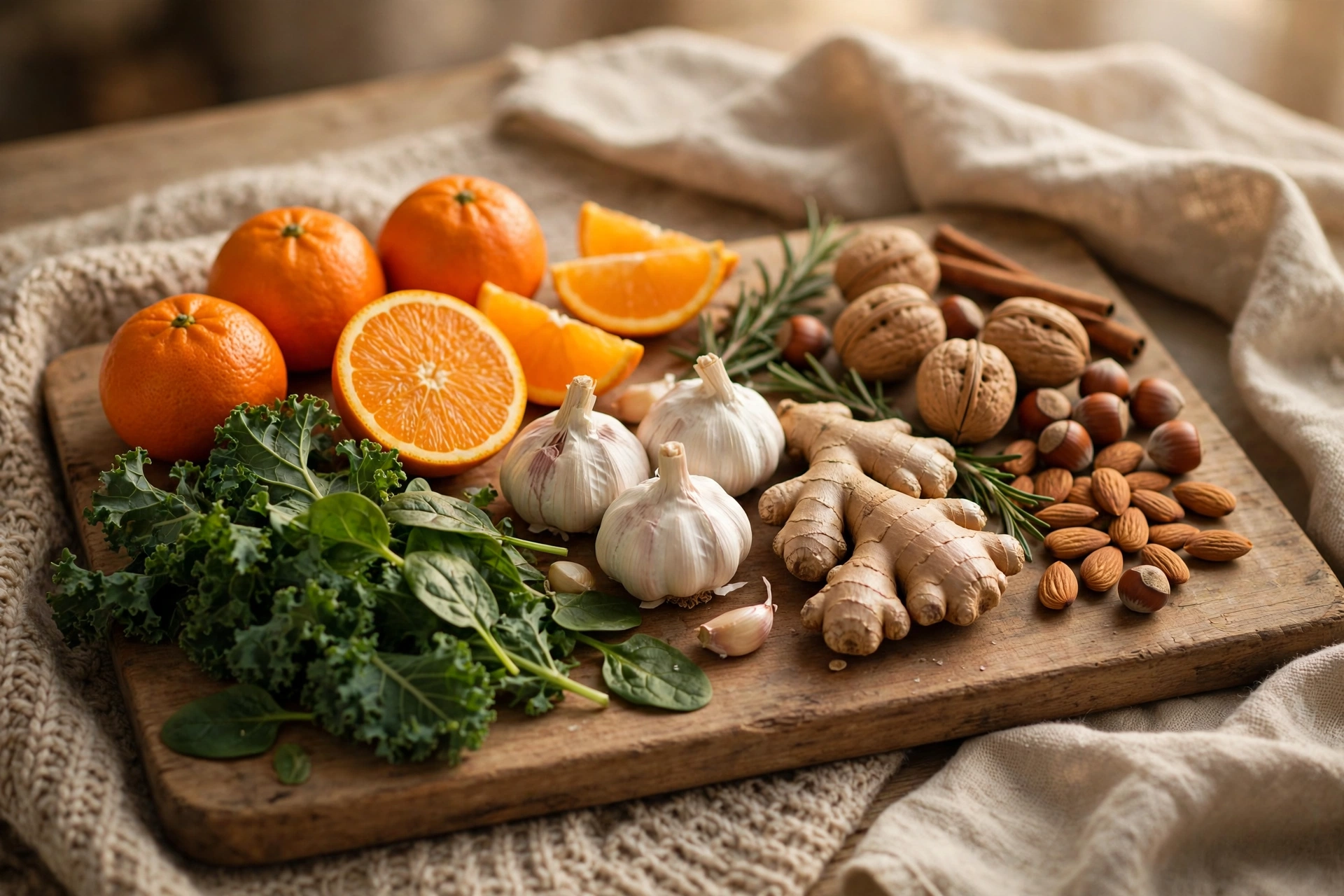
The table below gives a quick overview. After the table, each group is explained in more detail, with practical US and UK shopping and cooking ideas.
| Food | Key nutrient | Why it helps in winter |
|---|---|---|
| Oranges, clementines, and grapefruit | Vitamin C, folate | Supports immune cells and helps maintain skin and mucosal barriers. |
| Broccoli and Brussels sprouts | Vitamin C, vitamin K, folate, fibre | Provide vitamin C and fibre in the coldest months, when fresh choices narrow. |
| Carrots, sweet potatoes, and squash | Beta-carotene (vitamin A) | Vitamin A supports the lining of the airways and gut and normal immune function. |
| Dark leafy greens | Folate, vitamin C, vitamin K, iron | Supply several immune-related nutrients in one low-cost, versatile group. |
| Salmon, sardines, and mackerel | Vitamin D, omega-3 fats, protein, selenium | Provide vitamin D when sunlight is weak, plus protein for immune cells. |
| Eggs | Vitamin D, vitamin B12, protein, selenium | An affordable, everyday source of protein and several micronutrients. |
| Lentils, chickpeas, and black beans | Zinc, iron, folate, fibre, protein | Support immune cell development and gut health, and keep meals filling. |
| Yogurt and kefir | Protein, calcium, live cultures | Provide protein and fermented foods that support the gut-immune connection. |
| Pumpkin seeds, sunflower seeds, and walnuts | Zinc, selenium, vitamin E, healthy fats | Offer concentrated minerals in small, portable portions. |
| Garlic, onions, and leeks | Prebiotic fibre, sulphur compounds | Feed beneficial gut microbes and add flavour without extra salt or sugar. |
| Oats and barley | Beta-glucan fibre, B vitamins, iron | Support gut health and steady energy on cold mornings. |
| Mushrooms | Selenium, B vitamins, vitamin D when exposed to sunlight or fortified | Add savoury depth to winter dishes and a useful range of nutrients. |
How Can Winter Foods Support the Immune System in the US and UK?
Winter foods support immunity mainly by covering the basics well. Protein provides the building blocks for immune cells and antibodies. Vitamin C helps immune cells function and supports the skin and mucosal barriers. Vitamin A supports the lining of the respiratory and digestive tracts. Vitamin D helps regulate immune responses. Zinc is needed for the development and function of several immune cells. Selenium and vitamin E help protect cells from damage. Iron and folate support the production of new cells. Fibre feeds gut microbes, and a healthy gut environment is closely linked with immune regulation. No food supplies all of these at once, which is why variety matters more than any single ingredient.
Why Are Citrus Fruits a Winter Staple?
Oranges, clementines, satsumas, tangerines, and grapefruit are at their best in winter in both the US and the UK, and they are among the easiest sources of vitamin C. A medium orange, or two small clementines, can provide a large share of the daily vitamin C recommendation. Citrus fruit also provides folate, potassium, and fibre, and it is naturally hydrating. Keep a bowl of clementines by the door for an easy snack, add orange segments to a winter salad with red onion and olives, or squeeze lemon over roasted vegetables and fish to help plant iron absorb better. Grapefruit can interact with some medicines, including certain statins and blood pressure medicines, so check with a pharmacist if you take regular medication.
Why Do Root Vegetables and Squash Matter in Winter?
Carrots, parsnips, sweet potatoes, butternut squash, and beets are inexpensive, filling, and widely available through winter. Their orange colour comes largely from beta-carotene, which the body converts to vitamin A. Vitamin A supports the integrity of the mucosal lining, which is a first line of defence in the nose, throat, and gut. These vegetables also provide fibre, potassium, and vitamin C, and they roast, mash, and blend into soup very well. A tray of roasted carrots, parsnips, and sweet potato with olive oil and rosemary makes a useful side dish for several meals. Sweet potato can be baked and filled with black beans, yogurt, and pumpkin seeds for a balanced lunch. Butternut squash soup with lentils and a little ginger is warming, high in fibre, and easy to batch-cook and freeze.
What Makes Winter Greens So Useful?
Kale, cabbage, Brussels sprouts, broccoli, cauliflower, leeks, and spinach (fresh or frozen) are winter workhorses. Broccoli and Brussels sprouts are especially rich in vitamin C, and they also provide folate, vitamin K, and fibre. Kale and other dark greens provide folate, vitamin C, and iron, although plant iron is absorbed better when eaten with vitamin C, so pairing greens with citrus, peppers, or tomatoes is a smart habit. Cabbage is often overlooked, but it is cheap, keeps well, and works in soups, slaws, and stir-fries. Frozen spinach is just as useful as fresh for soups, curries, pasta sauces, and egg dishes, and it avoids waste when fresh leaves wilt quickly. Steam or roast greens lightly rather than boiling them for a long time, which can lose vitamin C into the cooking water.
Why Is Oily Fish Especially Important in Winter?
Salmon, sardines, mackerel, trout, and herring are among the few foods that naturally contain vitamin D in meaningful amounts. That makes them especially valuable when sunlight is weak. They also provide high-quality protein, selenium, and long-chain omega-3 fats, which are linked with a healthy inflammatory response. In the US, canned salmon and sardines are affordable pantry staples. In the UK, tinned sardines, mackerel, and salmon are widely available and keep well. Aim for oily fish once or twice a week if you eat fish, for example grilled salmon with roasted root vegetables, sardines on wholegrain toast with lemon, or a mackerel and bean salad. If you do not eat fish, fortified foods and a vitamin D supplement may be worth discussing with a clinician, especially in winter.
How Do Eggs, Dairy, and Fortified Foods Help?
Eggs are a practical winter food because they are affordable, quick to cook, and rich in protein, vitamin B12, selenium, and some vitamin D. Two eggs with wholegrain toast and vegetables make a filling breakfast or light dinner. Milk, yogurt, and cheese provide protein and calcium, and many milk and plant-based drinks in the US and UK are fortified with vitamin D. Check the label, because fortification varies by brand and country. Plain yogurt and kefir also contain live cultures, which may support gut health. Choose plain versions where possible and add your own fruit, oats, or nuts, because many flavoured yogurts and drinks are high in added sugar. For people who avoid dairy, fortified soy drinks and fortified soy yogurt can play a similar role.
Why Are Beans, Lentils, and Whole Grains Important?
Lentils, chickpeas, kidney beans, black beans, and butter beans provide zinc, iron, folate, fibre, and plant protein. Zinc is often highlighted for immunity because it is needed for normal immune cell function, and beans and lentils are among the most accessible plant sources. They also feed gut microbes through their fibre, which supports the gut-immune link. Oats and barley add another useful fibre, beta-glucan, which has been studied for its effects on immune function. A bowl of porridge made with oats, milk or a fortified plant drink, and topped with berries and seeds is a strong winter breakfast. Lentil soup with carrots, onions, and barley is filling, inexpensive, and easy to freeze in portions. Wholegrain bread, brown rice, and wholewheat pasta help keep meals satisfying and support steady energy.
What Role Do Nuts, Seeds, and Healthy Fats Play?
Walnuts, almonds, hazelnuts, pumpkin seeds, sunflower seeds, and sesame seeds provide vitamin E, zinc, selenium, and healthy fats in small portions. Brazil nuts are exceptionally rich in selenium, so one or two a day is plenty; eating large handfuls every day is not necessary and can provide too much selenium over time. Seeds are easy to add to porridge, yogurt, salads, and roasted vegetables. Nut butters on wholegrain toast or apple slices make a useful snack that combines protein, fat, and fibre. If you have a nut allergy, seeds, beans, and whole grains can still cover many of the same nutrients, and a dietitian can help you plan alternatives. Store nuts and seeds in a cool place, because their fats can go rancid, and buy in smaller quantities if you use them slowly.
How Can Garlic, Onions, Mushrooms, and Herbs Add Value?
Garlic, onions, leeks, and shallots are cheap winter flavour builders. They contain prebiotic fibres that feed beneficial gut bacteria, and they allow you to season food well without relying on salt, sugar, or heavy sauces. Mushrooms add a savoury, meaty texture to winter stews, pasta, and grain bowls, and they provide selenium and B vitamins. Some mushrooms sold in the US and UK are exposed to ultraviolet light to increase their vitamin D content, so check the packaging if that matters to you. Fresh herbs such as parsley, thyme, and rosemary, and dried spices such as turmeric, black pepper, cinnamon, and chilli, add flavour and plant compounds without calories. They do not replace a varied diet, but they make healthy meals more enjoyable, which helps you keep eating them.
What About Warm Drinks and Soups?
Warm drinks and soups are useful in winter for comfort, hydration, and appetite, especially when you feel unwell and do not want a large meal. A clear vegetable soup, lentil soup, or chicken soup with vegetables and barley can provide fluid, protein, fibre, and several micronutrients in an easy-to-eat form. Herbal teas, green tea, and warm water with lemon are hydrating choices, although they should not be treated as cures. Be careful with sugary hot drinks, sweetened juice drinks marketed for immunity, and very salty instant soups, which can add a lot of sugar or sodium without much nutrition. Plain water remains the main source of hydration, and soups and teas can complement it rather than replace it.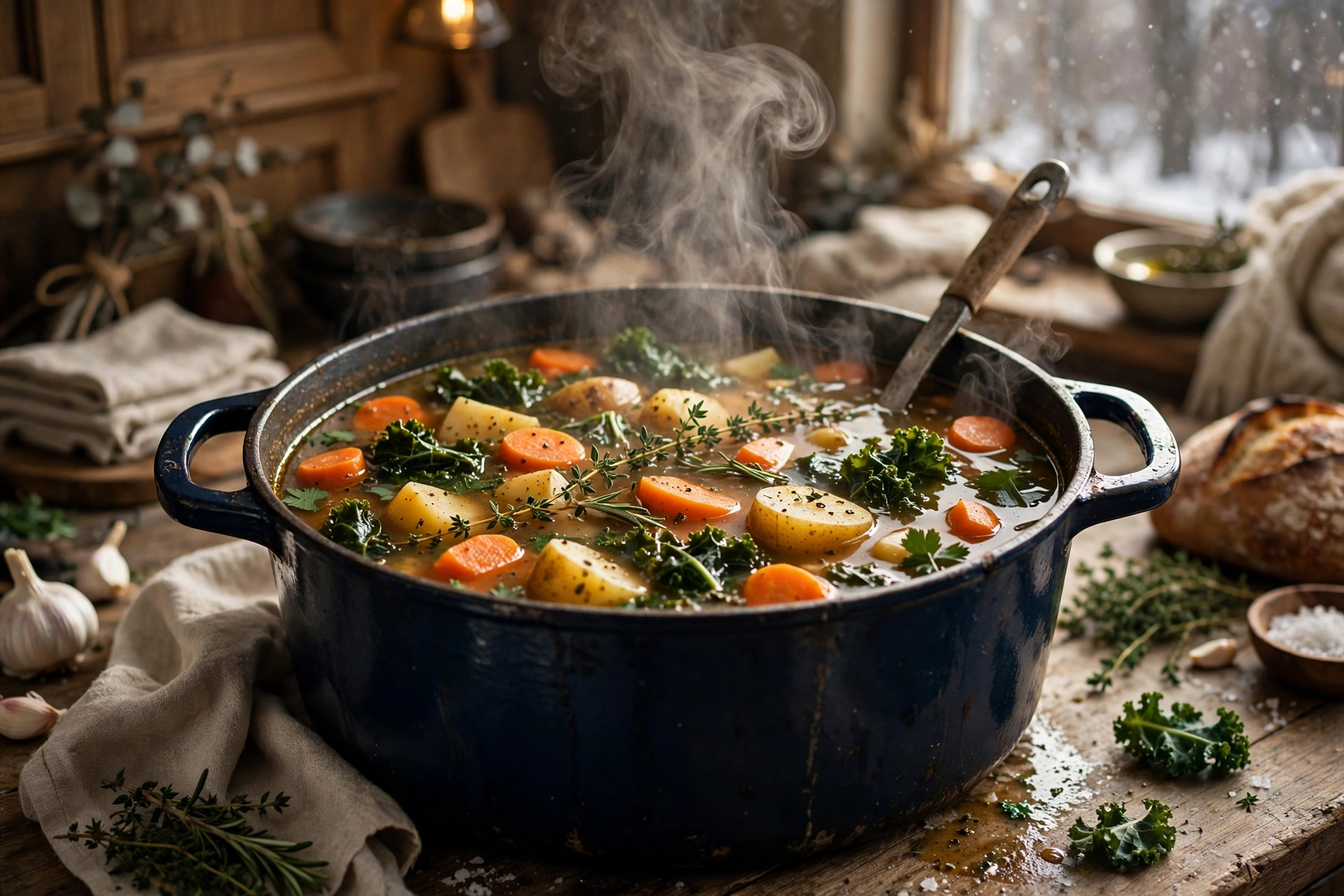
What Seasonal Winter Produce Should You Choose in the US and UK?
Choosing seasonal produce in winter is practical rather than fashionable. Seasonal vegetables tend to be cheaper, fresher, and easier to find, and they encourage variety without much planning. In both the US and the UK, winter produce commonly includes root vegetables such as carrots, parsnips, turnips, and beets; brassicas such as cabbage, cauliflower, broccoli, Brussels sprouts, and kale; leeks and onions; winter squash; and citrus fruit. Apples and pears, especially varieties that store well, are also available through much of winter, and frozen berries, frozen peas, frozen broccoli, and frozen mixed vegetables fill gaps when fresh produce is limited.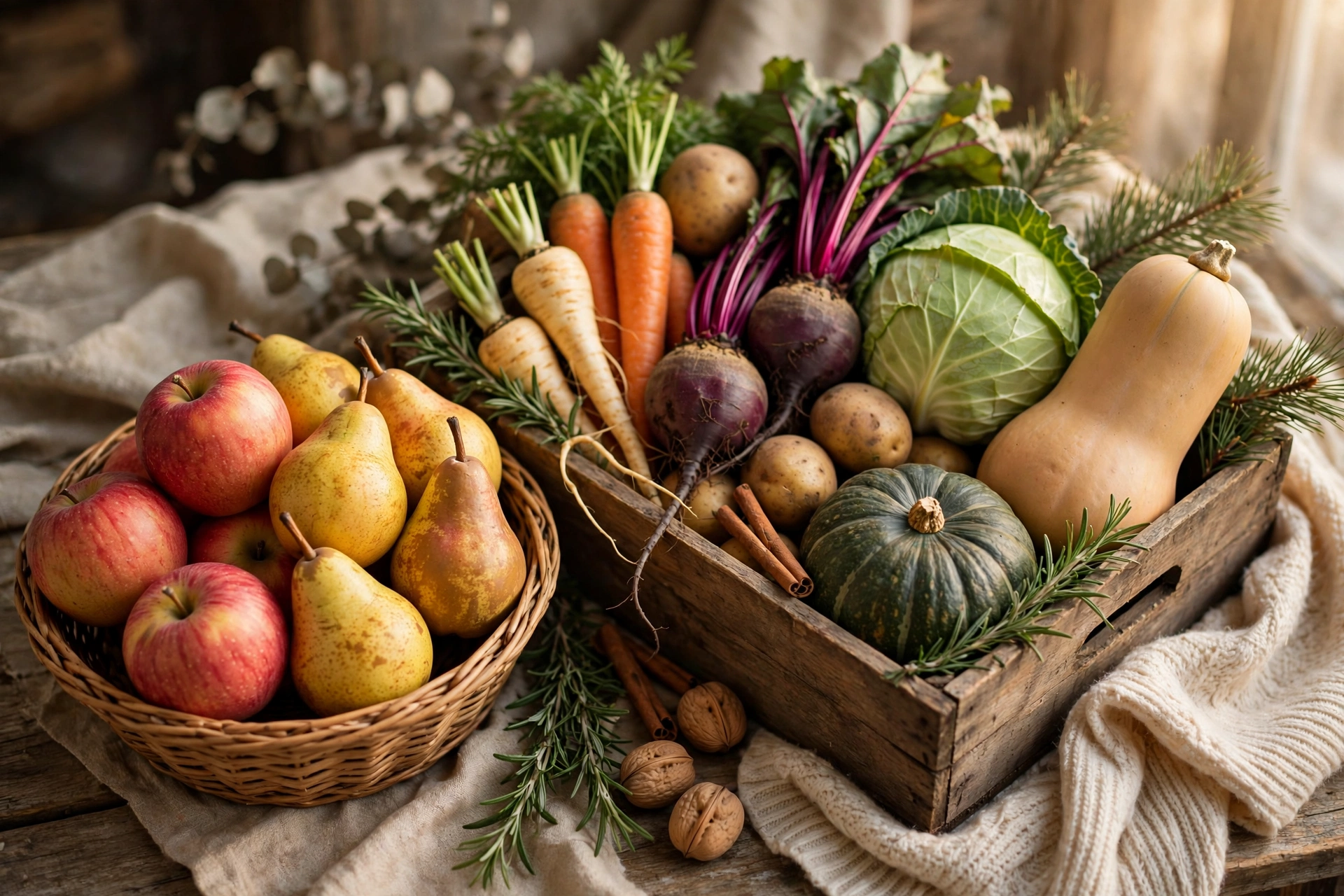
There are some regional differences worth noting. In the southern US, winter greens such as collards, mustard greens, and turnip greens are widely available and very nutritious. In the UK, swede, celeriac, and Savoy cabbage are common winter choices that work well in mashes, soups, and roasts. In northern US states, stored apples, root vegetables, and frozen produce are often more practical than imported fresh salads. The principle is the same in all regions: build meals around what is fresh, affordable, and in season near you, and use frozen and canned options, with no added sugar and low salt where possible, to keep variety high. Canned beans, canned tomatoes, and canned fish are pantry foods that make winter cooking much easier.
Shopping tips can help you use winter produce well. Buy root vegetables and cabbage in larger quantities because they keep well in a cool place. Use softer greens and berries first, and keep frozen vegetables for the end of the week. Cook a large pot of soup or stew at the weekend and freeze portions for busy evenings. Keep a small stock of oats, lentils, canned beans, wholegrain pasta, tinned fish, eggs, yogurt, and frozen vegetables, so a balanced meal is possible even when you cannot get to a store. That kind of planning supports immunity indirectly, because it makes regular, varied meals the easy choice.
What Is a Balanced Winter Day of Eating?
A balanced winter day does not need to be complicated or expensive. It needs protein at most meals, vegetables or fruit at most meals, a wholegrain or starchy food for energy, and a source of healthy fat. Breakfast could be porridge with milk or a fortified plant drink, frozen berries, and pumpkin seeds, or eggs on wholegrain toast with spinach and tomato. Lunch could be lentil and vegetable soup with wholegrain bread, or a tuna or chickpea salad with mixed leaves, carrots, and a citrus dressing. Dinner could be baked salmon or tofu with roasted sweet potato, broccoli, and leeks, or a bean stew with barley and cabbage. Snacks could include a clementine, a small handful of nuts, plain yogurt with fruit, or a warm drink.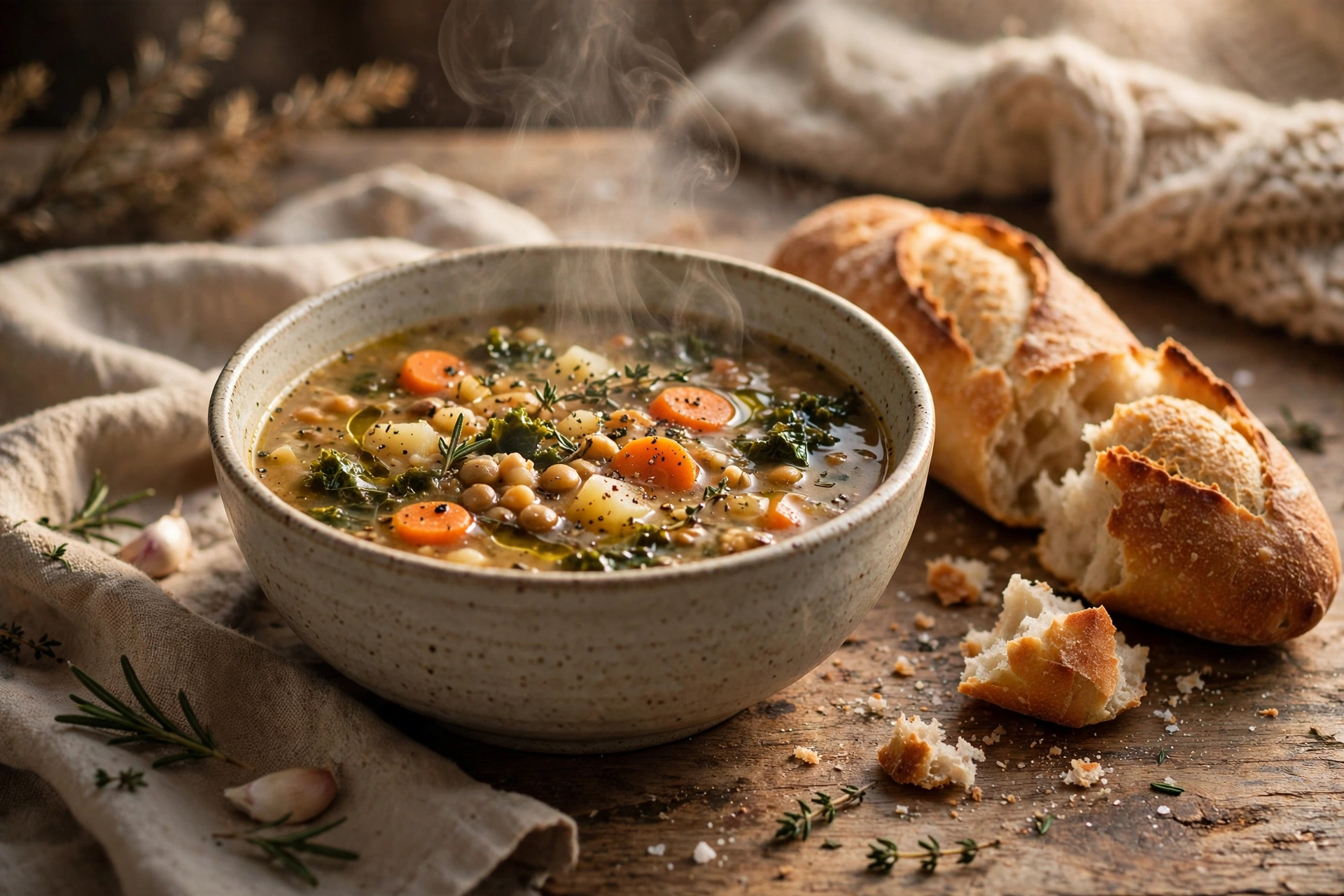
This pattern covers many of the nutrients discussed in this guide without counting every milligram. It also leaves room for enjoyment. A hot chocolate, a slice of cake, or a takeaway meal does not undo a generally balanced week. Problems arise when those foods become the main pattern, replacing vegetables, protein, and whole grains day after day. A useful question to ask is not whether a single food is perfect, but whether the whole week includes colour, variety, protein, fibre, and enough total food. Skipping meals regularly, especially in cold weather, can leave you under-fuelled, which is not helpful for energy, mood, or immune function.
What Should You Limit in Winter?
Winter is also a season of treats, celebrations, and convenience foods, and it helps to be clear about what to limit rather than to ban foods entirely. Sugary drinks, including soda, sweetened juice drinks, and many festive hot drinks, provide a lot of added sugar with few nutrients, and frequent sugary drinks are linked with poorer overall diet quality. Alcohol can disturb sleep, dehydrate you, and affect immune function, especially in larger amounts, so keeping within national guidance and having alcohol-free days is a sensible winter habit. Very salty processed meats, instant noodles, and ready meals eaten daily can push sodium intake high while displacing vegetables and protein.
Highly processed snacks, pastries, and fried foods are best kept occasional, not because one portion is harmful, but because they often replace more nutrient-dense foods and add a lot of energy, salt, or sugar. The same applies to large doses of supplements marketed for immunity. Vitamin C, zinc, and vitamin D supplements can help in specific situations, such as a diagnosed deficiency or a clinician’s recommendation, but megadoses do not strengthen immunity beyond normal function and can cause side effects or interact with medicines. Food first is a safer and more sustainable approach for most healthy adults. If you take regular medication, are pregnant, or have a health condition, check before starting any new supplement, including herbal products.
Another winter habit to watch is eating very little fruit and vegetables because salads feel unappealing in cold weather. Cooked vegetables, soups, stews, roasted vegetables, and frozen vegetables count just as well as raw salads. If you dislike a particular vegetable, choose another from the same group rather than dropping vegetables altogether. Variety is more important than forcing yourself to eat one food you dislike. Finally, avoid relying on a single immunity drink, powder, or juice as a substitute for meals. Those products may be convenient, but they rarely provide the protein, fibre, and range of nutrients that a balanced meal provides.
Frequently Asked Questions About Winter Foods and Immunity
What Are the Best Winter Foods for Immunity?
The best winter foods for immunity are the ones you will actually eat regularly and that cover several nutrients at once. Citrus fruit, broccoli, Brussels sprouts, carrots, sweet potatoes, leafy greens, oily fish, eggs, lentils, beans, yogurt, oats, nuts, and seeds form a strong core. A varied pattern built around those foods is more useful than searching for one perfect food. Frozen vegetables, canned beans, and tinned fish also count, and they make winter eating more practical and affordable.
Can Food Really Boost the Immune System in Winter?
Food can support normal immune function, but the word boost is often misleading. You cannot raise immunity above its normal healthy level by eating a particular food, and no diet can guarantee that you will avoid colds or flu. What a balanced diet can do is prevent nutrient gaps, support the production and function of immune cells, maintain mucosal barriers, and support gut health. That is a meaningful benefit, especially in winter when vitamin D from sunlight falls and diets can become less varied. Think of food as support for a well-functioning system, not as a switch that turns immunity up.
How Can I Get Enough Vitamin D in Winter?
Vitamin D comes from sunlight, food, and supplements. In winter, sunlight is weaker in the UK and in northern US states, so food becomes more important. Oily fish, eggs, and fortified milk, fortified plant drinks, and fortified spreads are the main dietary sources. Many adults in the UK are advised to consider a daily 10 microgram supplement in autumn and winter, and US guidance also identifies vitamin D as a nutrient many people under-consume. The right choice depends on your diet, sun exposure, age, skin tone, and health conditions, so ask a clinician or pharmacist if you are unsure. Do not take high doses without advice, because vitamin D can build up.
Are Frozen Fruits and Vegetables as Good as Fresh in Winter?
Yes, for most purposes. Frozen fruit and vegetables are usually frozen soon after harvest, which helps preserve nutrients, and they are often cheaper and less wasteful than fresh produce that spoils quickly. Frozen berries, broccoli, peas, spinach, and mixed vegetables are useful staples. The main difference is texture: frozen vegetables work best in soups, stews, stir-fries, and pasta sauces, while fresh vegetables are better for salads and roasting. A mix of fresh, frozen, and canned produce usually gives the best balance of nutrition, cost, and convenience in winter.
Should I Take Vitamin C or Zinc Supplements in Winter?
Most healthy adults can meet their needs from food, and routine high-dose supplements are not necessary. Vitamin C from citrus fruit, peppers, broccoli, and potatoes is usually enough when those foods are eaten regularly. Zinc from meat, seafood, beans, lentils, nuts, and seeds is also usually enough in a varied diet. Supplements may be helpful if you have a diagnosed deficiency, a restricted diet, or a clinician’s advice, but large doses can cause nausea, stomach upset, and interactions with medicines, and long-term high-dose zinc can affect copper levels. If you are considering a supplement, check the dose, keep it within recommended limits, and discuss it with a clinician or pharmacist first.
What Should I Eat When I Already Have a Cold?
When you have a cold, appetite often falls, and the priority is fluids, rest, and easy-to-eat foods. Warm soups, stews, porridge, toast, eggs, yogurt, and fruit are usually tolerated well. Drink water regularly, and use warm drinks, honey and lemon in warm water for adults and children over one year, and saline or steam as comfort measures if they help you. There is no food that will cure a cold quickly, and forcing yourself to eat large meals is not helpful. Seek medical advice promptly if symptoms are severe, breathing is difficult, a fever lasts more than a few days, or you have a condition that puts you at higher risk.
How Can You Build a Simple Winter Immunity Routine?
A simple routine is easier to keep than a complicated plan. Start the day with a warm, filling breakfast that includes protein and a fruit or vegetable. Build lunch around vegetables and a protein source, such as beans, eggs, fish, or yogurt. Make dinner a cooked meal with at least two vegetables, a wholegrain or root vegetable, and a protein food. Keep a fruit bowl visible, keep frozen vegetables in the freezer, and keep a few healthy snacks ready. Get outside in daylight when you can, even on cloudy days, move regularly, keep a regular sleep schedule, and wash your hands often during cold and flu season. These habits work together, and food is one part of that larger routine.
It also helps to plan for the weeks when time, money, or energy are tight. A freezer stocked with soup, a cupboard stocked with oats, lentils, canned beans, and tinned fish, and a simple list of five meals you can cook without thinking can prevent a week of takeaways and skipped meals. Winter eating does not need to be perfect to be supportive. It needs to be regular, varied, and adequate, with treats enjoyed as part of an overall balanced pattern.
Keep Reading
- Best Foods to Boost Immune System
- How to Strengthen Your Immune System Naturally
- Zinc-Rich Foods for Immunity
- Immune-Boosting Drinks and Teas
Medical Disclaimer
This article is for general information only and is not medical advice. It does not replace advice from a qualified clinician, pharmacist, or registered dietitian. If you have a medical condition, take regular medication, are pregnant or breastfeeding, care for a young child, or are concerned about frequent infections, poor wound healing, or unexplained weight loss, seek professional advice before changing your diet or starting supplements. If you have symptoms of a serious illness, seek urgent medical care. Nutrition information changes as research develops, and individual needs vary.