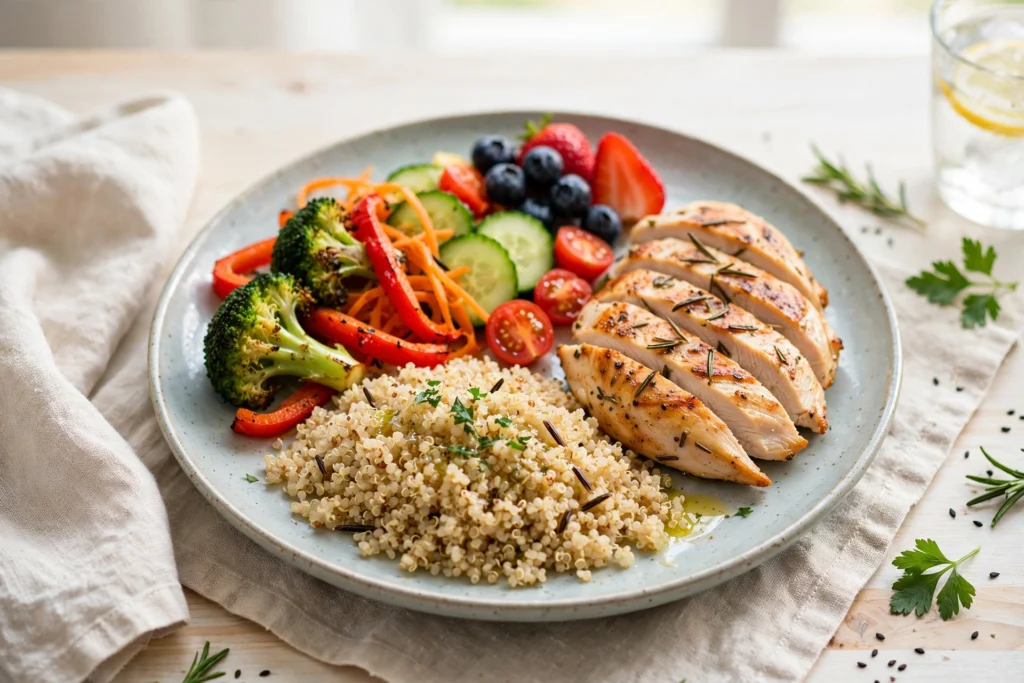
Biotin is one of the most talked-about nutrients in the world of hair and nail health. Walk into any pharmacy and you will find shelves of biotin gummies and capsules promising stronger nails and faster hair growth. But before you spend money on supplements, it is worth asking two simple questions: what does biotin actually do in the body, and can you get enough of it from ordinary food? This biotin foods for hair and nails guide explains the science, the best food sources with their biotin content, and a sample day of eating for stronger hair and nails.
The short answer is reassuring. Biotin, also known as vitamin B7, is found in many everyday foods — eggs, peanuts, almonds, lentils, spinach, bananas, and more. Most people who eat a reasonably varied diet get enough without supplements. And while biotin does play a genuine role in keeping hair, skin, and nails healthy, the evidence for taking extra biotin as a supplement is far more limited than marketing claims suggest.
In this guide, you will learn:
- What biotin (vitamin B7) does inside your body
- How much biotin you actually need each day
- What the research honestly shows about biotin for hair and nail health
- 12 biotin-rich foods with exact mcg per serving (with South Asian meal ideas)
- Signs and risk factors of biotin deficiency
- Why biotin can interfere with blood tests — and what to tell your doctor
- Biotin from food versus supplements: which is better
- The other B-vitamins and nutrients your hair and nails need
- A sample one-day high-biotin meal plan
What Is Biotin (Vitamin B7) and What Does It Do?

Biotin is a water-soluble B-vitamin, which means it dissolves in water and is not stored in the body in large amounts. Whatever your body does not use is flushed out in urine, so you need a regular supply from food. It is sometimes called vitamin H, from the German words Haut and Haar (skin and hair) — a clue to why it became linked with beauty.
Inside the body, biotin works as a helper molecule (coenzyme) for enzymes called carboxylases. These enzymes are involved in:
- Energy metabolism — helping convert the carbohydrates, fats, and proteins from your food into usable energy
- Fatty acid production — fats are a building block of healthy skin and the protective barrier around cells
- Amino acid breakdown — amino acids are the raw materials your body uses to build keratin, the tough protein that hair and nails are made of
- Gene regulation — biotin is involved in the process of turning certain genes on and off, including genes related to cell growth
Because keratin production depends partly on these processes, biotin earned its reputation as a “hair and nail vitamin.” That reputation has some truth to it — but as we will see, the story is more nuanced than supplement adverts suggest.
Biotin is also made in small amounts by the bacteria in your gut (the gut microbiome), though it is not clear how much of this the body can actually absorb and use. Food remains the reliable source.
How Much Biotin Do You Need Each Day?
There is no formal RDA for biotin in the way there is for some other vitamins, because the data is not strong enough to set one. Instead, health authorities set an Adequate Intake (AI) level — the amount that appears to keep healthy people well.
| Group | Adequate Intake per day |
|---|---|
| Infants 0–6 months | 5 mcg |
| Infants 7–12 months | 6 mcg |
| Children 1–3 years | 8 mcg |
| Children 4–8 years | 12 mcg |
| Children 9–13 years | 20 mcg |
| Teens 14–18 years | 25 mcg |
| Adults 19+ years | 30 mcg |
| Pregnancy | 25 mcg |
| Breastfeeding | 35 mcg |
(mcg = micrograms; these values come from the US Institute of Medicine and are widely used internationally.)
Thirty micrograms is a small amount — far smaller than a milligram. To put it in perspective, one cooked egg provides roughly a third of an adult’s daily need. This is one reason deficiency is uncommon: it does not take much biotin to meet your needs.
No Upper Limit — But That Does Not Mean Unlimited Is Safe
No tolerable upper intake level has been set for biotin, because studies have not found clear toxicity even at very high doses (some supplements contain 5,000–10,000 mcg, hundreds of times the daily need). However, “not toxic” is not the same as “harmless.” As we will explain in the lab-test section, very high biotin doses can distort the results of common blood tests, including thyroid and heart tests — a serious practical risk. More is not automatically better.
The Honest Evidence: Does Biotin Really Help Hair and Nails?
This is the section supplement companies hope you skip. Let us look at what research actually shows, in plain language.
Biotin deficiency genuinely harms hair, skin, and nails
In true biotin deficiency — which is rare — the symptoms are well documented: hair loss (alopecia), a red scaly rash around the eyes, nose, and mouth, brittle or splitting nails, and sometimes depression or fatigue. When deficient people are given biotin, these symptoms improve. That much is solid.
Most people are not deficient
Here is the catch: clinical biotin deficiency is uncommon in people who eat a varied diet. If your hair is thinning or your nails are brittle, the most likely causes are genetics, age, thyroid problems, iron deficiency, stress, hormonal changes, harsh styling, or other nutritional gaps — not a lack of biotin. Taking extra biotin cannot fix hair loss caused by these other factors.
The supplement studies are small and weak
Most of the research suggesting biotin supplements help hair and nails comes from small case reports and uncontrolled studies — often in people who may have been deficient, or in people with brittle nail syndrome (a specific condition). A widely cited 2017 review in the journal Skin Appendage Disorders found only limited, low-quality evidence supporting biotin supplementation for hair growth in healthy people. The authors concluded that the evidence was not strong enough to recommend biotin for hair loss in people without deficiency.
What a registered nutritionist would tell you
- If you are deficient, biotin helps — but deficiency is rare.
- If you are not deficient, there is little good evidence that extra biotin improves hair or nail growth.
- Hair and nail health depends on overall nutrition (protein, iron, zinc, vitamin D, essential fatty acids), not one vitamin.
- Food first is the sensible approach: biotin-rich foods give you biotin alongside protein and other nutrients that hair and nails actually need.
The takeaway is not that biotin is useless — it is an essential nutrient — but that expensive high-dose supplements are unlikely to transform your hair if your diet already contains enough biotin. Save your money and eat well instead.
12 Best Biotin Foods for Hair and Nails
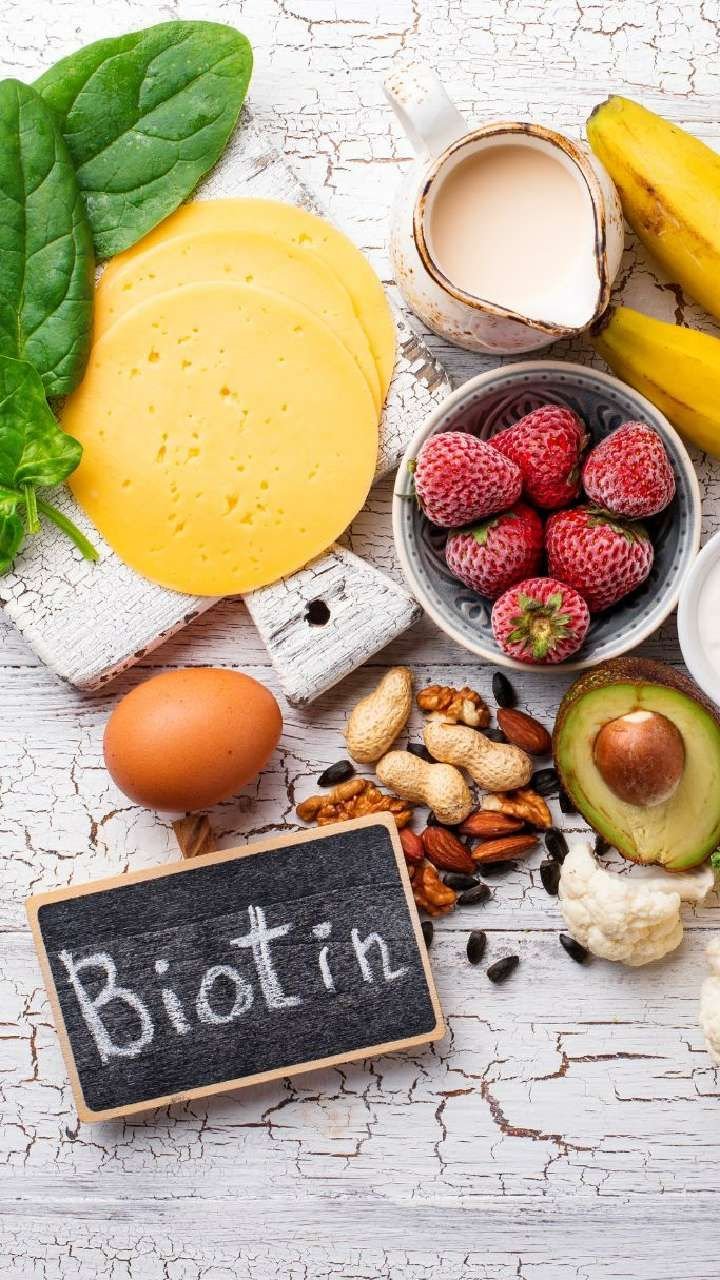
The biotin content of foods can vary with growing conditions, processing, and measurement methods, so treat the figures below as approximate. Values are based on published food-composition data.
1. Eggs (Cooked) — ~10 mcg per large egg
Eggs are the single most practical biotin source in most diets. One large cooked egg provides about a third of an adult’s daily need, alongside high-quality protein (the building material of keratin), vitamin D, and selenium.
Important: eat eggs cooked, not raw. Raw egg whites contain a protein called avidin, which binds biotin and blocks its absorption. Cooking deactivates avidin completely. This is worth knowing in South Asia, where raw-egg drinks (desi tonics of raw egg in milk) are sometimes taken for strength — they actually work against biotin absorption. A simple boiled egg, omelette, or anda paratha gives you the full benefit.
2. Peanuts (Mong Phali) — ~5 mcg per 28 g handful
Peanuts are one of the richest plant sources of biotin. A small handful of roasted peanuts (about 28 grams) provides around 5 mcg. They are cheap, widely available across Pakistan, and also supply protein, vitamin E, and healthy fats.
Enjoy them as roasted mong phali, a spoonful of peanut butter on roti, or ground into chutneys. Note that dry-roasting at very high heat for a long time can reduce biotin slightly, but ordinary roasted peanuts remain a good source.
3. Almonds (Badaam) — ~4 mcg per 28 g (about 20 almonds)
Almonds provide biotin along with vitamin E, magnesium, and monounsaturated fats. The traditional South Asian habit of soaking a few almonds overnight and eating them in the morning is a perfectly good way to get them — soaking does not remove biotin.
4. Walnuts (Akhrot) — ~4–5 mcg per 28 g (about 7 halves)
Walnuts add biotin plus omega-3 fatty acids (ALA), which support scalp and skin health. A few walnuts crushed over dahi (yoghurt) or eaten with breakfast is an easy daily habit.
5. Sunflower Seeds — ~7 mcg per 28 g (2 tablespoons)
Sunflower seeds are among the most biotin-dense foods by weight. Two tablespoons give you roughly a quarter of the daily need, plus vitamin E and selenium. Sprinkle them over salads, raita, or porridge, or eat a small handful as a snack.
6. Sweet Potatoes (Shakarkandi) — ~4 mcg per medium potato (150 g)
Sweet potatoes provide biotin together with beta-carotene (which the body converts to vitamin A, important for skin and scalp cell turnover) and fibre. Roasted shakarkandi from a street vendor or baked at home is a nourishing winter snack.
7. Spinach (Saag / Palak) — ~7 mcg per 100 g raw
Leafy greens contribute biotin alongside folate, iron, and vitamin C. The iron deserves attention: iron deficiency is a common, well-documented cause of hair shedding, especially in women. A plate of palak therefore supports hair through two routes at once.
Cooking reduces the volume dramatically — 100 g of raw spinach cooks down to a small portion — so pair it with other biotin foods in the same meal.
8. Bananas (Kela) — ~1 mcg per medium banana
Bananas are not a biotin powerhouse, but they deserve a place because they are eaten daily by millions of people. A banana adds a little biotin plus vitamin B6, potassium, and quick energy. Think of it as a supporting player rather than the star.
9. Lentils (Daal) — ~3 mcg per 100 g cooked
Cooked lentils (masoor, moong, chana daal) provide biotin with generous protein and iron — the nutrients hair needs most. Since daal is already a daily staple in most Pakistani homes, this is biotin you are likely getting without trying.
10. Cauliflower — ~2 mcg per 100 g cooked
Cauliflower offers modest biotin with vitamin C and fibre. Gobi curry, aloo gobi, or roasted cauliflower all count. It is another example of ordinary sabzi quietly contributing to your intake.
11. Mushrooms — ~10–16 mcg per 100 g (varies by type)
Mushrooms are one of the richest vegetable sources of biotin, though the exact amount varies widely between types (button, oyster, and shiitake differ). Sautéed mushrooms in an omelette combine two top biotin foods in one meal.
12. Milk and Yoghurt (Dahi) — ~2–3 mcg per cup
Dairy contributes small but steady amounts of biotin. A daily glass of milk or bowl of dahi adds to the total, along with protein and calcium.
Biotin Foods Comparison Table
| Food | Typical serving | Approx. biotin | % of adult daily need (30 mcg) |
|---|---|---|---|
| Egg (cooked, large) | 1 egg | ~10 mcg | ~33% |
| Mushrooms | 100 g | ~10–16 mcg | ~33–50% |
| Sunflower seeds | 28 g (2 tbsp) | ~7 mcg | ~23% |
| Spinach (raw) | 100 g | ~7 mcg | ~23% |
| Peanuts (roasted) | 28 g handful | ~5 mcg | ~17% |
| Walnuts | 28 g (7 halves) | ~4–5 mcg | ~15% |
| Sweet potato | 1 medium (150 g) | ~4 mcg | ~13% |
| Almonds | 28 g (20 almonds) | ~4 mcg | ~13% |
| Lentils (cooked) | 100 g | ~3 mcg | ~10% |
| Milk / yoghurt | 1 cup (240 ml) | ~2–3 mcg | ~8% |
| Cauliflower (cooked) | 100 g | ~2 mcg | ~7% |
| Banana | 1 medium | ~1 mcg | ~3% |
Values are approximate; biotin content varies by variety, growing conditions, and preparation. Percentages are rounded.
As the table shows, meeting the 30 mcg daily need from food is entirely realistic: for example, two eggs at breakfast, a handful of peanuts as a snack, and a serving of daal with palak at dinner already gets you there — before counting anything else you eat.
Signs of Biotin Deficiency
True biotin deficiency is rare, but it can happen. Knowing the signs helps you recognise the situations where biotin genuinely matters.
Possible signs include:
- Hair thinning or hair loss
- Red, scaly rash around the eyes, nose, and mouth
- Brittle, splitting, or ridged nails
- Dry, irritated skin
- Loss of appetite, nausea
- Fatigue or low mood
- Numbness or tingling in the hands and feet (in severe, prolonged deficiency)
Who is at higher risk?
- People who eat large amounts of raw egg white over a long period (avidin blocks biotin absorption)
- People on long-term antibiotics, which can disrupt the gut bacteria that produce some biotin
- People with alcohol dependence, which impairs nutrient absorption generally
- People with certain rare genetic conditions (such as biotinidase deficiency) that affect biotin recycling
- Pregnant women — studies suggest a meaningful minority develop marginal (subclinical) biotin deficiency during pregnancy, which is one reason prenatal diets matter
If you have persistent hair loss, a facial rash, and brittle nails together, see a doctor rather than self-treating with high-dose supplements. These symptoms overlap with thyroid disorders, iron deficiency, and skin conditions that need proper diagnosis.
Medical disclaimer: This article is for education only and is not medical advice. Do not start high-dose supplements to treat suspected deficiency without speaking to a qualified doctor or registered nutritionist.
Biotin and Lab Test Interference: An Important Warning
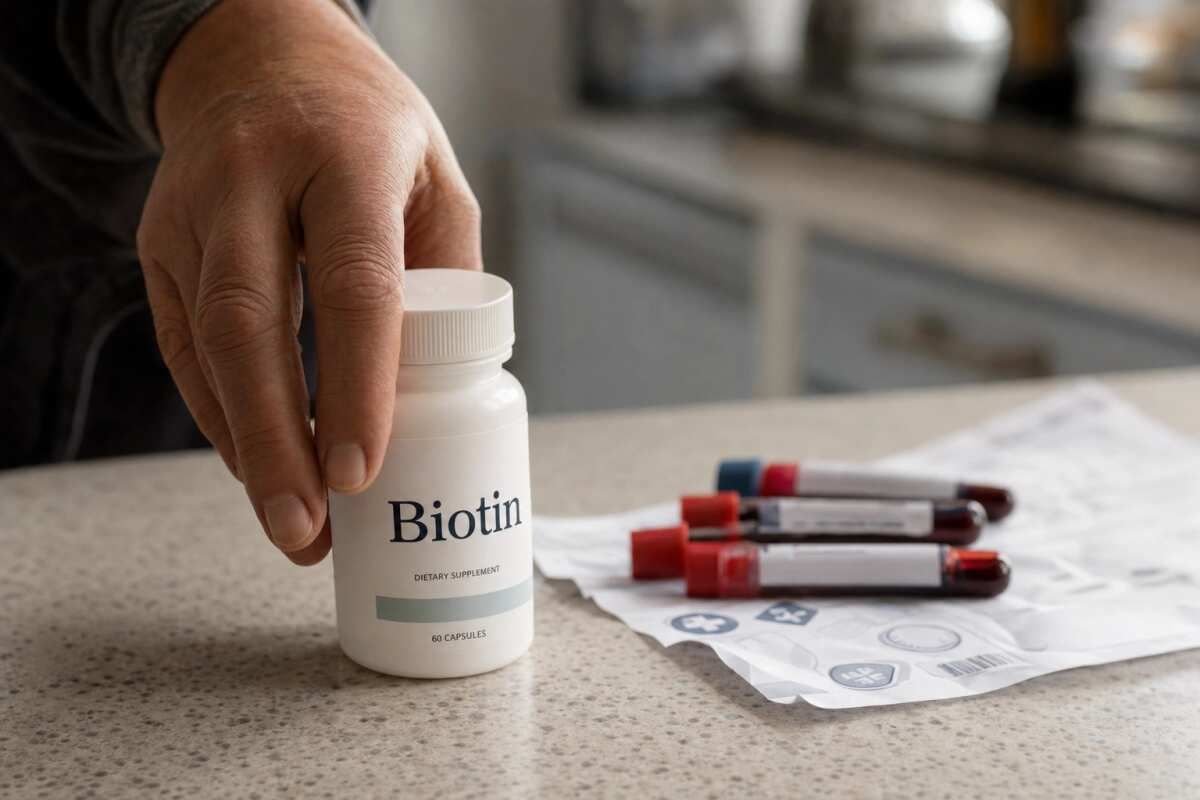
This is the most underappreciated risk of biotin supplements, and every reader should know it.
Many common laboratory tests — including thyroid function tests (TSH, T4) and heart tests (troponin, used to diagnose heart attacks) — use biotin-based technology in the testing process. When you take high-dose biotin supplements, the extra biotin in your blood can interfere with these tests and produce falsely low or falsely high results.
Real consequences have been documented:
- A falsely low TSH result can make a thyroid problem look like something it is not, leading to wrong treatment.
- A falsely low troponin result could mask a heart attack in an emergency — the US FDA issued a safety warning about this in 2017 and strengthened it in 2019.
What to do:
- If you take any biotin supplement, tell your doctor before any blood test.
- Your doctor will usually ask you to stop the supplement for at least 48–72 hours before testing (some labs recommend longer for very high doses).
- Biotin from food does not cause this problem — normal dietary amounts are far too low to interfere with lab tests. This is another reason food is the safer route.
If you are scheduled for thyroid or cardiac blood tests, check the label of every multivitamin and “hair, skin and nails” formula you take — many contain biotin doses hundreds of times the daily need without making it obvious.
Biotin from Food vs Supplements: Which Is Better?
| Food sources | Supplements | |
|---|---|---|
| Biotin dose | Natural, modest amounts the body is built to handle | Often 100–300× the daily need |
| Other nutrients | Comes packaged with protein, iron, zinc, vitamin E | Biotin only (or with a few extras) |
| Lab test risk | None at dietary levels | Real — can distort thyroid and heart tests |
| Cost | Part of your normal grocery bill | Ongoing expense |
| Evidence of benefit | Meets needs of healthy people | Weak evidence for hair/nail benefit in non-deficient people |
The bottom line: for most people, food is the better choice. Supplements have a legitimate role in diagnosed deficiency, in certain genetic conditions, and sometimes in pregnancy under medical supervision — but taking them “just in case” for hair growth is spending money on hope rather than evidence, while adding a genuine lab-test risk.
If you do take a supplement, choose a sensible dose (close to the 30 mcg daily need, not thousands of micrograms), tell your doctor, and stop it a few days before any blood test.
Other B-Vitamins and Nutrients Your Hair and Nails Need
Biotin does not work alone. Hair and nails are built from protein and maintained by a team of nutrients. If your hair and nails are struggling, check these too:
Protein
Hair and nails are made of keratin, a protein. Without enough dietary protein, hair growth slows and nails weaken. Aim for a protein source at every meal: eggs, daal, chickpeas, chicken, fish, milk, yoghurt, or nuts.
Iron
Iron deficiency is one of the most common nutritional causes of hair shedding worldwide, and it is widespread among women in South Asia. Good sources include red meat, lentils, spinach, and chickpeas — eat them with vitamin C (lemon, tomatoes, citrus) to boost absorption.
Zinc
Zinc supports the oil glands around hair follicles and the growth of nail tissue. Meat, pumpkin seeds, chickpeas, and peanuts are good sources.
Vitamin D
Low vitamin D has been linked with several types of hair loss. Sunlight exposure and fortified foods help; many people in Pakistan are deficient despite abundant sunshine, so testing is worthwhile.
Vitamin B12 and folate
These B-vitamins are needed for healthy cell division, including the fast-growing cells of hair follicles and nail beds. B12 comes mainly from animal foods (eggs, dairy, meat); folate from leafy greens and lentils.
Omega-3 fatty acids
These support scalp health and the skin barrier. Walnuts, flaxseeds (alsi), and fatty fish such as sarmai or rohu are practical sources.
Vitamin C
Needed to make collagen, which strengthens the skin around nails and supports hair structure. Citrus fruits, guava (amrood — exceptionally rich in vitamin C), tomatoes, and peppers are excellent sources.
A varied diet containing the biotin foods listed above will naturally supply most of these companions too — which is exactly why whole foods beat single-nutrient pills.
Sample One-Day High-Biotin Meal Plan (South Asian Style)
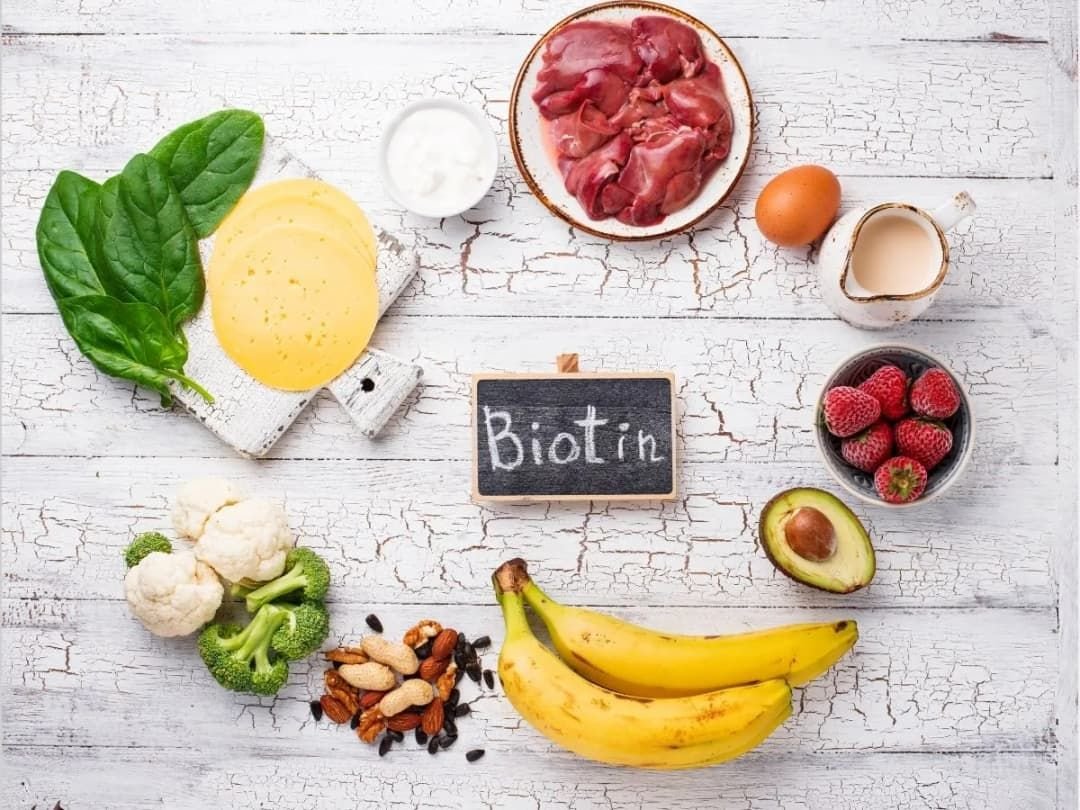
This plan comfortably exceeds the 30 mcg daily need using ordinary Pakistani foods. Adjust portions to your appetite and energy needs.
Breakfast — Vegetable omelette + milk
– 2-egg omelette with mushrooms and spinach (~25 mcg biotin)
– 1 banana (~1 mcg)
– 1 glass of milk (~2–3 mcg)
– Running total: roughly 28–29 mcg
Mid-morning snack
– Small handful of roasted peanuts, 28 g (~5 mcg)
– 5–6 soaked almonds (~1–2 mcg)
– Running total: roughly 34–36 mcg
Lunch — Daal, sabzi, roti, dahi
– 1 cup cooked masoor daal (~4–5 mcg)
– Palak or mixed sabzi (~3–4 mcg)
– 1 bowl dahi (~2 mcg)
– 2 whole-wheat rotis
– Running total: roughly 43–47 mcg
Evening snack
– Roasted shakarkandi (sweet potato), 1 small (~3 mcg)
– Lemon chai (no biotin, but a pleasant break)
Dinner — Light and balanced
– Aloo gobi or cauliflower curry (~2 mcg)
– Chicken or chickpea curry for protein
– Salad with sunflower seeds sprinkled on top (~4 mcg)
– Running total: roughly 52–57 mcg for the day
This is nearly double the daily need — without a single supplement. Notice how the protein, iron, and zinc in the same meals are doing just as much work for your hair and nails as the biotin itself.
Biotin Safety: Who Should Be Careful?
- Pregnant and breastfeeding women: meet needs through food; only supplement if a doctor advises it, since marginal deficiency is more common in pregnancy but high-dose self-supplementation is not well studied.
- People with thyroid disease or heart conditions: be especially careful with biotin supplements because of lab-test interference — always inform your doctor.
- People awaiting blood tests: stop biotin supplements 48–72 hours beforehand.
- People taking anti-seizure medication: some of these drugs can lower biotin levels over time; discuss with your doctor rather than self-dosing.
- Children: keep adult-strength biotin gummies out of reach; children need much smaller amounts.
Biotin from food is safe for everyone, including pregnant women — no caution needed there.
Tips to Get the Most Biotin from Your Food
- Cook your eggs. Heat deactivates avidin in egg whites, freeing the biotin for absorption. Boiled, fried, or in an omelette — all fine.
- Do not rely on raw-egg tonics. Raw egg whites actively block biotin uptake.
- Eat a mix of sources. Different foods carry different amounts, and variety covers the other hair-and-nail nutrients too.
- Do not over-boil vegetables. Biotin is water-soluble, so some leaches into cooking water. Light steaming, stir-frying, or using the cooking water in daal or soups keeps more of it in the meal.
- Be cautious with extreme diets. Very restrictive eating patterns (severe calorie restriction, cutting out whole food groups without substitutes) are the most common route to marginal biotin intake.
- Limit heavy alcohol intake. Chronic heavy drinking impairs absorption of B-vitamins generally, including biotin.
- Store nuts and seeds properly. Keep them in airtight containers away from heat; rancid fats are worth avoiding for general health, even though biotin itself is fairly stable.
Frequently Asked Questions
1. How long does biotin take to work for hair growth?
Hair grows about 1 cm per month, and any nutritional change takes time to show in new growth. If you are correcting a true deficiency, improvements in hair shedding may appear within a few months, with visible changes in new hair over 3–6 months. But if you are not deficient, extra biotin is unlikely to produce noticeable changes at all — and there is no quality evidence for a specific timeline in healthy people. Be sceptical of products promising results in weeks.
2. Can I take biotin and a multivitamin together?
Check the labels first — most “hair, skin and nails” formulas and many multivitamins already contain biotin, sometimes in very high doses. Taking both can easily push your intake into the thousands of micrograms, raising the lab-test interference risk for no added benefit. One sensible product (or better, food) is enough.
3. Does biotin cause acne or weight gain?
Some people report breakouts after starting high-dose biotin supplements. The evidence is anecdotal, but there is a plausible mechanism: very high biotin doses may interfere with the absorption of vitamin B5 (pantothenic acid), which plays a role in skin health. Weight gain is not an established effect of biotin. If you notice new acne after starting a supplement, discuss it with your doctor — and consider whether the supplement is doing anything useful for you at all.
4. Is biotin safe during pregnancy?
Biotin from food is completely safe and important during pregnancy. High-dose supplements are a different matter: they are not well studied in pregnancy, and marginal biotin deficiency is more common in pregnant women, so this is a decision for your doctor, not the supplement aisle. A diet rich in eggs, lentils, nuts, and vegetables is the safest way to cover your needs.
5. Which food has the most biotin?
Per typical serving, cooked eggs and mushrooms are among the richest common sources, followed by sunflower seeds, peanuts, and spinach. But the “best” biotin food is the one you will actually eat regularly — a daily handful of peanuts or two eggs at breakfast beats an exotic superfood you eat once a month. Consistency matters more than chasing the single highest number.
The Bottom Line

Biotin is genuinely essential for healthy hair, skin, and nails — but the gap between that fact and the marketing of biotin supplements is wide. True deficiency is rare, the evidence for supplements in healthy people is weak, and high doses carry a real risk of distorting thyroid and heart blood tests.
The good news is simpler and cheaper: everyday foods — cooked eggs, peanuts, almonds, walnuts, sunflower seeds, sweet potatoes, spinach, lentils, bananas, cauliflower, mushrooms, and dairy — provide more than enough biotin for most people, while also delivering the protein, iron, zinc, and other nutrients your hair and nails truly depend on.
If you are dealing with persistent hair loss, brittle nails, or skin changes, do not guess — get a proper assessment. Nutrition works best when it is personalised to your body, your diet, and your test results.
Ready for guidance built around you? Book a one-to-one nutrition appointment with our UK-Registered Associate Nutritionist and get a personalised plan for your hair, skin, and overall health — based on evidence, not trends.
Keep Reading
- Skin and Hair Nutrition Guide — the pillar page for this topic cluster.
- Foods for Hair Growth and Thickness: What Science Says You Should Eat
- Best Foods for Glowing Skin: What a Nutritionist Recommends
- Collagen-Rich Foods for Skin: An Evidence-Based Guide
- Health Disclaimer — please read before acting on any nutrition advice on this site.
References
- World Health Organization. Healthy diet (fact sheet).