
You spend most of your day indoors, eat the same meals on rotation, and barely give your vitamin D status a second thought — until a blood test comes back at 14 ng/mL and your doctor asks why you are tired all the time. If that sounds familiar, you are far from alone. Low vitamin D is one of the most common nutritional shortfalls in the world, and it is especially widespread among people who live in northern countries, work office hours, or — as is common in South Asian communities — habitually avoid the sun or keep most of their skin covered.
The good news is that increasing your vitamin D naturally is straightforward once you understand how it works. It is a fat-soluble vitamin your body can make from sunlight, take in from food, and top up with supplements — and the best results come from using all three routes intelligently, not relying on any single one.
In this guide, you will learn:
- Why vitamin D deficiency is so common, and who is most at risk
- How much sun exposure you actually need — and how to get it safely
- The best food sources of vitamin D, including desi-friendly options
- When supplements make sense, and how to choose between D2 and D3
- How to absorb more of the vitamin D you already consume
- The mistakes most people make when trying to raise their levels
- How to test and monitor your status properly
Why Vitamin D Deficiency Is So Common
Vitamin D behaves unlike most other nutrients. Very few foods contain meaningful amounts, and our main “source” is not food at all — it is a chemical reaction in the skin triggered by UVB rays from sunlight. When UVB hits bare skin, it converts a cholesterol derivative (7-dehydrocholesterol) into vitamin D3, which the liver and kidneys then convert into the active hormone calcitriol.
Modern life interferes with this process at every step. Office workers spend the peak UVB hours (roughly 10 am to 3 pm) indoors under artificial light. People living above roughly 37° latitude — which includes all of the UK and much of Europe and northern North America — get almost no skin-synthesizing UVB during autumn and winter, sometimes for five or six months. Sunscreen, while essential for skin-cancer protection, blocks UVB almost completely when applied properly. Add in ageing skin (which makes vitamin D less efficiently), darker skin tones (melanin acts as a natural UV filter), and diets low in oily fish, and deficiency becomes the default outcome rather than the exception.
Population surveys reflect this. In the UK, large portions of adults have blood levels below 20 ng/mL (50 nmol/L) in winter and spring, and South Asian communities show some of the lowest average levels of any ethnic group — a combination of darker skin, sun-avoidant habits, modest indoor clothing norms, and diets that are often low in the few foods that carry vitamin D.
How to Get Vitamin D from Sunlight Safely

Sunlight is the most powerful natural route to vitamin D, and it costs nothing. The trick is getting enough UVB exposure to make vitamin D without drifting into sunburn and skin-cancer risk.
When to go outside
UVB intensity depends on the sun’s angle. The practical window for meaningful vitamin D production is midday — roughly 10 am to 3 pm, when your shadow is shorter than your height. Early morning and late evening sun contains mostly UVA, which ages and burns skin but contributes almost nothing to vitamin D synthesis. For readers in the UK and northern Europe, note that from about October to March the sun sits too low at midday for meaningful production regardless; plan for food and supplements during those months.
How long is enough
Research suggests that exposing about 25–40% of your skin (arms, lower legs, and face, for example) for roughly 10–30 minutes around midday, a few times per week, can generate substantial vitamin D in fair-to-medium skin. Darker skin needs more time — often two to three times as long — because melanin filters UVB. The important rule is to stop before the skin reddens. Never burn in pursuit of vitamin D; the goal is a modest, regular dose, not a sunbath.
Skin, age, and location factors
Several factors change how much sun you need:
- Skin tone: Fair skin (Fitzpatrick type I–II) synthesizes vitamin D quickly but burns easily; brown and black skin (types IV–VI) needs considerably longer exposure for the same amount.
- Age: Skin in a 70-year-old produces roughly a quarter of the vitamin D a 20-year-old’s skin produces from the same exposure.
- Latitude and season: Above ~37°N, winter sun cannot drive meaningful synthesis. The UK sits at 50–58°N, so winter supplementation is standard advice.
- Sunscreen: SPF 30 applied correctly blocks about 97% of UVB. This does not mean skipping sunscreen — it means getting your brief, protected-skin-free exposure first, then applying sunscreen for any longer time outdoors.
A sensible routine: aim for 15–25 minutes of midday sun on arms and legs, 2–3 times weekly in summer, applying sunscreen afterwards if you stay out. Consider it part of your routine rather than a special event — a walk at lunch, gardening, or tea on the balcony all count.
The sunscreen balance
This is where nuance matters. Dermatologists are right that unprotected sun exposure causes skin damage, and the vitamin D message must never become an excuse to bake in the sun. The evidence-based compromise is short, deliberate exposure on limited skin, then protection for everything longer. You can also keep your face — the most age-visible and cancer-prone area — covered or sunscreened, and rely on arms and legs for synthesis.
Best Food Sources of Vitamin D

Food is the weakest of the three routes on its own, because few foods naturally contain vitamin D. But food still matters: it provides a baseline every day, and fat-rich food sources come packaged with the dietary fat you need to absorb the vitamin.
Fatty fish
Oily fish is the richest natural food source. A 100 g serving of cooked salmon provides roughly 400–600 IU (10–15 mcg); mackerel, sardines, and tuna provide similar amounts. Two servings of oily fish per week is a solid target and also covers omega-3 needs. In South Asian cooking, fish like rohu, hilsa, and pomfret are eaten regionally but eaten infrequently and in small portions — if fish is part of your food culture, eating it more regularly is one of the easiest dietary upgrades you can make.
Egg yolks and dairy
Egg yolks contain a modest amount — roughly 40–50 IU per yolk, more if the hens were raised outdoors or fed vitamin D-enriched feed. Desi diets with daily anday (eggs) get a small but consistent contribution. Full-fat milk, paneer, butter, and ghee contain only traces unless fortified, which is why fortified dairy matters much more than dairy per se.
Fortified foods
In the UK and US, many foods are fortified with vitamin D: milk and plant milks (soy, oat, almond), orange juice, breakfast cereals, and some yoghurts. Check labels — fortification is voluntary in the UK for most foods, so it varies by brand. In Pakistan and India, fortified milk is available in some cities but far from universal; do not assume your doodh provides vitamin D unless the label says so.
Mushrooms
Mushrooms exposed to sunlight or UV light can contain meaningful vitamin D2 — sometimes 400+ IU per 100 g, though levels vary wildly by how they were treated. Wild or UV-treated mushrooms are the exception; ordinary supermarket mushrooms grown in the dark contain very little. If you cook desi-style mushrooms (khumbi) or sabzi with mushrooms, this is a useful bonus source for vegetarians, but treat it as supplementary rather than reliable.
Desi and vegetarian-friendly options
Vegetarian and largely plant-based diets face the biggest food-source gap, because the richest natural sources are animal foods. Practical options: UV-exposed mushrooms, fortified plant milks and cereals, fortified orange juice, and eggs for lacto-ovo vegetarians. For non-vegetarians, even small, regular amounts of oily fish (sardines and mackerel are affordable and low in mercury compared to large predators like king mackerel or swordfish) make a measurable difference.
Should You Take a Vitamin D Supplement?
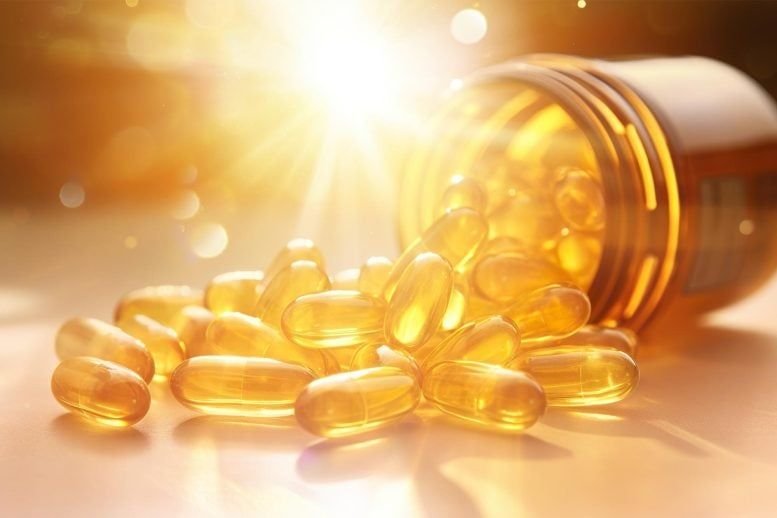
For many people — especially those in northern latitudes, with darker skin, or with covered skin — diet and summer sun together still fall short. Supplements are the most reliable way to close the gap, and major public health bodies in the UK and US recommend them for at-risk groups during autumn and winter, and year-round for some.
Vitamin D3 vs D2
Supplements come as vitamin D2 (ergocalciferol, usually from yeast or fungi) or vitamin D3 (cholecalciferol, usually from lanolin or lichen — lichen-based D3 is vegan). Research shows D3 raises and maintains blood 25(OH)D levels more effectively than D2, which is metabolized and cleared faster. If you are choosing a daily supplement, D3 is the better default choice for most people. D2 remains a reasonable option for strict vegans who cannot find affordable vegan D3, but check for lichen-based D3 first.
How much to take (IU per day)
Dosing should ideally follow a blood test and your doctor’s advice, but general evidence-based ranges are:
- Maintenance for adults: 600–800 IU (15–20 mcg) per day covers the basic recommended intake, but many adults need 1000–2000 IU/day to keep blood levels above 30 ng/mL, especially in winter.
- Correcting deficiency: Doctors often prescribe higher short-term doses (e.g. 2000–4000 IU/day, or weekly high-dose regimens) after a confirmed low result. Do not self-prescribe high doses without testing and medical guidance.
- Upper limit: The tolerable upper intake level for adults is 4000 IU (100 mcg) per day. Chronic intake above this can cause toxicity.
Vitamin D toxicity is real and worth respecting. It causes hypercalcemia — dangerously high blood calcium — leading to nausea, confusion, excessive thirst, kidney stones, and in severe cases kidney damage. Toxicity almost never comes from sun or food; it comes from excessive supplementation, often from taking many thousands of IU daily for months without testing.
When to supplement and for how long
A practical approach used widely in the UK: supplement daily from October to March (the “vitamin D winter”), and year-round if you have darker skin, cover most of your skin outdoors, spend little time outside, are over 65, or are pregnant or breastfeeding. Many clinicians now advise year-round supplementation for South Asian adults in northern countries given how consistently low their levels test. Take it as a daily habit rather than occasional large doses — steady intake maintains steadier blood levels.
How to Absorb Vitamin D Better

Vitamin D is fat-soluble, which means how you take it affects how much you actually absorb.
Pair it with fat
Studies show vitamin D taken with a fat-containing meal is absorbed significantly better than on an empty stomach — improvements of around 30–50% in some trials. Take your supplement with your largest meal, or with foods like eggs, nuts, yoghurt, avocado, or cooking oil. This is also why the best food sources (oily fish, egg yolks) are naturally fatty: the package does the job for you.
Magnesium and vitamin K2
Magnesium is a cofactor in vitamin D metabolism — the enzymes that convert vitamin D into its active form depend on it, and some research suggests magnesium status influences how effectively supplementation raises blood levels. Good sources include nuts, seeds, whole grains, and leafy greens — all common in desi diets (badam, akhrot, chana, palak).
Vitamin K2 (menaquinone) works alongside vitamin D in calcium handling: vitamin D increases calcium absorption, while K2 helps direct calcium into bones rather than soft tissues and arteries. Fermented foods (natto, some cheeses), egg yolks, and certain meats provide K2. The clinical evidence for the D3+K2 combination is still developing, so treat K2 as a sensible dietary companion rather than a mandatory pairing — and note that anyone on blood-thinning medication such as warfarin should discuss vitamin K intake with their doctor first.
What blocks absorption
Gut conditions that impair fat absorption — such as coeliac disease, Crohn’s disease, chronic pancreatitis, or prior bariatric surgery — can cause deficiency even with good sun and diet. Very low-fat diets and some weight-loss medications that block fat absorption (e.g. orlistat) reduce vitamin D uptake too. Certain medications, including some anti-seizure drugs and glucocorticoids (steroids), accelerate vitamin D breakdown. If you take long-term medication, mention your vitamin D status to your doctor rather than quietly doubling your supplement dose.
Lifestyle Factors That Affect Your Vitamin D

Beyond sun, food, and pills, everyday habits shape your levels. Regular outdoor physical activity — walking, cricket, gardening — delivers both movement and incidental UVB, which is why active people consistently test higher. Maintaining a healthy weight matters because vitamin D is stored in fat tissue; people with obesity often need higher intakes to reach the same blood levels, as more of the vitamin gets sequestered in adipose tissue.
Smoking is associated with lower vitamin D levels, and heavy alcohol use can impair the liver’s conversion steps. Sleep and stress matter indirectly: chronic stress and poor sleep rarely cause deficiency alone, but they cluster with indoor, sedentary routines that do. For South Asian families, a cultural shift is often the biggest lever — the habit of avoiding the midday sun, staying indoors during the brightest hours, and covering skin completely outdoors is worth re-examining through the lens of brief, deliberate, safe exposure rather than sun avoidance as an absolute rule.
Practical rooftop and lunchtime tips: if you work in an office, a 15–20 minute walk at lunch with sleeves rolled up is the single highest-value habit you can add. At home, morning chai on the rooftop or balcony, hanging laundry outside, or a short evening walk with arms uncovered in summer all add up. None of this requires gym time or special equipment — just stepping into the light you already live under.
7 Mistakes People Make When Trying to Raise Vitamin D
- Sunbathing to burn. More UV is not better. Burning damages skin and does not proportionally increase vitamin D — synthesis plateaus while damage accumulates.
- Relying on winter sun in northern countries. From October to March in the UK and similar latitudes, midday sun cannot make meaningful vitamin D. Plan for supplements instead of hoping.
- Taking supplements on an empty stomach. Fat-soluble means fat-soluble — take D3 with a meal containing some fat, or absorption suffers.
- Mega-dosing without testing. Taking 10,000 IU daily “to be safe” can push you toward toxicity over months. Test first, dose to the result.
- Choosing D2 when D3 is available. D2 works, but D3 maintains blood levels better for most people. Check the label.
- Ignoring magnesium and overall diet. A supplement cannot fully compensate for a diet devoid of the cofactors that activate it.
- Testing once and forgetting. Levels drift with seasons, weight changes, and habits. Rechecking after a few months of a new regimen tells you whether it is actually working.
Vitamin D for Special Groups
Some groups need more attention than the general advice covers.
Older adults
Skin synthesis declines sharply with age, kidney conversion becomes less efficient, and older adults often spend less time outdoors and eat less. Falls and fractures are the headline risk: adequate vitamin D (with calcium) modestly reduces fall and fracture risk in deficient older adults. Year-round supplementation of 800–1000 IU/day is commonly recommended, alongside weight-bearing activity and a protein-adequate diet.
Pregnant and breastfeeding women
Vitamin D supports foetal bone development, and deficiency in pregnancy is linked with poorer maternal and infant outcomes in observational research. Requirements rise, and many guidelines recommend 600–800 IU/day minimum with higher doses for deficient women under medical supervision. Because toxicity affects two people, not one, dosing during pregnancy should always be guided by a clinician and confirmed with testing.
Women who cover their skin
Cultural and religious dress — hijab, niqab, abaya, or full-coverage outdoor clothing — reduces UVB exposure to near zero for covered areas, making diet and supplements the entire strategy. This is not a reason to change how you dress; it is a reason to be deliberate about supplementation. Year-round D3, fortified foods, and testing are the practical trio here, and many clinicians treat covered women in northern countries as a priority group for supplementation.
Office workers and indoor lifestyles
If your daylight hours happen under fluorescent lights, you are effectively living a “vitamin D winter” all year. Shift your exposure into the margins: lunch walks, weekend outdoor time, and a standing October-to-March (or year-round) supplement. If you work night shifts, be extra proactive — shift workers show some of the lowest levels in population studies, since their free hours rarely coincide with UVB hours.
People with darker skin
Higher melanin means more natural sun protection — a genuine advantage against skin cancer — but it also means slower vitamin D synthesis. South Asian, African, and Middle Eastern adults in the UK, Europe, and northern North America are consistently among the most deficient groups in surveys. The practical response is not to abandon sun protection but to allow longer safe exposure times, lean harder on food and supplements, and test rather than guess.
Testing and Monitoring Your Vitamin D Levels
The blood test that matters is 25-hydroxyvitamin D (25(OH)D) — the storage form and the standard measure of status. General interpretation used by many laboratories:
- Below 20 ng/mL (50 nmol/L): deficient — correction needed
- 20–30 ng/mL (50–75 nmol/L): insufficient — improvement advisable
- 30–50 ng/mL (75–125 nmol/L): sufficient — the usual target range
- Above 100 ng/mL (250 nmol/L): potentially excessive — review supplementation
If you have never tested, one baseline test is worth more than a year of guessing. Test at the end of winter for your lowest point, or test 8–12 weeks after starting a new supplement regimen to see whether the dose is working. Home finger-prick test kits are available in the UK and US, or your GP can order the test — particularly if you have risk factors like covered skin, darker skin, osteoporosis, or malabsorption.
Keep a simple log: date, dose, brand, and result. Levels respond slowly — retesting sooner than 8 weeks after a dose change usually just measures noise.
Vitamin D Myths, Busted
“You can get enough from food alone.” Extremely difficult. Even fish-heavy diets rarely reach 600–800 IU/day consistently without fortified foods or supplements, and vegetarian diets come up shorter still.
“A glass of milk covers it.” Only if the milk is fortified. Unfortified milk contains roughly 40–50 IU per glass — a small fraction of daily needs. Read the label.
“Dark skin doesn’t need supplements.” Darker skin synthesizes vitamin D more slowly, which increases — not decreases — the likelihood of deficiency in low-sun environments.
“More is always better.” Vitamin D has a U-shaped relationship with some health outcomes in research, and excessive intake causes real harm (hypercalcemia, kidney stones). Target sufficiency, not maximum.
“Sunscreen makes deficiency inevitable.” Sunscreen reduces synthesis during the time it is worn, but brief pre-sunscreen exposure plus food and supplements easily cover needs. Skin protection and vitamin D sufficiency are compatible.
“Once corrected, you’re set for life.” Levels fall again within months if the habits that raised them stop — especially going into winter. Maintenance is a lifestyle, not a one-time fix.
Frequently Asked Questions
How can I increase vitamin D naturally without supplements?
The most natural lever is sunlight: 10–30 minutes of midday sun on arms and legs a few times per week in summer builds substantial stores, with darker skin needing longer. Add oily fish twice weekly (salmon, mackerel, sardines), daily eggs, UV-exposed mushrooms, and fortified milk or cereals. For many people in northern countries this still falls short in winter — “natural” methods have real limits from October to March, which is why testing matters more than ideology.
How long does it take to raise vitamin D levels?
With consistent daily supplementation (e.g. 1000–2000 IU of D3), most deficient adults see meaningful improvement in 8–12 weeks, with full correction often taking 3–6 months depending on how low the starting level was, body weight, and absorption. Sunlight works faster in summer but is seasonal. Retest after about three months to confirm your regimen is working rather than assuming.
Is 2000 IU of vitamin D3 safe to take daily?
For most healthy adults, yes — 2000 IU/day sits well below the 4000 IU/day upper limit and is a commonly used maintenance dose, especially in winter or for people with risk factors. Safety still assumes you are not also getting large amounts from multiple fortified products plus other supplements containing D. If you have kidney disease, sarcoidosis, or take medications affecting calcium (like thiazide diuretics), discuss any supplementation with your doctor first, and consider testing before and during use.
Which is better for deficiency: sun, food, or supplements?
They work best together, but ranked by reliability: supplements are the most controllable and consistent; sunlight is the most potent in summer but seasonal and weather-dependent; food is the weakest alone but provides a useful daily baseline. A practical hierarchy for a deficient adult in the UK: test, start D3, add midday sun in summer, and build fish, eggs, and fortified foods into meals.
Can I get vitamin D through a window or in the shade?
Effectively no. Standard glass blocks nearly all UVB, so sitting by a sunny window does not produce vitamin D. Shade similarly cuts UVB dramatically — dappled light under trees provides only a fraction of open-sky exposure. If you want the sunlight route, skin needs direct outdoor sun (briefly and safely, without burning).
The Bottom Line
Increasing your vitamin D naturally is not about one magic fix — it is about stacking small, consistent habits: brief midday sun in the months it counts, oily fish and fortified foods on the plate, D3 taken with a fatty meal, and testing to confirm it is all working. For South Asian readers in the UK, Europe, and North America, the honest message is that sun avoidance plus northern winters plus modest dietary sources make deficiency the likely default — and that a simple, tested supplement routine is the most reliable correction.
If you suspect your levels are low — persistent fatigue, frequent illness, bone or muscle aches, or simply a lifestyle that keeps you indoors — do not guess. Get a 25(OH)D test, and build your plan around the number.
Want personalised guidance on your vitamin D status, diet, and supplement plan? Book an appointment with our nutrition team for a one-to-one consultation tailored to your health profile, medications, and lifestyle.
Medical disclaimer: This article is for education only and is not medical advice. High-dose vitamin D can be toxic and cause dangerous hypercalcemia. Always discuss supplementation — especially doses above 2000 IU/day — with your doctor, and this is particularly important if you have kidney disease, a history of kidney stones, sarcoidosis, or take medications that affect calcium or vitamin D metabolism.