If you have recently been told you have a fatty liver, the first question most people ask is: “What should I stop eating?” It is a reasonable question — and the honest answer is more nuanced than most lists on the internet suggest. Fatty liver is not caused by one “bad” food. It develops when the liver stores more fat than it can process, usually over years of eating patterns that overwhelm it: too much sugar (especially fructose), too many refined carbohydrates, too much alcohol, and a diet built around ultra-processed foods.
The good news is that the liver is remarkably resilient. In its early stages, fatty liver is often reversible with sustained dietary and lifestyle changes — no single food needs to be feared forever, but several categories of food genuinely make the problem worse and are worth cutting back on seriously. This guide to the foods to avoid for fatty liver explains which foods those are, why they harm the liver (in plain language, with real numbers), and what to eat instead — including honest, practical guidance for South Asian eating habits like chai with sugar, mithai, and fried parathas.
In this guide, you will learn:
- What fatty liver actually is — and the difference between NAFLD/MASLD and alcohol-related liver disease
- How fructose, refined carbs and ultra-processed foods drive fat build-up in the liver
- The 8 categories of foods to avoid or strictly limit, with the mechanisms explained
- Honest guidance on alcohol when you have fatty liver
- Foods people wrongly blame (eggs, coffee, ghee) — and what the evidence says
- South Asian–specific advice: mithai, bakery items, chai, sharbat and wedding-season eating
- A practical swaps table, a 7-day avoidance checklist, and an eating-out guide
- Red flags: when diet alone is not enough and you need a doctor
What Fatty Liver Actually Means
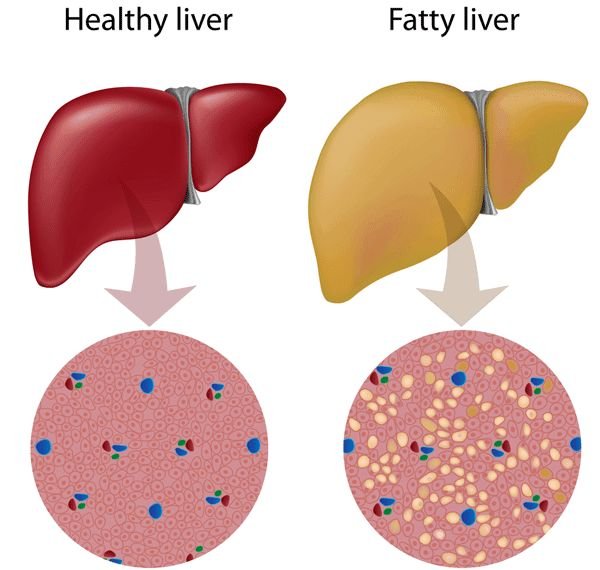
“Fatty liver” is the common name for a condition in which excess fat — mainly triglycerides — accumulates inside liver cells. Medically, a liver is considered fatty when fat makes up more than about 5% of its weight. There are two distinct types, and the distinction matters because the dietary advice differs.
NAFLD and MASLD: the metabolic type
Non-alcoholic fatty liver disease (NAFLD) is fat accumulation in the liver of people who drink little or no alcohol. In 2023, liver specialists updated the terminology: the condition is now called MASLD — metabolic dysfunction-associated steatotic liver disease — because it is fundamentally a metabolic problem, closely tied to insulin resistance, excess abdominal fat, type 2 diabetes, and abnormal blood lipids. If you have fatty liver alongside a large waistline, high triglycerides, or prediabetes, MASLD is almost certainly what is going on. An estimated 25–30% of adults worldwide have it, making it the most common chronic liver condition on the planet. For most readers of this article, MASLD is the relevant diagnosis.
Alcohol-related liver disease: the other type
When significant alcohol intake drives the fat accumulation, it is classified as alcohol-related liver disease (ALD). The two can also overlap — someone with metabolic risk factors who also drinks regularly can have both processes damaging the liver simultaneously, which accelerates progression. The key practical point: if your fatty liver is alcohol-related, reducing alcohol is the single most important step, and no dietary tweak compensates for continued heavy drinking.
Why early action matters
Simple fatty liver (steatosis) on its own usually causes no symptoms and is reversible. But if the underlying drivers continue, a portion of people progress to steatohepatitis (inflammation, now called MASH), then fibrosis (scarring), cirrhosis, and in rare cases liver cancer. You cannot feel these stages happening, which is why “I feel fine” is not a reason to ignore the diagnosis. Diet is the most powerful lever you have at the reversible stages.
How Food Causes Fat to Build Up in the Liver
To understand which foods to avoid, it helps to understand how food becomes liver fat. Three mechanisms do most of the damage.
Fructose and de novo lipogenesis
When you consume more carbohydrate energy than your body needs, the liver converts the excess into fat through a process called de novo lipogenesis (“making new fat”). Fructose is the standout driver here. Unlike glucose, which nearly every cell in the body can use, fructose is metabolised almost exclusively in the liver. A large fructose load — say from two cans of regular soft drink — arrives at the liver all at once, and the liver converts a significant share of it directly into triglycerides, some of which stay in the liver and some of which are exported into the blood, raising triglyceride levels. This is why sugar-sweetened drinks are so strongly linked to fatty liver in study after study: they deliver a concentrated fructose hit with zero fibre, protein, or fat to slow absorption.
Insulin resistance: the amplifier
Repeated spikes of blood sugar from refined carbohydrates and sugary foods gradually make cells less responsive to insulin. The pancreas compensates by producing more insulin, and high insulin levels signal the liver to keep making fat while suppressing fat burning. It is a vicious cycle: insulin resistance worsens fatty liver, and fatty liver worsens insulin resistance. This is why MASLD travels with type 2 diabetes and why the same dietary changes help both.
Ultra-processed foods: the pattern problem
Beyond individual nutrients, the overall pattern of ultra-processed eating — foods engineered to be hyper-palatable, calorie-dense, and easy to overeat — drives the calorie surplus and poor nutrient quality behind most fatty liver. These products combine refined starches, added sugars, unhealthy fats, and high sodium in combinations rarely found in home cooking. Large cohort studies consistently link higher ultra-processed food intake with greater NAFLD/MASLD risk. The practical takeaway: it is rarely one ingredient — it is the pattern of relying on packaged, ready-to-eat products daily.
1. Sugary Drinks: The Biggest Single Offender
If you change only one thing, make it this. Sugar-sweetened beverages — regular cola, lemonades, sweetened iced teas, energy drinks, packaged fruit juices, sharbat, and sweetened lassi — are the most concentrated source of liver-harming fructose in the modern diet.
The numbers
A standard 330 ml can of regular cola contains roughly 35 grams of sugar, most of it as sucrose or high-fructose corn syrup — delivering around 17–20 grams of fructose straight to the liver. The World Health Organization recommends keeping free sugars below 10% of total daily energy intake (about 50 grams for a 2,000-calorie diet), with a conditional recommendation to go below 5% for additional benefit. Two cans of cola alone exceed the 10% limit. Many people drinking “just one or two a day” are unknowingly doubling or tripling their safe sugar intake from drinks alone — and liquid calories barely register as fullness, so they do not displace food; they add on top.
What about fruit juice and “natural” drinks?
This surprises people: a 250 ml glass of orange juice contains about 20–26 grams of sugar — similar to cola. The vitamins do not cancel out the fructose load on the liver. Whole fruit is a different story because its fibre slows absorption and the bulk limits how much you can eat; nobody eats four oranges in two minutes, but drinking their juice takes seconds. Sharbat, rooh afza–style cordials, and sweetened “detox” juices belong in the same category as soft drinks for liver purposes.
What to drink instead
Water is the baseline. Unsweetened green tea and black coffee (see the section below — coffee is genuinely protective) are excellent. Sparkling water with lemon satisfies the fizz craving. If you need the transition, diet sodas are a lesser evil for the liver specifically, though water remains the better long-term habit.
2. Alcohol: The Honest Guidance
Alcohol is directly toxic to liver cells and a direct cause of fat accumulation in the liver — there is no ambiguity here. Even moderate drinking adds a second liver burden on top of metabolic fatty liver, and the combination progresses faster than either alone.
How much is safe with fatty liver?
The honest, evidence-based answer: the less, the better, and ideally none while you are working on reversing fatty liver. There is no “liver-safe” amount of alcohol for someone who already has liver fat accumulation. If your fatty liver is alcohol-related, abstinence is the cornerstone of treatment — the liver can recover remarkably once alcohol is removed. If your fatty liver is metabolic (MASLD) and you drink socially, cutting alcohol out entirely for several months gives your liver the clearest path to recovery.
A note on honesty, not fear
This is not moralising. Alcohol carries social and cultural weight, and many people find abstinence difficult. But pretending a glass or two of wine “doesn’t count” is exactly the thinking that lets liver damage progress silently. If cutting down feels hard, that is worth discussing honestly with your doctor — not with internet lists. No food or supplement compensates for continued drinking.
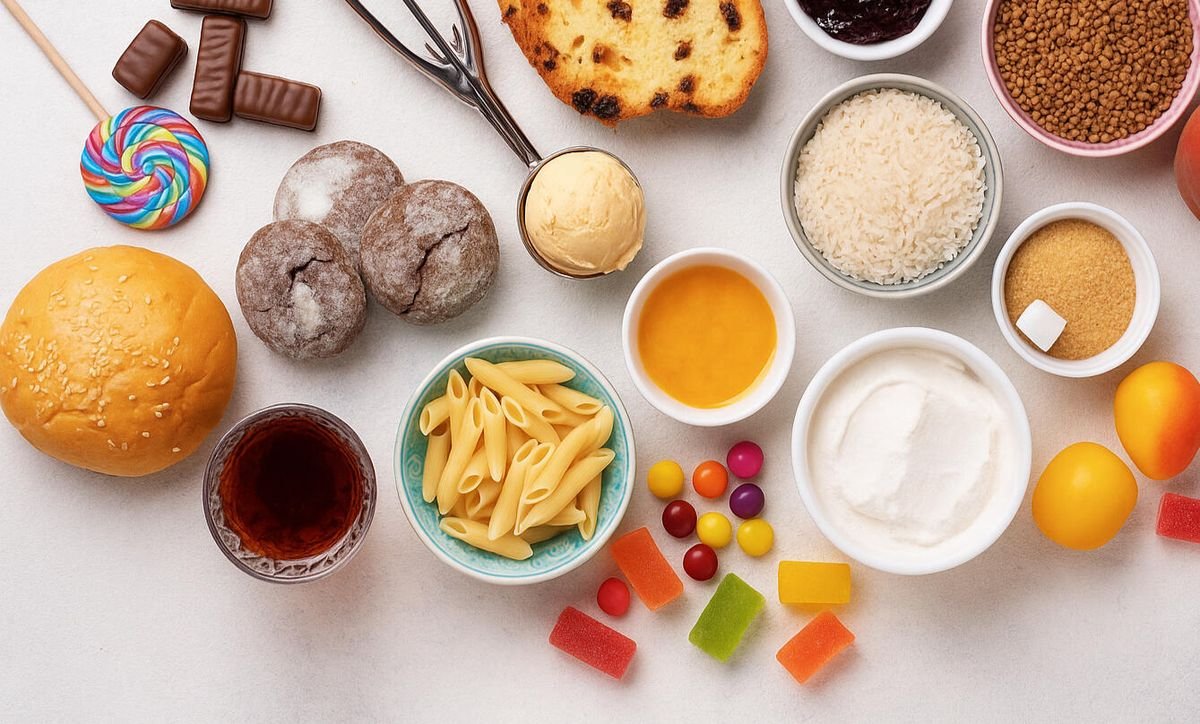
3. Refined Carbohydrates and Sweets
White bread, white rice in large portions, pastries, cakes, biscuits, doughnuts, breakfast cereals with added sugar, and confectionery all share the same problem: starch and sugar with the fibre stripped out, producing rapid blood-sugar spikes that drive insulin resistance and de novo lipogenesis.
The South Asian sweets problem
This deserves its own honest paragraph, because mithai is woven into celebration, hospitality, and family life — and it is also one of the most concentrated sources of the exact nutrients that worsen fatty liver. Gulab jamun, barfi, jalebi, rasmalai, and ladoo combine refined flour or milk solids with heavy sugar syrup; a single piece of gulab jamun can contain 15–25 grams of sugar, and nobody eats just one at a wedding. Bakery items — patties, cream rolls, Swiss rolls, iced buns, rusks dipped in chai — belong in the same category: refined flour plus sugar plus hydrogenated or palm-based fats.
The framing here is moderation, not demonisation. You do not need to refuse every sweet at every family event for the rest of your life. But if mithai and bakery items are a daily habit — the evening bakery run, sweets with every chai — that pattern is actively worsening your liver. Practical rules that work: keep sweets to genuine occasions rather than daily routines, take one piece instead of three, and never eat them on an empty stomach (pair with a meal to blunt the sugar spike).
Portion framing for staples
White rice and white flour (maida) are staples, not poisons. The issue is portion and frequency: very large servings of white rice twice daily, or multiple maida-based items (naan, paratha, bakery snacks) every day, keep insulin chronically elevated. You do not need to eliminate them — but shifting toward whole grains (brown rice, whole-wheat atta, oats, barley) for at least some meals meaningfully reduces the glycaemic load your liver has to handle.
4. Fried Foods and Fast Food
Deep-fried foods — chips/French fries, fried chicken, samosas, pakoras, spring rolls, doughnuts — harm the liver through three routes at once: very high calorie density (driving the surplus behind fatty liver), large amounts of refined starch, and fats damaged by repeated high-heat use.
The reheated-oil problem
Commercial fryers and many street-food stalls reuse frying oil repeatedly. Each heating cycle oxidises the oil further, generating harmful compounds, and foods absorb more degraded fat. This is one reason homemade, occasional fried food in fresh oil is a different proposition from daily bazaar or takeaway fried food. If fried snacks are a daily habit — the evening samosa-and-chai routine, for example — that is a pattern worth breaking.
Parathas fried in ghee: honest framing
Ghee itself is not the villain some make it out to be (more on misunderstood foods below). The problem with a ghee-fried paratha eaten alongside a full meal is calorie stacking: a single paratha fried in a tablespoon of ghee adds roughly 120–150 calories of pure fat on top of an already complete meal. One paratha at breakfast is a different matter from three parathas plus fried eggs plus chai with sugar. The honest framing: enjoy parathas, but count them as what they are — a rich food — and balance the rest of the plate (more vegetables and dal, smaller portions of the fried item). Dry-roasted or lightly brushed parathas on ordinary days, ghee-fried ones as the occasional treat, is a sustainable split.
Fast food meals
A typical fast-food meal — burger, large fries, sugary drink — can deliver 1,200–1,500 calories with 60+ grams of sugar and a heavy refined-carb load in a single sitting. Studies link frequent fast-food consumption directly with NAFLD severity. Once a month is not the issue; twice a week is.
5. Processed and Red Meats
Bacon, sausages, salami, pepperoni, hot dogs, kebabs from unknown processed sources, and heavily processed frozen meats are consistently associated with worse metabolic and liver outcomes. The mechanisms are layered: high saturated fat, high sodium, preservatives (nitrates/nitrites), and the formation of harmful compounds during high-heat processing and charring. Large observational studies link processed meat intake with higher NAFLD risk.
Red meat itself (beef, lamb, mutton) is less clearly harmful than processed meat, but large portions of fatty red meat several times a week add significant saturated fat to a diet that is already overloading the liver. The practical guidance:
- Treat processed meats as occasional foods, not daily breakfast or sandwich staples.
- Choose fresh, lean cuts over processed versions; trim visible fat.
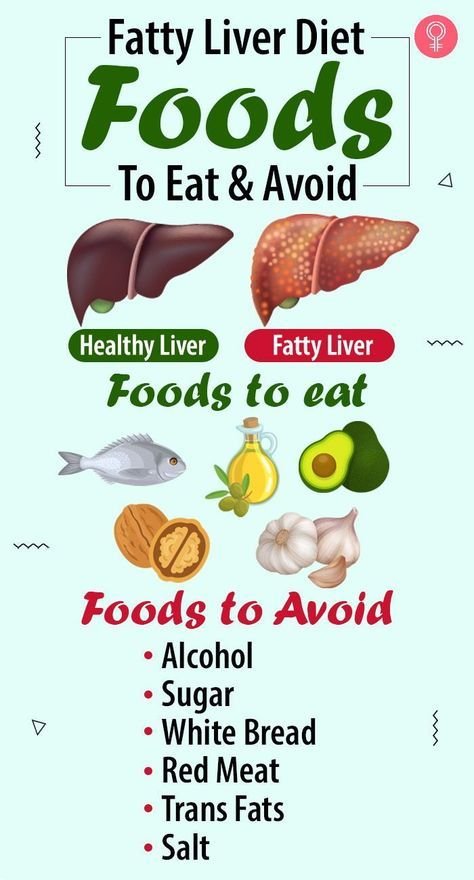
- Build more meals around the genuinely liver-friendly proteins: fish (especially oily fish like salmon, sardines, mackerel), chicken breast, eggs in moderation, lentils, chickpeas, and beans.
- When you do eat red meat, keep portions modest (a palm-sized serving) and pair with plenty of vegetables.
6. High-Sodium Foods
Salt does not directly deposit fat in the liver, so it surprises people to see it on this list. The connection is indirect but real: high sodium intake is linked with greater insulin resistance, higher blood pressure, and worse overall metabolic health — and MASLD is a metabolic disease. People with fatty liver very often have hypertension too, and the two amplify cardiovascular risk together.
Hidden salt sources
Most excess sodium comes not from the salt shaker but from processed foods: crisps and chips, instant noodles, canned soups, processed cheese, pickles and achaar (a tablespoon of mango pickle can contain 300–500 mg of sodium), papad, salted peanuts, soy sauce–heavy takeaway food, and restaurant meals generally. South Asian cooking at home is often already generous with salt; adding daily achaar, papad, and packaged snacks on top pushes intake far beyond the WHO’s recommended less than 5 grams of salt per day (about one teaspoon).
Practical sodium control
Cook with measured salt rather than by handful. Keep achaar and papad as small condiments, not daily staples. Rinse canned beans. Read labels on bread, cheese, and sauces — the numbers are often startling. Flavour food with lemon, herbs, garlic, and spices instead of extra salt; your palate adjusts within two to three weeks.
7. Full-Fat Dairy in Excess and Creamy Desserts
This one needs nuance, because dairy is not a villain — but certain dairy products eaten in quantity are a meaningful source of saturated fat and sugar. Cream-based desserts (shahi tukra, kheer made rich, trifle, ice cream), sweetened condensed-milk sweets, cheese-laden fast food, and drinking full-cream milk by the litre all add saturated fat that, in surplus, contributes to liver fat.
The distinction: plain yoghurt (dahi), moderate milk in chai, and small amounts of cheese are fine for most people — fermented dairy like yoghurt is even associated with better metabolic health in some studies. The foods to limit are the dessert end of dairy: the creamy, sugary preparations where dairy is a vehicle for sugar and saturated fat together. Switch dessert portions to fruit with plain yoghurt, and keep full-fat dairy as an ingredient, not a beverage.
8. “Health Halo” Traps: Granola Bars, Flavoured Yoghurts, Smoothie Bowls
A quick but important category: products marketed as healthy that are, for liver purposes, desserts. Many granola bars contain 12–20 grams of sugar per small bar. Flavoured yoghurts often match ice cream for sugar content. Large smoothie bowls with honey, dried fruit, and sweetened granola can exceed 50 grams of sugar — a full day’s WHO limit in one “healthy” breakfast. Restaurant salads drowned in creamy dressing and candied toppings are the savoury equivalent.
The rule is simple and applies everywhere: read the nutrition label, not the marketing. Anything with more than about 10 grams of added sugar per serving deserves the same caution as an acknowledged sweet — whatever the packaging claims.
Foods People Think Are Bad for Fatty Liver (But Are Fine)
Fear-based lists cause real harm: people cut out nutritious foods while continuing the actual culprits. Here is what the evidence says about the usual suspects.
Eggs: fine in moderation
Eggs were demonised for decades over cholesterol, but dietary cholesterol has a modest effect on blood cholesterol for most people, and eggs do not cause fatty liver. They are an excellent source of protein and choline — and choline is actually important for liver function, helping export fat out of the liver. One to two eggs daily as part of an overall balanced diet is fine for most people with fatty liver. What matters is the preparation: boiled or poached eggs are very different from eggs fried in reused oil with processed sausage.
Coffee: genuinely protective
This is one of the most consistent findings in liver research: regular coffee consumption is associated with less liver fat, less fibrosis, and lower liver-related mortality — across multiple large studies. The benefit appears with both caffeinated and decaffeinated coffee, suggesting it is the compounds in coffee (not just caffeine) doing the work. Two to three cups daily is the range most associated with benefit. The catch, and it matters: this means black or lightly milky coffee — not a 500-calorie caramel frappé with whipped cream, which is a dessert wearing a coffee costume.
Ghee and butter: neutral in small amounts, harmful in excess
Neither is poison; neither is medicine. In small culinary amounts, ghee and butter are neutral components of a balanced diet. They become a problem the way any concentrated fat becomes a problem: in large daily quantities, on top of an already calorie-heavy diet. A teaspoon of ghee tempering dal is fine; half a cup across parathas, rice, and sweets daily is a different story. The demonisation of ghee — and the equally silly glorification of it as a superfood — both miss the point. Dose and context decide.
Nuts and peanuts: protective, not fattening (in portions)
People avoid nuts because they are calorie-dense, but studies associate nut consumption with less fatty liver, likely because their unsaturated fats, fibre, and micronutrients improve metabolic health — and because nut eaters tend to snack on nuts instead of crisps and biscuits. The key is portion: a small handful (about 30 grams) daily. A whole 200-gram bag in front of the television is a different matter. Choose unsalted, unroasted or dry-roasted varieties.
The portion-vs-demonisation principle
No single food “gives” you fatty liver, and no single food cures it. The liver responds to patterns: total calorie balance, the proportion of sugar and refined starch, the quality of fats, and alcohol. Demonising eggs while drinking two colas a day is rearranging deck chairs. Fix the big levers first.
South Asian Eating: Honest, Practical Guidance
Generic Western advice (“avoid pizza and doughnuts”) misses the foods that actually fill South Asian plates. Here is an honest pass through the real dietary landscape for Pakistani, Indian, and Bangladeshi readers — and for diaspora families in the UK and US.
Chai with sugar: the daily drip
Two to three cups of doodh patti or chai, each with two teaspoons of sugar, adds up to 6 teaspoons (about 24 grams) of sugar daily — half the WHO limit — before food is even considered. This is the single most common “invisible” sugar source in South Asian households. The fix is gradual and painless: reduce by half a teaspoon per cup each week; within a month most people happily drink chai with half the sugar or none. Adding cardamom, ginger, or cinnamon makes reduced-sugar chai taste richer, easing the transition.
Sharbat, sodas, and sweet lassi
Rooh afza–style cordials, packaged sharbat, and sweet lassi are culturally beloved and metabolically identical to soft drinks — concentrated sugar water. At dawats and in Ramadan iftar spreads especially, people consume several glasses without thinking of them as “sugary drinks.” Treat them as what they are: occasion drinks, in small glasses, not daily hydration. Nimbu pani with minimal sugar, salted lassi, or plain water with mint serve the same refreshing role.
Desi fast food and takeaway culture
Shawarma loaded with garlic mayo, loaded fries, zinger-style fried chicken burgers, seekh kebab rolls dripping with oil, chargha, and late-night takeaway biryani with extra oil — the desi fast-food scene combines every liver stressor at once: refined carbs, deep-fried fats, sugary drinks, and enormous portions. Once or twice a month will not define your liver health; every weekend will. When ordering: grilled over fried, sauce on the side, water instead of soda, and one portion instead of “deal for two” eaten solo.
Wedding-season and dawat eating
Shaadi season is a genuine dietary hazard for fatty liver: multi-course dinners, fried starters, sugary drinks, mithai tables, and social pressure to eat generously — repeated across dozens of events. You cannot (and should not) skip every wedding. Strategies that work: eat a sensible high-protein meal before the event so you arrive satisfied; fill half your plate with salad and grilled items first; take small portions of the rich dishes rather than refusing them; alternate every sweet drink with water; and keep the days between events clean rather than writing off the whole season.
The home-cooking advantage
Here is the genuinely good news: traditional home-cooked South Asian food — dal, sabzi, grilled or curry chicken, whole-wheat roti, plain rice in moderate portions, dahi — is an excellent base for liver health. The problem was never the cuisine; it is the modern overlay of packaged snacks, sugary drinks, bakery items, and restaurant food on top of it. Returning to home cooking for most meals is itself a powerful intervention.
Smart Swaps: What to Eat Instead

Avoidance lists fail when they leave a vacuum. Every “stop” needs a “start instead.”
| Instead of this | Choose this |
|---|---|
| Regular cola / soft drinks | Sparkling water with lemon, or unsweetened iced green tea |
| Sweetened packaged juice | Whole fruit, or water with fresh fruit slices |
| Sugary chai (2 tsp sugar) | Chai reduced gradually to ½ tsp or none, with cardamom/ginger |
| Sharbat / sweet cordials | Salted lassi, nimbu pani (minimal sugar), or mint water |
| White bread / bakery buns | Whole-grain bread, or whole-wheat roti |
| Large plates of white rice | Smaller rice portion + extra dal/sabzi, or brown rice/barley mix |
| Gulab jamun / barfi (daily habit) | Fresh fruit with plain yoghurt; mithai only on true occasions |
| Samosa / pakora (daily snack) | Roasted chickpeas, peanuts (unsalted, 30 g), or fruit |
| Ghee-fried paratha daily | Dry-roasted or lightly brushed paratha; vegetables and dal alongside |
| Fried chicken / zinger burger | Grilled chicken, tandoori chicken, or fish |
| Processed sausages / salami | Fresh lean chicken, eggs, lentils, or chickpeas |
| Crisps and chips | Roasted makhana, unsalted nuts (small handful), or cucumber with hummus |
| Creamy desserts / ice cream | Fruit chaat, plain yoghurt with berries, or a small piece of dark chocolate |
| Flavoured sugary yoghurt | Plain dahi with fresh fruit |
| Granola bar | A small handful of nuts and a piece of fruit |
Your 7-Day Avoidance Checklist
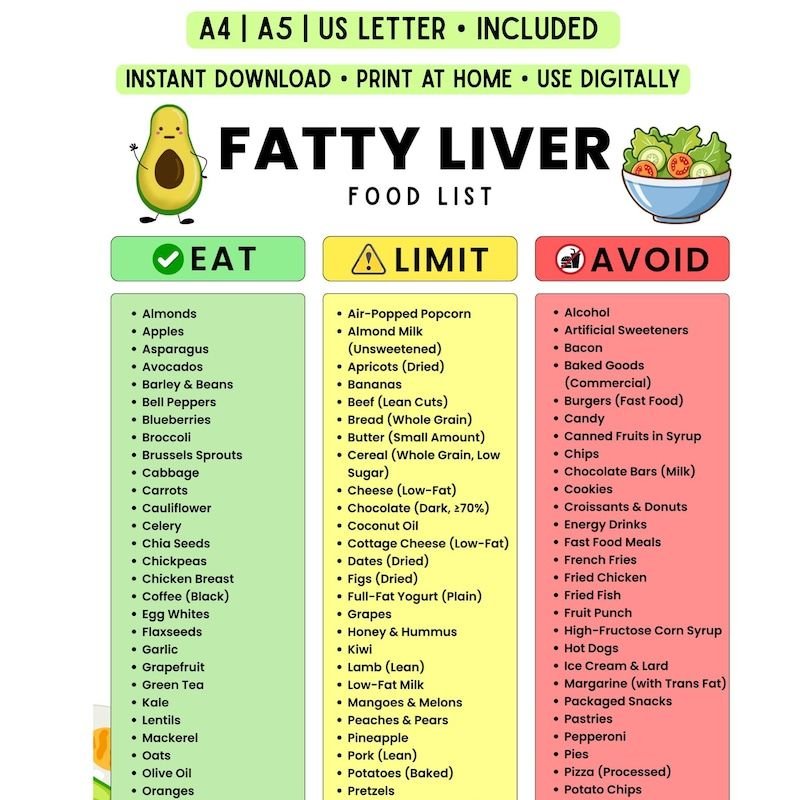
Do not try to change everything on day one — that fails by day four. Use this as a progressive checklist; tick items off as they become habits.
Days 1–2: Drinks
– [ ] Replace all sugary drinks (soda, packaged juice, sharbat) with water, sparkling water, or unsweetened tea
– [ ] Cut chai sugar by half a teaspoon per cup
– [ ] No alcohol — commit to at least 30 alcohol-free days
Days 3–4: Snacks and sweets
– [ ] Remove daily bakery items, crisps, and biscuits from the routine; keep healthy snacks visible instead
– [ ] Move mithai/sweets to “occasions only” — none on ordinary days this week
– [ ] Check labels on “healthy” snacks (granola bars, flavoured yoghurt); drop anything over 10 g added sugar per serving
Days 5–6: Meals
– [ ] Swap one refined-carb staple for whole grain (brown rice mix, whole-wheat atta, oats at breakfast)
– [ ] Replace one fried item with a grilled, baked, or steamed version
– [ ] Halve the achaar/papad habit; measure cooking salt instead of pouring freely
Day 7: Review
– [ ] One takeaway meal maximum this week — grilled, sauce on the side, water to drink
– [ ] Plan next week’s meals around home cooking for at least 5 dinners
– [ ] Note what was hardest — that is the habit to design around, not willpower through
Repeat the cycle. Habits compound; perfection is not required.
Eating Out Without Sabotaging Your Liver
Restaurant food is engineered for pleasure, not liver health — but a few reliable strategies let you eat out regularly without undoing your progress.
- Drink strategy: Order water first, always. If others order soft drinks or cocktails, sparkling water with lime keeps you socially comfortable without the sugar or alcohol.
- Starter strategy: Begin with salad, soup (broth-based, not creamy), or grilled starters. Arriving at the main course already partly satisfied prevents the bread-basket binge.
- Main course strategy: Grilled, tandoori, steamed, or baked preparations over fried or “creamy/buttery” ones. Ask for sauce or gravy on the side — you will use a third of what they’d pour over.
- Carb strategy: One bread or one rice portion, not both in full. At desi restaurants, a single roti plus a modest rice serving with extra dal and sabzi beats three naans.
- Dessert strategy: Share one dessert, or order fresh fruit or chai (light sugar) instead. The first three bites deliver most of the pleasure; the rest is habit.
- Frequency honesty: Eating out twice a week with these strategies is manageable. Eating out five nights a week will overwhelm any strategy — that is a pattern problem, not a willpower problem.
When Diet Alone Is Not Enough: See a Doctor
This article is education, not medical advice. Fatty liver is a medical diagnosis that needs proper evaluation, and diet supports treatment — it does not replace it.
Get your diagnosis confirmed properly. Fatty liver is usually found on ultrasound or blood tests done for another reason. If you have been told you have it, ask your doctor about the stage — simple steatosis versus inflammation or fibrosis changes the urgency. People with diabetes, very high triglycerides, or obesity should be assessed more carefully, as they progress faster.
See your doctor promptly if you notice red flags: persistent pain or heaviness in the upper right abdomen, unexplained fatigue that does not lift with rest, yellowing of the eyes or skin (jaundice), dark urine with pale stools, swelling of the abdomen or legs, easy bruising or bleeding, or unexplained weight loss. These can signal advancing liver disease and need medical evaluation, not dietary tweaks.
Be cautious with “liver detox” products. Milk thistle, “liver cleanse” teas, and herbal detox kits are marketed aggressively, but there is no strong evidence they reverse fatty liver — and some herbal products have themselves caused liver injury. No supplement replaces the fundamentals: less sugar and alcohol, better overall diet, gradual weight loss if overweight, and regular movement. Discuss any supplement with your doctor or pharmacist before taking it.
Frequently Asked Questions
Can fatty liver be reversed by diet alone?
In its early stages — simple steatosis without significant inflammation or scarring — fatty liver is often reversible, and diet is the most powerful tool for that reversal. Studies show that losing 7–10% of body weight through diet and exercise resolves steatosis in a large proportion of people and can improve inflammation too. “Diet alone” usually works best combined with regular physical activity (even brisk walking 30 minutes daily) and alcohol avoidance. Once significant fibrosis or cirrhosis has developed, the liver’s ability to fully recover is reduced — which is exactly why early dietary action matters so much.
Is fruit bad for fatty liver because of fructose?
No — whole fruit is not a problem and is generally beneficial. The fructose in whole fruit comes packaged with fibre, water, and micronutrients, and the physical bulk limits how much you can eat; it is absorbed slowly and does not flood the liver the way liquid sugar does. The evidence linking fructose to fatty liver concerns added fructose in sugary drinks and processed foods, not fruit. What to avoid is fruit juice (even 100% juice) in large quantities and dried fruit eaten by the handful, since both concentrate sugar without the same satiety. Two to three servings of whole fruit daily fit comfortably in a liver-friendly diet.
Should I completely avoid ghee if I have fatty liver?
No — complete avoidance is unnecessary, but quantity and context matter. Ghee is a concentrated saturated fat (about 120 calories per tablespoon), so using it lavishly every day — frying parathas, tempering everything, adding it to rice and dal — contributes a meaningful calorie and saturated-fat load that works against liver recovery. A teaspoon or two for tempering or flavour within an otherwise balanced, calorie-appropriate diet is fine for most people. The foods to prioritise cutting are sugary drinks, alcohol, and ultra-processed snacks — those move the needle far more than the ghee in your tadka.
How long does it take to reverse fatty liver with diet?
There is no fixed timeline, and anyone promising one is selling something. Measurable improvements in liver fat can appear within 8–12 weeks of sustained dietary change and modest weight loss, and many people see normalisation of liver enzymes within 3–6 months. Full reversal of steatosis typically takes several months of consistent habits, not days. The honest framing: think in terms of a permanent eating pattern, not a 30-day fix. Crash diets and extreme restrictions often backfire — gradual, sustainable change wins because the liver responds to what you do for years, not weeks.
Are “liver detox” diets and juices effective?
There is no scientific basis for the idea that special juices, teas, or short “detox” regimens cleanse the liver of fat. The liver detoxifies itself continuously — that is its job — and what it needs is less incoming burden (less sugar, alcohol, and excess calories) plus the nutrients of a balanced diet, not a three-day juice fast. Juice fasts can actually be counterproductive: large volumes of fruit juice deliver exactly the fructose load the liver is struggling with, and very-low-calorie crash diets can transiently worsen liver tests. Save your money and put the effort into the sustainable changes in this guide instead.
The Bottom Line
Fatty liver is not a verdict — at its early stages, it is a warning your body is giving you while there is still time to act. The foods that matter most are not exotic: sugary drinks, alcohol, daily sweets and bakery items, fried fast food, processed meats, and the steady drip of sugar in chai and sharbat. Cut those back seriously, keep the nutritious foods people wrongly fear (eggs, coffee, nuts, home-cooked meals), and give it months of consistency rather than days of perfection. Your liver is one of the few organs that can genuinely recover — meet it halfway.
If you want personalised guidance rather than general information — a diet plan built around your blood reports, your medications, your food preferences, and the realities of your household’s cooking — that is exactly what a one-to-one consultation is for. Book an appointment with our registered nutritionist, and we will build your liver-friendly eating plan together, step by step.
Keep Reading
- Liver and Kidney Health: The Complete Guide to Healthy Organs
- Best Foods for Liver Health Detox: What Science Actually Says
- Health Disclaimer