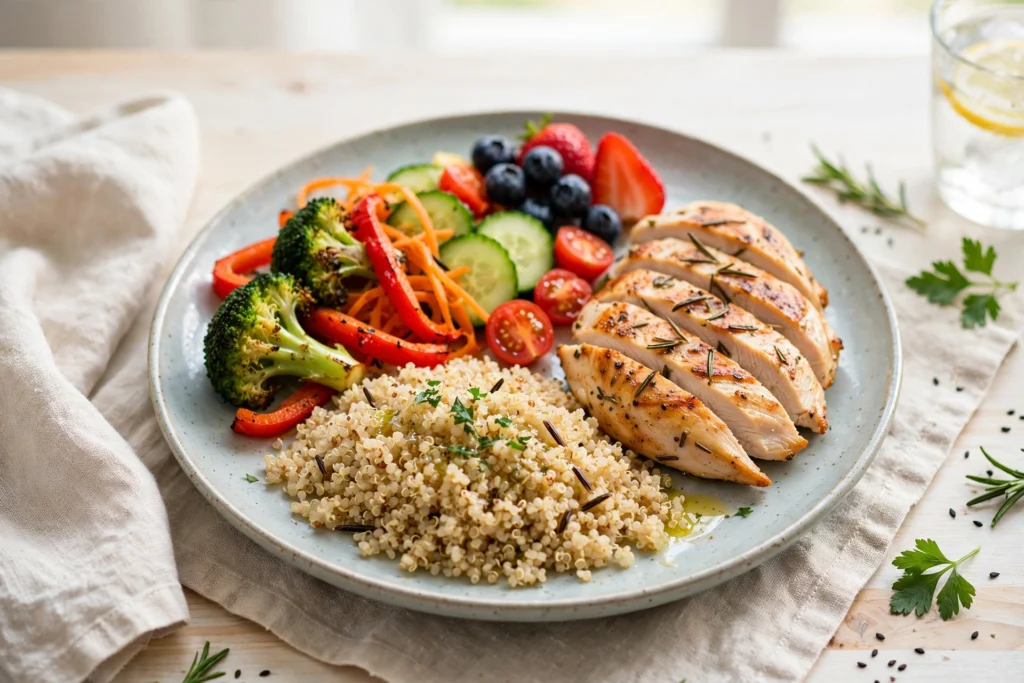
Pregnancy changes what your body needs from food. Your blood volume expands by roughly half, your baby’s brain, bones, and organs are built almost entirely from the nutrients you eat, and your own tissues work harder to support the process. That sounds demanding — and it is — but it does not require an exotic shopping list. Most of the nutrients that matter most are sitting in an ordinary kitchen: daal, palak, dahi, eggs, fruit, and milk.
The idea is not to eat twice as much. Most women need only a modest increase in calories — roughly none extra in the first trimester and about 300–450 extra calories a day in the second and third trimesters — but a substantially bigger supply of a few key nutrients: folate, iron, calcium, protein, DHA, choline, vitamin D, and fiber. Getting those from food is preferable because whole foods deliver nutrients alongside fiber, water, and plant compounds that supplements cannot replicate. A prenatal multivitamin still has an important role, especially for folate and vitamin D, but it works best as a safety net under a solid diet, not as a replacement for one.
This guide walks through exactly which foods deliver which nutrients, how much of each to aim for, and what a practical day of eating can look like — including familiar South Asian foods. It is written for an international audience, so amounts are given in grams and everyday servings, and both Western and desi staples are covered.
In this guide, you will learn:
- The daily nutrient targets that matter most in pregnancy — and which foods meet them
- Folate, iron, calcium, protein, DHA, choline, and vitamin D sources with exact portions
- How to combine everyday South Asian foods (daal, chana, palak, methi, dahi) into a pregnancy-supporting diet
- Healthy snack ideas, hydration targets, and food-safety rules
- Budget-friendly superfoods and a sample one-day meal plan
- Answers to five of the most common questions about eating in pregnancy
Medical disclaimer: This article is for education only and is not medical advice. Every pregnancy is different — talk to your doctor, obstetrician, or midwife before making major dietary changes, especially if you have anemia, gestational diabetes, thyroid problems, or a high-risk pregnancy.
Why Pregnancy Nutrition Is Different
Before the food lists, it helps to see the numbers. Pregnancy raises the recommended intake of several nutrients well above what a non-pregnant woman needs. These are the targets this guide is built around, drawn from widely used reference values:
| Nutrient | Daily target in pregnancy | Why it matters |
|---|---|---|
| Folate | 600 mcg | Supports the baby’s neural tube and DNA development, especially in early pregnancy |
| Iron | 27 mg | Needed for the expanded blood supply and to reduce the risk of anemia |
| Calcium | 1,000 mg | Builds the baby’s bones and teeth; protects the mother’s bone density |
| Protein | ~60–80 g | Supplies the amino acids for the baby’s tissues, placenta, and the mother’s body |
| DHA (omega-3) | 200–300 mg | Supports the baby’s brain and eye development |
| Choline | 450 mg | Important for brain development and liver function |
| Vitamin D | 15 mcg (600 IU) | Helps calcium absorption and bone development |
| Fiber | ~28 g | Helps prevent constipation, which is common in pregnancy |
You do not need to track these numbers daily. But knowing them helps you understand why certain foods keep appearing on every pregnancy list: they are simply the most efficient carriers of these nutrients. The sections below are organized by nutrient so you can spot gaps in your own diet and fill them deliberately.
Folate-Rich Foods: The First-Priority Nutrient
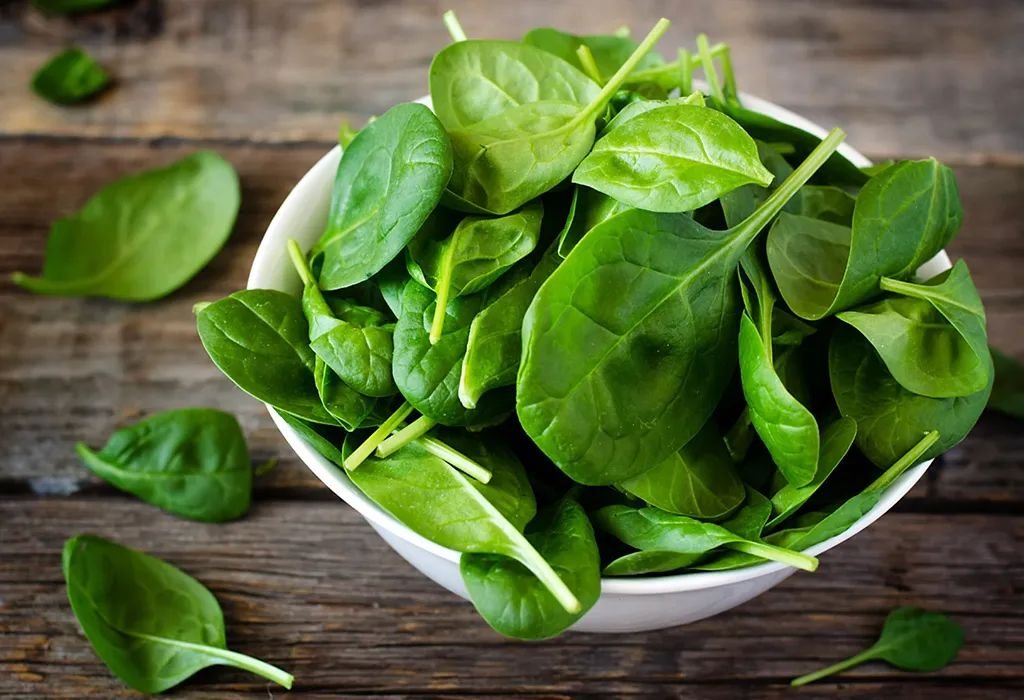
Folate (vitamin B9) is arguably the single most important nutrient in pregnancy. It supports the development of the baby’s neural tube — the structure that becomes the brain and spinal cord — and because that development happens very early, often before a woman knows she is pregnant, a steady folate intake before and during early pregnancy matters greatly.
The daily target is 600 micrograms (mcg) of dietary folate equivalents. Most prenatal supplements contain folic acid (the synthetic form), which helps, but folate from food adds variety and fiber. The richest food sources are:
Lentils and legumes
Cooked lentils (daal) are one of the best folate foods anywhere. One cup of cooked lentils (about 200 g) provides roughly 350–360 mcg of folate — more than half the daily target in a single bowl. Chickpeas (chana) are nearly as good: one cup of cooked chickpeas gives about 280 mcg. Black-eyed peas, kidney beans (rajma), and mung beans (moong) are also strong contributors, typically 200–300 mcg per cooked cup.
Leafy greens
Cooked spinach (palak) is a classic folate source: one cup of cooked spinach (about 180 g) provides around 260 mcg. Fenugreek leaves (methi), mustard greens (sarson), and collard-style greens all contribute meaningfully. Cooking reduces the volume, so a small heap of raw palak becomes a nutrient-dense cup once cooked down — an easy way to add it to daal, roti fillings, or sabzi.
Fruits and other sources
Oranges and orange juice, mangoes, papaya, bananas, asparagus, broccoli, and Brussels sprouts all provide useful amounts of folate. Eggs contribute a modest amount too. A practical habit: add a citrus fruit or a glass of fresh orange juice to the meal that contains your daal or palak — the vitamin C also helps your body absorb iron, which you will read about next.
Portion tip: A lunch of one cup of cooked masoor daal (200 g) plus one cup of cooked palak (180 g) delivers roughly 600 mcg of folate — the full daily target — in a single ordinary desi meal.
Iron-Rich Foods: Fighting Pregnancy Anemia
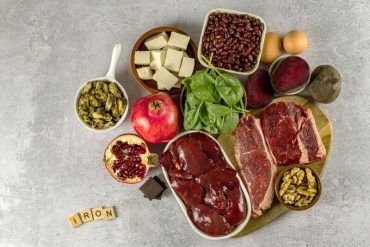
Pregnancy raises the iron target to 27 mg per day because your body is making far more red blood cells. Iron deficiency is one of the most common nutritional problems in pregnancy worldwide, and it is especially common among South Asian women, where diets may be low in red meat and high in tea (whose tannins reduce iron absorption). Anemia can leave you exhausted and may increase the risk of complications, so this section deserves attention.
Iron comes in two forms. Heme iron from meat, chicken, and fish is absorbed well (roughly 15–35%). Non-heme iron from plant foods is absorbed less efficiently (roughly 2–20%), but its absorption improves dramatically when eaten with vitamin C. Since many readers follow vegetarian diets, both paths are covered here.
Plant-based iron sources
- Lentils and chickpeas: One cup of cooked lentils provides about 6.6 mg of iron; a cup of cooked chickpeas about 4.7 mg. Kidney beans and soybeans are comparable. These should be daily staples, not occasional foods.
- Cooked spinach (palak): One cup provides roughly 6.4 mg of iron. Pairing palak with lemon juice (nimbu) is not just flavor — the vitamin C genuinely improves how much iron your body takes up.
- Pumpkin seeds: A 30 g handful provides about 2.5–3 mg of iron, plus zinc and magnesium.
- Dried fruit: A small box of raisins (40 g) adds about 1 mg; dried apricots are similar.
- Fortified cereals and whole grains: Check labels — many breakfast cereals are fortified with iron, and whole wheat atta contributes more than refined flour.
Animal-based iron sources
- Lean red meat: A 100 g serving of lean beef provides about 2.6–3 mg of heme iron, the most easily absorbed form. One or two servings a week is plenty for most women.
- Chicken and turkey: Dark meat provides more iron than breast.
- Fish and eggs: Moderate contributors; eggs also supply choline (covered below).
The vitamin C trick — and the tea caution
This is the most actionable advice in the whole article: eat a vitamin C source with every iron-rich meal. A squeeze of lemon over daal, a few slices of amrood (guava), an orange, anar (pomegranate) seeds, strawberries, or bell peppers alongside the meal can multiply non-heme iron absorption several times over. Conversely, drinking chai or coffee with the meal can cut absorption noticeably because of tannins — keep tea at least an hour away from your main iron-rich meals. This single habit change is one of the simplest ways vegetarian pregnant women can protect their iron status.
Portion tip: One cup of cooked masoor daal (6.6 mg) + one cup of cooked palak (6.4 mg) + lemon juice on top + an orange afterwards puts you at roughly half the 27 mg target in one meal. Two such meals a day, plus eggs or meat occasionally, gets most women close — with supplements filling any remaining gap.
Calcium Sources: Building Two Skeletons
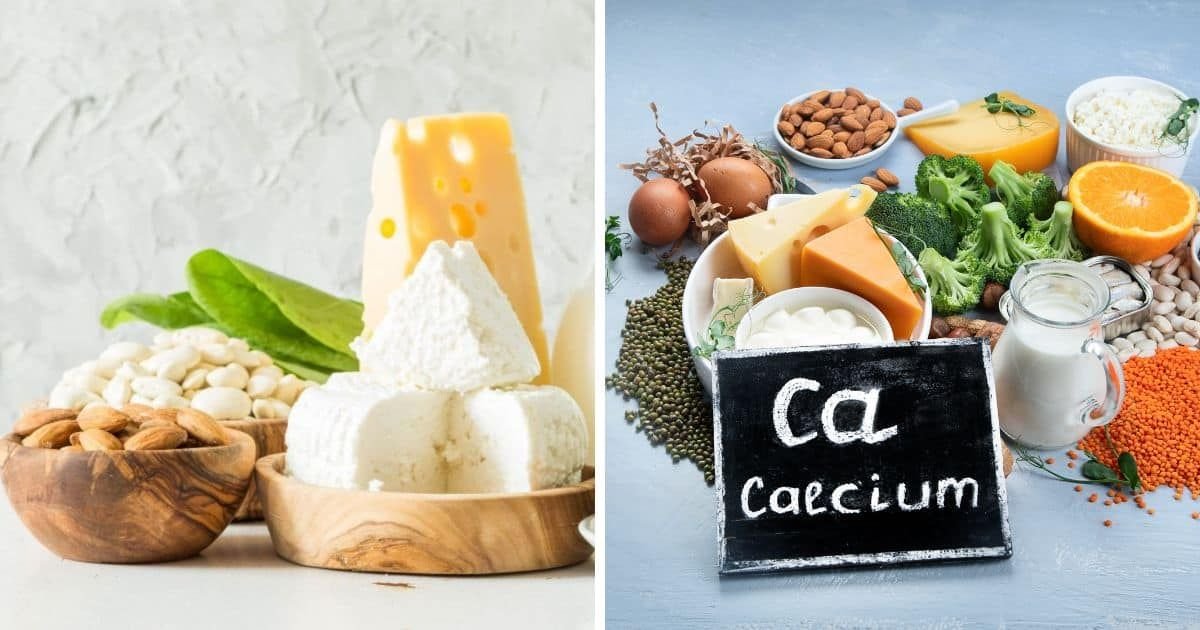
The target is 1,000 mg of calcium per day. Your baby’s bones and teeth are built from calcium, and if your diet falls short, your body will draw it from your own bones. Research suggests that adequate calcium intake may also be associated with a lower risk of pregnancy-related high blood pressure in women with low baseline intake — another reason not to treat this nutrient casually.
Dairy: the straightforward route
- Milk (doodh): One 250 ml glass of cow’s or buffalo milk provides roughly 300 mg of calcium — nearly a third of the daily target. Two to three glasses a day covers most of the need.
- Dahi (yogurt): A 200 g bowl of plain yogurt provides about 220 mg, plus protein and gut-friendly probiotics. Curd rice, raita, lassi, and plain dahi with fruit are all good vehicles.
- Paneer: About 100 g provides roughly 200–250 mg of calcium, plus solid protein.
- Buttermilk (chaas): Lighter than milk but still contributes calcium and hydration.
Non-dairy calcium sources
- Fortified plant milks: Soy, oat, or almond milks fortified with calcium typically match dairy at about 300 mg per 250 ml — check the label, since unfortified versions have very little.
- Sesame seeds (til): Two tablespoons (about 20 g) provide roughly 180 mg. Til laddoo, tahini, or a sprinkle over sabzi all work.
- Almonds (badam): A 30 g handful provides about 75 mg.
- Tofu set with calcium sulfate: Can provide 300+ mg per 100 g serving — check the label.
- Small fish eaten with bones: Sardines (about 100 g) provide roughly 380 mg.
- Leafy greens: Cooked palak and methi contribute calcium too, though their oxalates reduce how much is absorbed — count them as a bonus, not a primary source.
Portion tip: A day with 2 glasses of milk (600 mg) + 1 bowl of dahi (220 mg) + a handful of almonds and a serving of palak lands you right around 1,000 mg without thinking hard.
Protein Needs: The Building Blocks
Protein requirements rise in pregnancy to about 1.1 g per kilogram of body weight per day, which works out to roughly 60–80 g daily for most women. Protein supplies the amino acids used to build the baby’s organs, the placenta, the uterus, and the expanded blood volume. Most women who eat three balanced meals plus snacks reach this target naturally — but it is worth checking if your diet is heavily carbohydrate-based, as many rice-and-roti-heavy diets are.
Best protein sources with portions
- Eggs: One large egg provides about 6 g of protein plus choline and vitamin D. Two eggs at breakfast = 12 g.
- Daal + rice or roti: The classic combination is nutritionally smart — legumes and grains together provide a complete set of amino acids. One cup of cooked daal ≈ 18 g of protein.
- Chicken: 100 g of cooked chicken breast provides about 31 g.
- Fish: 100 g of cooked salmon or similar provides about 25 g, plus DHA.
- Dahi and milk: 200 g of dahi ≈ 7 g; a glass of milk ≈ 8 g.
- Paneer: 100 g provides about 18 g.
- Soybeans and soya chunks: Among the richest plant proteins — 50 g of dry soya chunks can provide about 26 g of protein once cooked.
- Nuts and seeds: A 30 g handful of almonds ≈ 6 g; peanuts similar.
Practical spread: Aim for a protein source at every meal and at least one snack. For example: 2 eggs at breakfast (12 g), daal + 2 rotis at lunch (20 g), chicken or paneer at dinner (25–30 g), and dahi or nuts as a snack (7 g) — that day totals roughly 65–70 g with no special effort.
DHA and Omega-3 Foods: For the Baby’s Brain
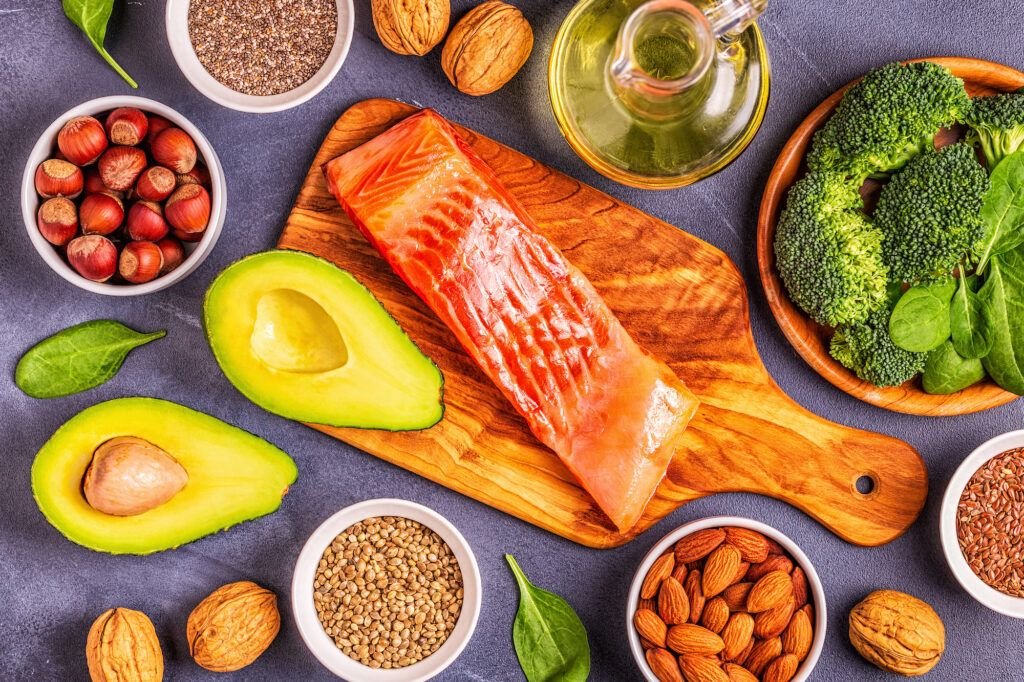
DHA is an omega-3 fatty acid concentrated in the brain and eyes, and the baby’s demand peaks in the third trimester when brain growth is fastest. Many expert bodies suggest pregnant women aim for at least 200–300 mg of DHA per day. Oily fish is by far the most efficient source.
Oily fish: the top source
The standard guidance is two servings of low-mercury oily fish per week, with each serving about 140 g cooked weight:
- Salmon: One 140 g serving provides roughly 1,000–1,500 mg of DHA — several days’ worth in one meal.
- Sardines: Cheap, low in mercury, and rich in DHA plus calcium from the bones.
- Trout and mackerel (small varieties): Good options; choose smaller fish to keep mercury low.
- Rohu, hilsa (ilish): Common South Asian fish that do provide omega-3s, though fattier varieties vary in DHA content.
Stick to the “two servings a week” pattern and avoid high-mercury fish: shark, swordfish, king mackerel, and tilefish. Limit tuna (especially bigeye/ahi) to occasional small portions.
Plant-based omega-3 options
Plant foods provide ALA, a different omega-3 that the body converts to DHA only inefficiently — but they still contribute and are worth including:
- Walnuts (akhrot): A 30 g handful provides about 2.5 g of ALA.
- Flaxseed (alsi): One tablespoon of ground flaxseed provides about 1.6 g of ALA. Grind it fresh — whole seeds pass through undigested.
- Chia seeds: One tablespoon provides about 1.7 g of ALA.
Vegetarian women who eat no fish should discuss an algae-based DHA supplement with their doctor, since food alone rarely reaches 200–300 mg of DHA without fish.
Fiber Foods: Preventing Constipation
Pregnancy hormones slow digestion, iron supplements can constipate, and the growing uterus presses on the bowel — so constipation is extremely common. The target is about 28 g of fiber per day, and many women get barely half that.
High-fiber foods worth eating daily
- Legumes: Daal, chana, rajma, and lobia are fiber champions — one cup of cooked lentils provides about 15 g of fiber, more than half the daily target.
- Whole grains: Whole wheat atta (2 rotis ≈ 4–6 g), brown rice, oats (one 40 g bowl ≈ 4 g), barley (jau).
- Vegetables: Aim for at least 3–4 servings a day. Bhindi (okra), gourds, carrots, peas, and leafy greens all contribute.
- Fruits: Guava (amrood) is a standout — one medium guava provides about 5 g of fiber. Pears, apples (with skin), berries, and anar are all good.
- Nuts and seeds: Badam, peanuts, flaxseed, and chia add fiber alongside healthy fats.
Practical constipation tips
Increase fiber gradually and drink more water at the same time — fiber without water can make constipation worse. Prunes or prune juice (4–5 prunes) are a well-supported natural option. Isabgol (psyllium husk), one teaspoon in water or milk, is a traditional and generally safe remedy, but check with your doctor first. Gentle daily walking also helps keep things moving.
Vitamin D Sources: The Sunshine Nutrient
The target is 15 mcg (600 IU) per day. Vitamin D helps your body absorb calcium and supports bone development, and deficiency is remarkably common — including in sunny countries, because clothing, indoor lifestyles, and darker skin (which needs more sun exposure to make the same amount of vitamin D) all reduce production. South Asian women living in the UK and Europe are at particularly high risk of deficiency.
Food sources
Honestly, food alone rarely covers vitamin D — but these help:
- Oily fish: Salmon, sardines, and mackerel are among the few meaningful food sources.
- Egg yolks: One yolk provides roughly 1 mcg — small, but it adds up across the day.
- Fortified milk and cereals: Many brands add vitamin D; check labels, since this varies by country.
- Mushrooms exposed to sunlight: A less-known but genuine source.
Sunlight and supplements
Brief, regular sun exposure on arms and legs — roughly 10–20 minutes midday, a few times a week, adjusted for skin tone and climate — supports vitamin D production. Because deficiency is so widespread, many clinicians recommend a vitamin D supplement (often 600–1,000 IU daily, sometimes more) during pregnancy, particularly in winter or for women with limited sun exposure. Ask your doctor whether your prenatal vitamin already covers this — many do, but not all.
Choline Foods: The Overlooked Brain Nutrient
Choline rarely makes headlines, yet the adequate intake in pregnancy is 450 mg per day, and research suggests many women fall short. Choline supports the baby’s brain and spinal cord development and helps the mother’s liver process fats. It works closely with folate, so the two nutrients deserve attention together.
Best choline sources
- Eggs: The standout source — one large egg provides about 147 mg of choline, mostly in the yolk. Two eggs deliver roughly two-thirds of the daily target. This is one of the strongest reasons eggs belong in a pregnancy diet.
- Meat and fish: Chicken, beef, and salmon are all good sources (roughly 70–90 mg per 100 g).
- Soybeans: One cup of cooked soybeans provides about 100 mg — the best plant source.
- Dairy: Milk and dahi contribute modest amounts.
- Potatoes, cauliflower, and mushrooms: Smaller but useful contributors for vegetarian diets.
Portion tip: Two eggs at breakfast (294 mg) + a cup of soybeans or a serving of chicken at lunch (~90–100 mg) + dairy and vegetables through the day gets you to 450 mg comfortably.
Healthy Snacks for Pregnancy
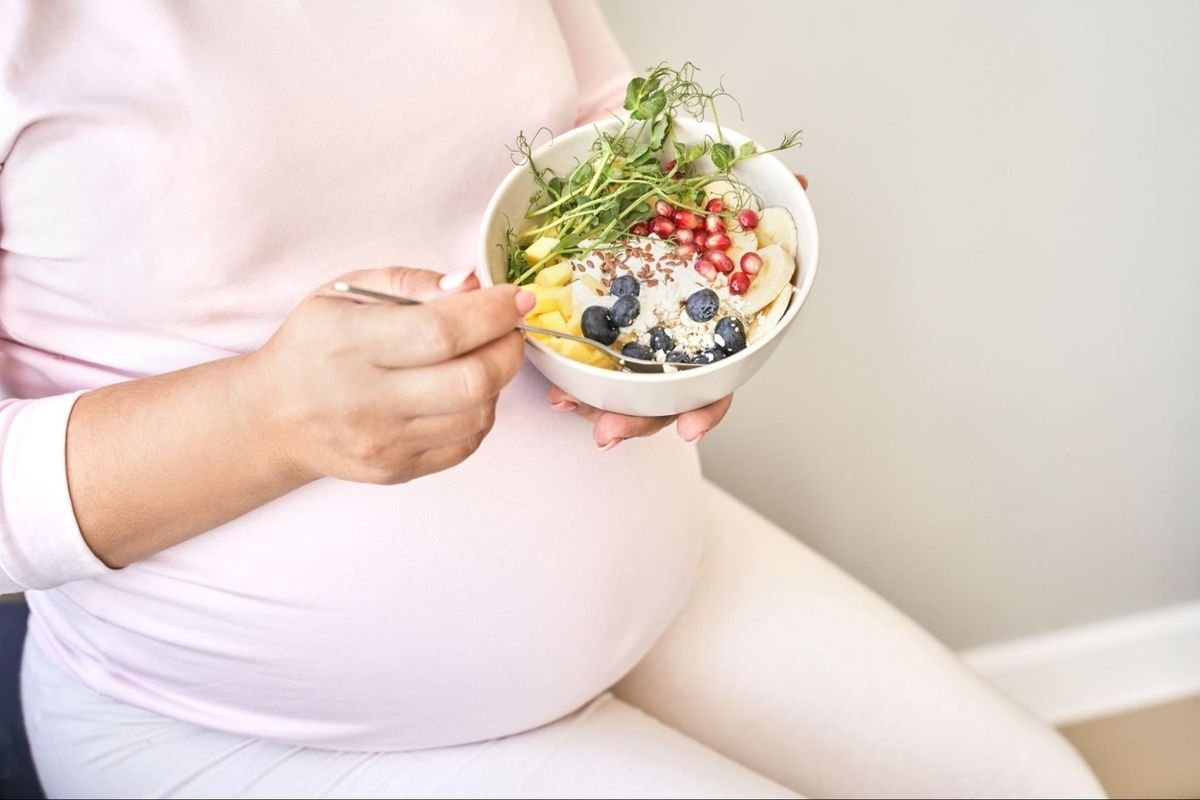
Pregnancy hunger is real, and long gaps between meals can worsen nausea and heartburn. The trick is snacks that combine protein, fiber, or healthy fats rather than pure sugar — they keep blood sugar steadier and actually satisfy hunger.
Ten snacks that work
- A handful of badam (almonds), 30 g — protein, calcium, vitamin E, and healthy fats in one handful.
- 2–3 khajoor (dates) with a few walnuts — natural sweetness plus fiber and iron; dates have some traditional associations with late pregnancy, though the evidence for any labor benefit is limited.
- A bowl of dahi (200 g) with fruit — protein, calcium, and probiotics; top with anar seeds or banana.
- Roasted chana (50 g) — crunchy, high in protein and fiber, and very filling.
- An apple or guava with peanut butter (1 tablespoon) — fiber plus protein and fats.
- A glass of milk (250 ml), warm with a pinch of haldi (turmeric) — calcium, protein, and comfort; evidence for turmeric’s health effects in these amounts is modest, but it is a traditional and safe flavoring.
- Vegetable sticks with hummus (3–4 tablespoons) — chickpea-based protein and fiber.
- A boiled egg — portable protein and choline.
- Oats porridge (40 g oats) with milk and banana — fiber-rich and gentle on nausea.
- A small bowl of mixed fruit chaat — vitamin C, fiber, and hydration; wash all fruit carefully first.
Keep a snack with you when you go out — pregnancy hunger has a way of arriving suddenly, and having badam or roasted chana in your bag beats whatever the nearest shop offers.
Hydration: How Much Water in Pregnancy
Your blood volume increases substantially, amniotic fluid needs maintaining, and adequate fluids help prevent constipation, urinary tract infections, and headaches. The commonly cited target is roughly 8–10 cups (about 2–2.3 liters) of water per day from drinks, with more in hot weather or if you are active. Fruits, vegetables, dahi, and soups all contribute fluid too.
What to drink
- Water should be the default — keep a bottle visible through the day.
- Milk and lassi hydrate while adding calcium and protein.
- Coconut water (nariyal pani) is a good natural option for electrolytes, especially in summer.
- Fresh fruit juices are fine in moderation, but whole fruit is better because of the fiber.
- Soups and shorbas count toward fluid intake and are gentle when appetite is low.
Caffeine: the 200 mg rule
Most guidelines suggest limiting caffeine to about 200 mg per day — roughly one 350 ml mug of brewed coffee, or two cups of chai. Remember that chocolate, green tea, and many soft drinks also contain caffeine. High caffeine intake has been associated with a higher risk of miscarriage and low birth weight in some studies, so this is one limit worth respecting.
Food Safety Basics: What to Avoid and What’s Safe
Eating well in pregnancy also means eating safely. The immune system shifts during pregnancy, making foodborne infections like listeria, salmonella, and toxoplasmosis more dangerous — for both mother and baby. These rules are simple and worth following strictly.
Foods to avoid or handle carefully
- Raw or undercooked meat and poultry: Cook all meat until steaming hot throughout, with no pink inside. Avoid rare kebabs and undercooked keema.
- Raw fish and high-risk seafood: Skip sushi, sashimi, and raw oysters. Cooked fish is safe and encouraged (see the DHA section).
- Unpasteurized milk and soft cheeses: Use only pasteurized doodh and dahi. Avoid unpasteurized soft cheeses; hard cheeses like cheddar are safe.
- Raw or undercooked eggs: Avoid homemade mayonnaise, raw cookie dough, and runny fried eggs with unset whites. Fully cooked eggs are perfectly safe.
- Deli meats and ready-to-eat cold cuts: Eat only if reheated until steaming.
- High-mercury fish: Shark, swordfish, king mackerel, tilefish — avoid entirely.
- Unwashed fruits and vegetables: Wash everything thoroughly, including salad leaves and fruit skins. This also applies to pre-cut fruit from street vendors.
- Raw sprouts: Alfalfa and mung sprouts can carry bacteria; cook them before eating.
- Liver and liver products: Very high in vitamin A (retinol), which can be harmful in excess during pregnancy — avoid liver and cod liver oil supplements.
- Alcohol: No amount has been established as safe in pregnancy — the safest choice is none.
- Unpasteurized juices: Choose pasteurized.
Kitchen habits that protect you
Wash hands before cooking, keep raw meat separate from ready-to-eat foods, refrigerate leftovers promptly, and reheat leftovers until steaming hot. These basics prevent the majority of foodborne illness.
Budget-Friendly Superfoods
A pregnancy diet does not need imported “superfoods.” Some of the most nutrient-dense foods for pregnancy are also the cheapest in South Asian markets. If the budget is tight, these give the most nutrition per rupee, pound, or dollar:
- Masoor and moong daal: Folate, iron, protein, and fiber at a fraction of the cost of meat. Buy in bulk.
- Eggs: Complete protein, choline, vitamin D, and B12 — one of the cheapest complete foods available.
- Seasonal leafy greens (palak, methi, sarson): Folate, iron, and calcium for very little money when bought in season.
- Peanuts (moong phali): Protein, healthy fats, and folate at a low price — a 30 g handful is a legitimate snack.
- Bananas and guava: Cheap, filling fruits providing energy, fiber, vitamin C (guava), and potassium.
- Milk: Where affordable, even one glass a day plus dahi covers a large share of calcium needs.
- Soya chunks: Extremely cheap protein — 50 g dry weight rivals a serving of chicken for protein.
- Sweet potatoes (shakarkandi): Beta-carotene (vitamin A precursor), fiber, and energy.
The pattern is clear: legumes, eggs, seasonal greens, and cheap fruits cover nearly every pregnancy nutrient target. Expensive imported berries and specialty powders are optional, not necessary.
Sample One-Day Meal Plan
Here is what a full day can look like, built around familiar foods and hitting the key targets. Portions are realistic, not aspirational.
Breakfast: 2 boiled or omelette eggs + 2 whole wheat rotis + 1 glass of milk (250 ml) + 1 banana
Protein ~26 g, choline ~300 mg, calcium ~350 mg
Mid-morning snack: 1 medium guava + a 30 g handful of badam
Fiber ~7 g, vitamin C, healthy fats
Lunch: 1 cup cooked masoor daal (200 g) with tadka + 1 cup cooked palak (180 g) + 1.5 cups cooked rice or 2 rotis + lemon squeezed over the daal + 1 orange
Folate ~600+ mcg, iron ~13 mg with vitamin C for absorption, fiber ~18 g
Afternoon snack: 1 bowl of dahi (200 g) with 2 chopped khajoor
Calcium ~240 mg, protein ~8 g
Dinner: 100 g grilled chicken (or 100 g paneer / 1 cup soya chunk curry for vegetarians) + mixed vegetable sabzi + 2 rotis + salad
Protein ~30 g, iron, vitamin A from vegetables
Before bed: 1 glass of warm milk (250 ml), optional pinch of haldi
Calcium ~300 mg, protein ~8 g
Daily totals (approximate): Folate 700+ mcg ✓ · Iron ~25–30 mg ✓ (with vitamin C pairing) · Calcium ~1,000 mg ✓ · Protein ~75–85 g ✓ · Fiber ~30 g ✓ · Choline ~450 mg ✓
Vegetarian? Swap the chicken for paneer or soya chunks and add an extra egg or a serving of soybeans — the totals hold up. Keep tea or coffee at least an hour away from lunch and dinner to protect iron absorption.
Frequently Asked Questions
1. Can I eat fish during pregnancy?
Yes — and you should. Two servings (about 140 g each, cooked) of low-mercury oily fish per week, such as salmon, sardines, or trout, are one of the best ways to get DHA for your baby’s brain development. What to skip: raw fish and sushi, and high-mercury fish like shark, swordfish, king mackerel, and tilefish. Cooked fish from clean sources is safe and recommended.
2. How much caffeine is safe — can I still drink chai?
Most guidelines cap caffeine at about 200 mg per day, which is roughly two cups of chai or one mug of brewed coffee. You do not have to give up chai entirely — just count your cups, keep them moderate, and remember that green tea, chocolate, and cola also add caffeine. Keep chai an hour away from iron-rich meals so tannins do not block iron absorption.
3. If I take a prenatal vitamin, do I still need to eat well?
Yes. A prenatal vitamin is a safety net, not a substitute. It typically covers folic acid and some iron and vitamin D, but it cannot provide protein, fiber, DHA, or choline in meaningful amounts — and nutrients from whole foods come packaged with fiber, water, and plant compounds that pills lack. Think of it as diet first, supplement as backup, and discuss your specific supplement with your doctor.
4. Are dates (khajoor) safe to eat in pregnancy?
Yes, dates are safe and nutritious — they provide fiber, iron, potassium, and natural energy, which makes them a genuinely good snack for pregnancy. You may come across claims that dates in late pregnancy ease labor; the research on this is limited and mixed, so enjoy them as a healthy food rather than as a remedy. Stick to 2–4 dates a day as part of a balanced diet, especially if you are watching blood sugar.
5. What should I eat when nausea or morning sickness makes everything unappealing?
Eat small, frequent meals rather than three big ones, and keep something bland by the bed — dry toast, crackers, or a banana — to eat before getting up. Cold foods often smell less and are easier to tolerate than hot, spiced meals. Ginger (adrak chai or ginger biscuits) has reasonable evidence for easing nausea. Prioritize whatever you can keep down; the detailed nutrient targets matter most across weeks, not in a single bad day. If vomiting is severe or you cannot keep fluids down, see your doctor promptly.
Conclusion: Small Daily Habits, Big Payoff
You do not need a perfect diet to have a healthy pregnancy — you need a consistent one. A bowl of daal with lemon, a glass of milk, two eggs, a handful of badam, and some palak each day quietly covers nearly every target in this guide. The nutrients that matter most — folate, iron, calcium, protein, DHA, and choline — are not hiding in exotic foods; they are in the kitchens most of us already cook in.
Start with two habits this week: put a vitamin C food next to every iron-rich meal, and move your chai an hour away from lunch and dinner. Those two changes alone meaningfully improve how much nutrition your body actually absorbs from the food you are already eating.
Every pregnancy is different, though, and general guidance cannot account for anemia, gestational diabetes, food intolerances, or twin pregnancies. If you want a diet plan built around your health, your food preferences, and your trimester, a qualified nutritionist can map these targets to your actual meals.
Ready for personalized guidance? Book an appointment with our Registered Associate Nutritionist (ANutr) for a one-to-one pregnancy nutrition consultation — in English or Urdu, online from anywhere in the world.
This article is for educational purposes only and does not replace professional medical advice. Always consult your doctor, obstetrician, or midwife about your individual nutritional needs during pregnancy.
Keep Reading
- Pregnancy Nutrition Guide – our complete pillar page on eating well during pregnancy
- Pregnancy Diet Chart Month by Month – a month-by-month meal plan companion to this guide
- Health Disclaimer – please read before following any nutrition advice on this site