Important: This article is for education only. Chronic kidney disease (CKD) diets must be individualized by your nephrologist or renal dietitian. The numbers here are guideline reference points — your own target should come from your care team, especially if you have advanced CKD, take potassium-altering medicines, or are on dialysis. If you notice rapid weight gain, new or worsening swelling, or shortness of breath, contact your doctor promptly.
If you have kidney disease, you have probably heard the advice to “cut back on salt.” But for someone with healthy kidneys, excess salt is mostly a blood-pressure concern. For someone with chronic kidney disease, sodium restriction is one of the most powerful tools available for slowing damage — and one of the least understood.
The kidneys balance fluid and minerals in your blood. When they lose filtering ability, sodium lingers instead of being excreted. That excess sodium pulls water with it, raising blood pressure, increasing protein loss in urine, swelling tissues, and straining the heart. For people with CKD, heart disease — not kidney failure itself — is the leading cause of death, and sodium sits at the center of that risk. This guide to a low-sodium diet for kidney disease explains how much sodium your kidneys can handle, where hidden salt lives in everyday foods, and how to cut back without giving up the food you love.
In this guide, you will learn:
- Why sodium restriction matters so much in kidney disease — and the exact physiology behind it
- The guideline-based sodium targets from KDOQI, KDIGO, WHO, and UK SACN, and what they mean for you
- How much sodium is actually hiding in everyday foods, with real numbers
- How to read UK food labels using the traffic-light system
- Why potassium-based salt substitutes can be dangerous for CKD patients
- How to cook flavorful food without salt — including desi dishes
- A complete 7-day low-sodium meal plan with approximate sodium counts
- How to handle restaurants, weddings, and dawats without blowing your sodium budget
Why Sodium Matters So Much in Kidney Disease
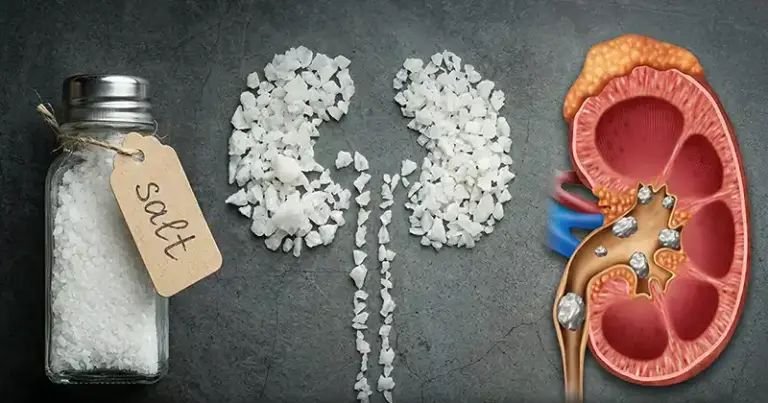
Healthy kidneys manage sodium effortlessly
In a person with healthy kidneys, eating a salty meal triggers a precise response: the kidneys filter the extra sodium into the urine within hours, blood volume stays stable, and blood pressure barely moves. The average healthy adult excretes what they eat, within reason.
Damaged kidneys cannot keep up
Chronic kidney disease reduces the glomerular filtration rate (GFR) — the kidneys’ filtering capacity. As GFR falls, sodium excretion falls with it. The sodium stays in the bloodstream, and water follows sodium wherever it goes (this is basic osmosis). The result is a cascade:
Fluid retention. Extra sodium holds extra water in the body. This shows up as swollen ankles, puffy eyes in the morning, tight rings or shoes, and unexplained weight gain. A gain of 1 kg overnight is essentially 1 litre of retained fluid.
Higher blood pressure. More fluid in the vessels means more pressure against the vessel walls. High blood pressure is both a cause and a consequence of kidney disease — it damages the kidney’s delicate filters, which reduces function further, which retains more sodium. Cutting sodium helps break this cycle.
More protein in the urine (proteinuria). Research consistently shows that high sodium intake increases urinary protein excretion in CKD patients. Proteinuria is not just a marker of damage — protein leaking through the filters appears to injure the kidney’s tubules directly. Reducing sodium lowers proteinuria even independent of blood pressure changes, which is one reason nephrologists consider it so important.
Heart strain. The heart must pump that extra fluid volume. Over time this enlarges the heart muscle (left ventricular hypertrophy) and increases the risk of heart failure. Most CKD patients are at higher risk from cardiovascular disease than from reaching dialysis, so anything that eases the heart’s workload matters enormously.
What the guidelines actually say
Sodium recommendations come from several major bodies, and they are worth knowing so you can have an informed conversation with your doctor:
- KDOQI (Kidney Disease Outcomes Quality Initiative) and KDIGO (Kidney Disease: Improving Global Outcomes) — the leading kidney-disease guideline bodies — advise limiting sodium to less than 2 grams per day for adults with CKD, which equals about 5 grams of table salt per day (roughly one level teaspoon). KDIGO notes this should be individualized, and very strict restriction is not appropriate for everyone.
- WHO (World Health Organization) recommends less than 2 g/day of sodium (5 g/day of salt) for adults generally, to reduce blood pressure and cardiovascular risk.
- UK SACN (Scientific Advisory Committee on Nutrition) recommends no more than 6 g of salt per day for the general adult population (about 2.4 g sodium). This is a general-population target, not a CKD-specific one.
Notice that the kidney-disease targets (2 g sodium) are stricter than the general UK target (6 g salt ≈ 2.4 g sodium). Your personal target should be set by your nephrologist or renal dietitian, because sodium needs vary with CKD stage, blood pressure, fluid status, diuretic use, and other conditions. Some patients with heavy fluid losses or on certain medications need a different approach — another reason this is not a one-size-fits-all prescription.
Converting Between Salt and Sodium
Food labels in the UK usually list salt; guidelines and many research papers talk about sodium. They are not the same thing — salt (sodium chloride) is about 40% sodium by weight.
- Salt (g) × 0.4 = Sodium (g)
- Sodium (g) × 2.5 = Salt (g)
So 2 g of sodium ≈ 5 g of salt, and 6 g of salt ≈ 2.4 g of sodium. When a label says 1.5 g salt per 100 g, that is 0.6 g (600 mg) sodium per 100 g. Keep these conversions handy — label reading is impossible without them.
Hidden Sodium: Where the Salt Really Comes From
Most people with CKD do not pour their daily salt from a shaker. Roughly three-quarters of dietary sodium in Western diets comes from processed and restaurant foods, not from salt added during cooking or at the table. The foods below carry far more sodium than most people expect.
Bread and bakery products
Bread is the single biggest contributor to salt intake in the UK diet, simply because people eat so much of it. A typical slice of white or wholemeal bread contains 0.4–0.5 g of salt (160–200 mg sodium). Two slices of toast at breakfast plus a sandwich at lunch can quietly deliver 2 g of salt before you count any fillings.
Lower-salt breads exist — check labels and compare brands, since salt content varies widely between loaves that look identical.
Processed and cured meats
Bacon, ham, sausages, salami, pepperoni, and hot dogs are preserved with salt — that is the point of curing. Approximate values:
- 2 rashers of back bacon: ~1.5 g salt
- 1 pork sausage: ~0.6–0.8 g salt
- 2 slices of ham: ~1.0 g salt
- 1 slice of pepperoni pizza (takeaway): ~1.5 g salt
Cheese
Cheese needs salt for its texture and preservation, and hard cheeses are saltiest:
- 30 g cheddar: ~0.5 g salt
- 30 g feta (brined): ~0.9 g salt
- 30 g parmesan: ~0.5 g salt
If you eat cheese daily, portions and frequency matter more than the type.
Canned and tinned foods
Canning liquid is often salted for preservation. A 400 g tin of baked beans contains roughly 2 g of salt in the whole tin. Tinned soups are among the saltiest foods in the supermarket — a single 400 g tin can contain 2–3 g of salt. “No added salt” or “low salt” tinned vegetables, beans, and tomatoes are widely available; where only salted versions exist, draining and rinsing tinned beans or vegetables under running water can wash away a meaningful portion of the surface sodium.
Sauces, condiments, and stock
This is where sodium hides in plain sight:
- 1 tablespoon soy sauce: ~1.5 g salt
- 1 tablespoon ketchup: ~0.3 g salt
- 1 tablespoon ready-made pasta sauce (per 100 g serving can exceed 1 g): check labels
- 1 stock cube dissolved for gravy: ~2–3 g salt — one of the saltiest single ingredients in home cooking
- Pickles, olives, and capers: brined by definition; a small serving of olives can add 0.5–1 g salt
Restaurant and takeaway food
A single restaurant main course can contain an entire day’s sodium allowance. Restaurant cooking relies on salt for flavor, and portion sizes are large. Approximate values for popular takeaways:
- A takeaway chicken tikka masala with pilau rice: 3–5 g salt
- A large portion of fish and chips: 3–4 g salt
- A fast-food burger meal: 3–4 g salt
- A Chinese takeaway main with rice: 4–6 g salt (soy sauce, MSG, and stock all contribute)
This is not a reason to never eat out — the eating-out section below covers strategies — but it explains why home cooking is the foundation of sodium control.
How to Read Labels: The UK Traffic-Light System
The UK’s front-of-pack traffic-light labels rate salt per 100 g:
- Green (low): ≤ 0.3 g salt per 100 g (≤ 120 mg sodium)
- Amber (medium): 0.3–1.5 g salt per 100 g
- Red (high): > 1.5 g salt per 100 g (> 600 mg sodium)
Practical rules for CKD shopping:
- Aim for mostly green. Build the basket around green-rated staples.
- Treat red as occasional. A red-rated food is not forbidden, but it must be portion-controlled and balanced against the rest of the day.
- Compare within categories. Salt in bread, breakfast cereals, cheese, and ready meals varies enormously between brands. Comparing two similar products and picking the lower-salt one is one of the highest-impact habits you can build.
- Check “per 100 g,” not just “per serving.” Serving sizes are set by manufacturers and can be unrealistically small. The per-100-g column is the honest comparison.
- Watch the ingredient list too. Sodium appears as salt, sodium bicarbonate (baking soda), monosodium glutamate (MSG), sodium nitrite, and disodium phosphate. Ingredients are listed by weight — if any of these appear in the first few ingredients, the product is salt-heavy.
The Salt-Substitute Warning Every CKD Patient Must Read
Why potassium-based substitutes are risky in kidney disease
When people cut table salt, they often reach for “low-sodium” salt substitutes — products like LoSalt and similar blends that replace some or all sodium chloride with potassium chloride. For the general population this swap can help blood pressure. For people with CKD, it can be dangerous.
Damaged kidneys also struggle to excrete potassium. Adding a potassium-based salt substitute on top of dietary potassium can push blood potassium into dangerous territory — hyperkalemia — which can cause muscle weakness, irregular heartbeat, and in severe cases cardiac arrest. The risk is highest in advanced CKD (stages 4–5), in people taking ACE inhibitors, ARBs, or potassium-sparing diuretics (very common CKD medicines), and in anyone whose doctor has already advised potassium restriction.
The rule
Do not use potassium-based salt substitutes if you have CKD unless your nephrologist or renal dietitian has explicitly approved them for you. This includes “low-sodium salt,” “heart salt,” potassium chloride seasonings, and mineral salts marketed as healthy alternatives. Bring the product to your appointment and ask directly — do not guess.
Safe flavor alternatives are covered in the cooking section below: herbs, spices, acids, and aromatics add depth without sodium or potassium risk.
Cooking Without Salt: Flavor Without the Shaker
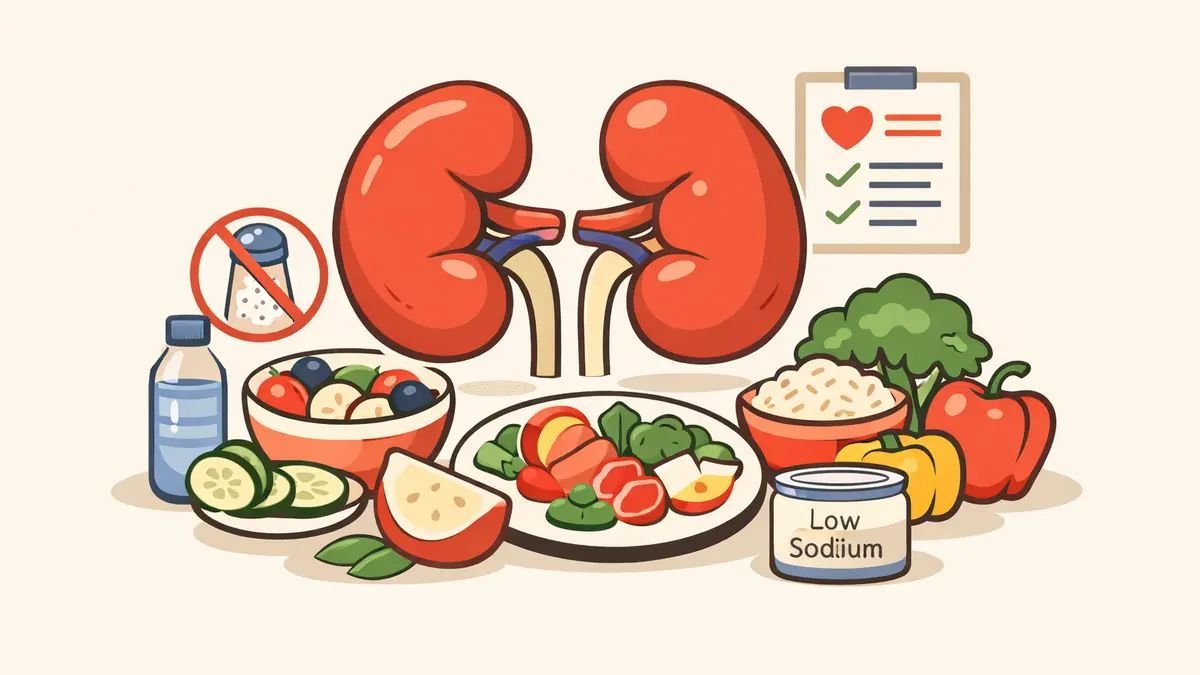
Reducing salt does not mean eating bland food. It means rebuilding flavor from other sources — and giving your palate time to adjust, because it will.
The gradual reduction strategy
Taste buds adapt. Research on salt reduction shows that cutting salt by about 10–15% at a time, every week or two, lets the palate recalibrate without food tasting “wrong.” Within 2–3 weeks of steady reduction, previously normal food starts tasting too salty. Abrupt, drastic cuts fail because everything tastes punishingly bland and people give up. Go stepwise:
- Week 1–2: remove the table shaker; cook with your usual salt but stop adding at the table.
- Week 3–4: cut cooking salt by a quarter; add lemon, herbs, or spices to compensate.
- Week 5+: cut by another quarter; by now your baseline has shifted.
Flavor-building techniques
- Acids: lemon juice, lime juice, and vinegar brighten dishes the way salt does — they stimulate saliva and sharpen other flavors. A squeeze of lemon over daal or grilled fish replaces a surprising amount of salt.
- Aromatics: garlic, ginger, onions, and fresh green chillies build a savory base. Brown onions properly (until deeply golden) and the natural sweetness reduces the need for salt.
- Herbs and spices: cumin, coriander, turmeric, black pepper, garam masala, paprika, oregano, and fresh coriander leaves all add complexity. Toast whole spices in a dry pan before grinding — heat releases their oils and intensifies flavor.
- Umami without sodium: mushrooms, tomatoes (fresh or no-added-salt tinned), and slow-caramelized onions add savory depth.
- Texture contrast: toasted nuts, seeds, crispy onions, or fresh herbs on top make food feel satisfying even with less salt.
- Finish, don’t cook in: if a recipe truly needs a pinch of salt, add it at the very end. Salt on the surface of food hits the tongue directly, so you taste more from less.
Low-Sodium Eating for South Asian Households
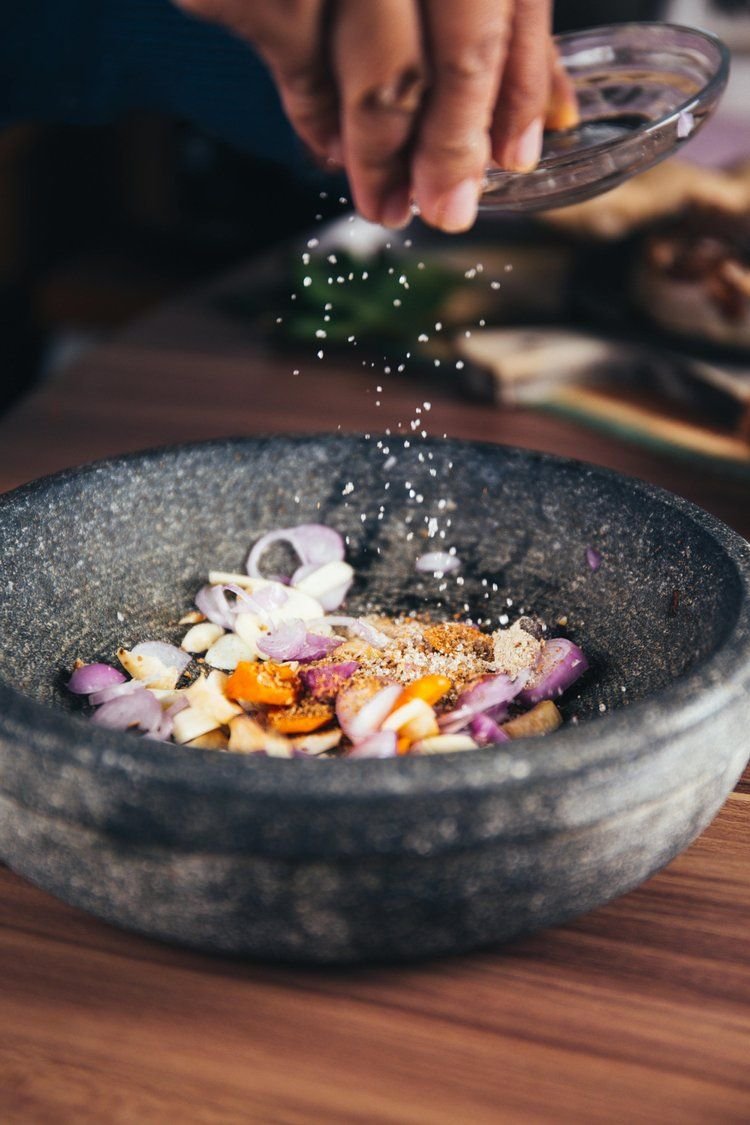
This section matters because desi food culture is genuinely high in salt — and generic Western advice (“eat fewer sandwiches”) misses the real sources in a Pakistani or Indian kitchen. Honest, practical adjustments follow.
Where the salt hides in desi cooking
- Salan and curries: salt goes in by the spoonful, often more than once (during bhunai, then “to taste” at the end). A single serving of home-style chicken curry can carry 1–2 g of salt.
- Daal: usually salted generously, plus tarka fried in salted ghee or oil.
- Roti and paratha: plain roti needs no salt at all — many households add it to the dough out of habit. Parathas are often salted and fried in salted ghee.
- Rice: salted cooking water; biryani and pulao are layered with salt at multiple stages.
- Achar (pickle): preserved in salt by design — a tablespoon can contain 1–2 g of salt. Treat achar as a tiny condiment (a fingertip’s worth), not a side dish.
- Papad/papadum: extremely salty; one large papad can carry ~1 g of salt.
- Pakoras and samosas: the filling and batter are salted, then they are often eaten with salty chutneys or ketchup.
- Chaat masala and other sprinkle mixes: contain salt as a main ingredient.
- Lassi and raita: salted versions add up across the day; unsalted or lightly salted versions are easy wins.
- Stock cubes in desi cooking: some households add chicken stock cubes to curries and biryani — each cube adds 2–3 g of salt.
Practical desi kitchen swaps
- Halve the salt in salan, double the aromatics. Increase ginger, garlic, green chillies, and fresh coriander. Add tomatoes for body. Most families cannot tell the difference after a week of gradual reduction.
- Make a no-salt garam masala and curry powder. Grind your own from whole spices (cumin, coriander seed, black pepper, cardamom, cloves, cinnamon) with no added salt — commercial blends often contain it.
- Salt daal once, at the end. Add a measured half-teaspoon after cooking rather than salting during cooking and again in the tarka.
- Keep roti salt-free. There is no culinary reason for salt in plain roti dough.
- Rethink rice. Cook plain rice in unsalted water; flavor biryani and pulao with whole spices, fried onions, mint, and lemon instead of extra salt layers.
- Achar as garnish, not food. If achar is non-negotiable (and for many families it is), use a teaspoon-sized portion and count it in the day’s sodium.
- Unsalted ghee and butter. Switch cooking fats to unsalted versions — salted butter in tarka or on parathas is invisible sodium.
- Lemon over salt at the table. Put lemon wedges on the table instead of the salt shaker; it fits desi eating habits naturally.
Eating at dawats and weddings
South Asian social life revolves around food, and refusing it can feel socially impossible. Strategies that actually work:
- Eat a small low-sodium meal before you go so you arrive satisfied, not ravenous.
- Fill half your plate with plain rice or roti and salad/raita (unsalted), with smaller portions of the salan.
- Choose grilled or tandoori items over gravies — marinades have salt, but far less than a reduced curry sauce.
- Skip the papad, achar, and salted lassi at the event; nobody notices.
- Drink water, not salted drinks.
- Do not salt your plate at the table, even if a shaker is offered.
- One flexible meal does not ruin the week — but make it the exception, plan lower-sodium meals around it, and watch for swelling the next day.
A 7-Day Low-Sodium Meal Plan (Approximate Sodium)
These plans target roughly 1,500–2,000 mg sodium per day (about 4–5 g salt), consistent with kidney-guideline targets. Sodium values are approximate — they depend on brands and portions. Potassium and phosphorus also matter in CKD; this plan is a sodium-focused template, not a complete renal diet. Your renal dietitian should review any meal plan before you adopt it, particularly if you have potassium or fluid restrictions.
Day 1 (~1,700 mg sodium): Breakfast — porridge made with water or low-fat milk, topped with berries and a spoonful of unsalted nuts. Lunch — homemade vegetable soup (no stock cube; flavored with garlic, cumin, and lemon) with one slice of low-salt bread. Dinner — grilled chicken breast marinated in yoghurt, lemon, garlic, and homemade no-salt tikka spices, with unsalted boiled rice and cucumber raita (unsalted yoghurt).
Day 2 (~1,800 mg sodium): Breakfast — 2 boiled eggs, one slice low-salt toast, fresh tomato. Lunch — chickpea salad (rinsed tinned chickpeas) with olive oil, lemon, cucumber, and fresh coriander. Dinner — low-salt daal (moong daal, salt added once at end, measured) with salt-free roti and a side of steamed vegetables with lemon.
Day 3 (~1,600 mg sodium): Breakfast — plain yoghurt with sliced banana and oats. Lunch — tuna salad (tuna in spring water, drained) with mixed leaves, lemon-olive-oil dressing, one small wholemeal pitta. Dinner — baked white fish with herbs, boiled potatoes (no salt in water), and steamed green beans with a squeeze of lemon.
Day 4 (~1,900 mg sodium): Breakfast — vegetable omelette (peppers, mushrooms, onion) cooked in unsalted butter. Lunch — leftover daal with rice. Dinner — homemade chicken curry made with halved salt, extra ginger/garlic/tomato, served with salt-free roti and unsalted raita.
Day 5 (~1,700 mg sodium): Breakfast — porridge with sliced apple and cinnamon. Lunch — homemade lentil and carrot soup (no stock cube), low-salt bread. Dinner — stir-fried vegetables with ginger, garlic, and a teaspoon of low-sodium soy sauce (measured — this is the day’s main sodium source), served over unsalted rice.
Day 6 (~1,800 mg sodium): Breakfast — 2-egg masala omelette (tomato, onion, green chilli, fresh coriander, minimal measured salt). Lunch — bean and vegetable stew with no-added-salt tinned tomatoes. Dinner — grilled lamb chops with rosemary and garlic, roasted vegetables in olive oil, small portion of couscous.
Day 7 (~1,600 mg sodium): Breakfast — fruit salad with plain yoghurt. Lunch — homemade vegetable pulao (whole spices, fried onion, lemon; minimal measured salt) with unsalted raita. Dinner — baked chicken with Mediterranean vegetables (peppers, courgette, red onion) roasted in olive oil with oregano and garlic.
Low-Sodium Shopping List
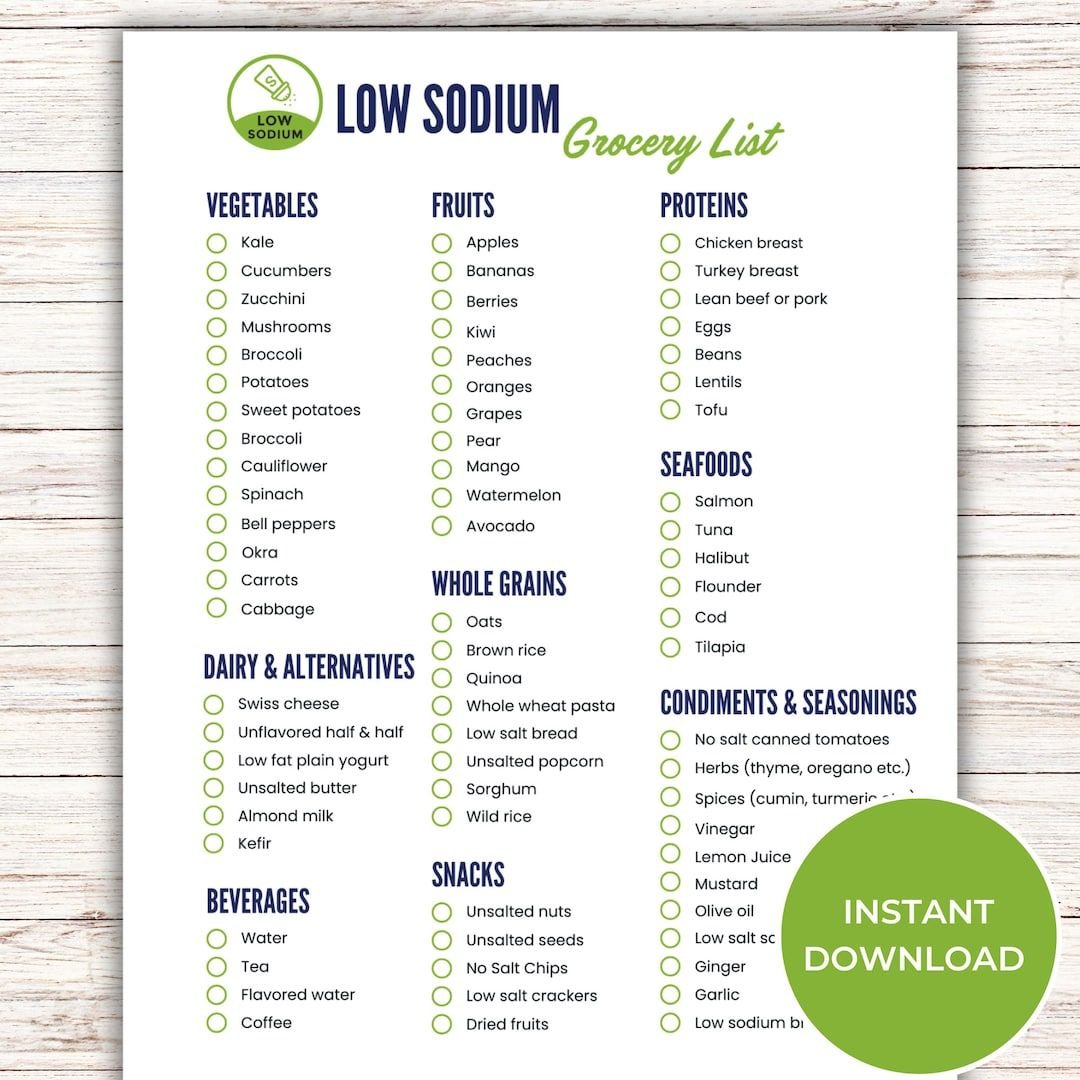
Proteins: fresh chicken, fish, eggs, dried lentils and chickpeas (or no-added-salt tinned), plain yoghurt.
Carbohydrates: rice, oats, low-salt bread, plain flour/atta for salt-free roti, potatoes.
Vegetables and fruit: fresh or frozen vegetables (plain, no sauces), fresh fruit, no-added-salt tinned tomatoes, lemons and limes.
Flavor: garlic, ginger, fresh chillies, onions, fresh coriander, mint, whole and ground spices (check blends for added salt), black pepper, vinegar, olive oil, unsalted butter/ghee.
To avoid or strictly limit: stock cubes and stock pots, soy sauce (unless measured low-sodium), ketchup and brown sauce in large amounts, processed meats, ready meals, salted snacks, salted nuts, pickles and achar (tiny portions only), cheese in large amounts, potassium-based salt substitutes (unless your doctor approves).
Eating Out Without Blowing Your Sodium Budget
Restaurant food is the hardest part of sodium control, but a few scripts make it manageable:
- Ask directly: “Could the chef go light on salt in my dish?” Most kitchens accommodate this without fuss, especially if you mention a medical reason.
- Sauces on the side. Gravies, dressings, and curry sauces carry the most salt — controlling the amount controls the sodium.
- Choose simply prepared foods: grilled, baked, steamed, or tandoori items over casseroles, curries, and anything “in sauce.”
- Skip the extras: bread baskets with salted butter, olives, and pickles add sodium before the meal starts.
- At desi restaurants: order tandoori/grilled starters, plain rice or tandoori roti, and daal (ask for light salt). Avoid the saltiest gravies and the papad basket.
- Fast food: check published nutrition data before ordering — most chains list sodium per item online. Smaller portions, no added salt on fries, and water instead of soft drinks all help.
Monitoring Yourself: Simple Daily Checks
Sodium’s effects show in the body quickly, so self-monitoring catches problems early:
- Weigh yourself daily, at the same time, in similar clothing. A gain of more than 1 kg in a day or 2 kg in a week usually means fluid retention — report it to your care team.
- Check for swelling in ankles, feet, and hands each evening, and puffiness around the eyes in the morning.
- Track blood pressure if your doctor has asked you to, since sodium and blood pressure move together.
- Keep a short food and symptom diary for the first few weeks — it reveals your personal high-sodium triggers faster than any general list.
Frequently Asked Questions
How much salt can I have per day with kidney disease?
Guidelines from KDOQI and KDIGO suggest less than 2 g of sodium per day (about 5 g / one teaspoon of salt) for adults with CKD, but this is a reference point, not a personal prescription. Your nephrologist or renal dietitian sets your individual target based on your CKD stage, blood pressure, fluid status, and medications. Never adopt a very-low-sodium diet without medical guidance — overly strict restriction can cause problems too.
Are salt substitutes safe for kidney patients?
Potassium-based salt substitutes (such as LoSalt and similar “low-sodium” salts) are not automatically safe in CKD. Because damaged kidneys excrete potassium poorly, these products can raise blood potassium to dangerous levels, especially if you take ACE inhibitors, ARBs, or potassium-sparing diuretics. Check with your doctor before using any salt substitute.
Does cutting salt really slow kidney damage, or just lower blood pressure?
Both. Lower sodium reduces blood pressure and fluid overload, and studies show it also reduces proteinuria (protein in the urine) partly independent of blood pressure. Since proteinuria itself injures kidney tissue, sodium restriction is considered kidney-protective in its own right — one reason guidelines emphasize it alongside medication.
I eat mostly desi food. Is a low-sodium diet even possible?
Yes — desi cooking adapts well because its flavor comes from spices, aromatics, and techniques like bhunai, not from salt itself. The practical moves: halve salt in salan and compensate with ginger, garlic, chillies, and tomato; make salt-free roti; use no-salt homemade masala blends; treat achar and papad as tiny condiments; and cook rice in unsalted water. Most families adjust within a couple of weeks using the gradual reduction approach.
What are the warning signs that my sodium/fluid balance is off?
Contact your doctor promptly if you notice rapid weight gain (around 1 kg overnight), new or worsening swelling in the legs, ankles, or around the eyes, shortness of breath (especially when lying flat), or a sudden rise in blood pressure. These can signal fluid overload, which needs medical assessment — not just dietary adjustment.
Conclusion: Small Cuts, Compounding Protection
A low-sodium diet for kidney disease is not about bland food or misery — it is about removing the single dietary factor that most directly raises your blood pressure, swells your tissues, increases protein loss, and overworks your heart. The evidence behind sodium restriction in CKD is among the strongest in renal nutrition, and unlike medication, it costs nothing and has no pharmacy queue.
Start where the sodium actually is: read labels with the traffic-light system, halve the salt in your salan this week, keep roti salt-free, treat achar as a garnish, and give your palate two to three weeks to recalibrate. Avoid potassium-based salt substitutes unless your doctor approves them, and keep your nephrologist or renal dietitian in the loop — because in kidney disease, the right sodium target is personal.
If you want a sodium plan tailored to your CKD stage, medicines, and the food you actually eat — including desi meal planning — professional guidance makes all the difference. Book a one-to-one consultation and get a personalized renal nutrition plan built around your labs, your prescriptions, and your kitchen.
Keep Reading
- Liver and Kidney Health: The Complete Guide to Healthy Organs
- Best Foods for Kidney Health: An Evidence-Based Nutritionist’s Guide
- Health Disclaimer
References
- World Health Organization: Healthy Diet Fact Sheet