Thinning hair, excessive shedding, and slow growth are among the most common complaints people bring to nutrition clinics — and in Pakistan and South Asia, they are especially frequent. While genetics, hormones, and age all play a role, research consistently shows that diet can either support healthy hair or quietly work against it. Hair follicles are among the most metabolically active cells in the body, which means they are also among the first to suffer when your nutrition falls short. This foods for hair growth and thickness guide explains the 8 key hair nutrients, the best desi foods for each, and a sample day of eating for thicker, fuller hair.
The good news? Many cases of diet-related hair thinning are reversible. In this guide, you will learn:
- How hair actually grows, and why nutrition matters at every stage of the hair cycle
- The 8 most important nutrients for hair growth and thickness — and the best food sources for each
- Why iron deficiency is the hidden cause of hair loss in so many South Asian women
- Traditional desi hair foods (amla, curry leaves, sesame seeds, coconut) — what the evidence really says
- Foods and habits that can damage your hair, including crash diets and excess vitamin A
- A full sample day meal plan designed for hair growth
- Hair-loss red flags: when nutrition is not the issue and you need to see a doctor
1. How Hair Grows: The Biology You Need to Understand
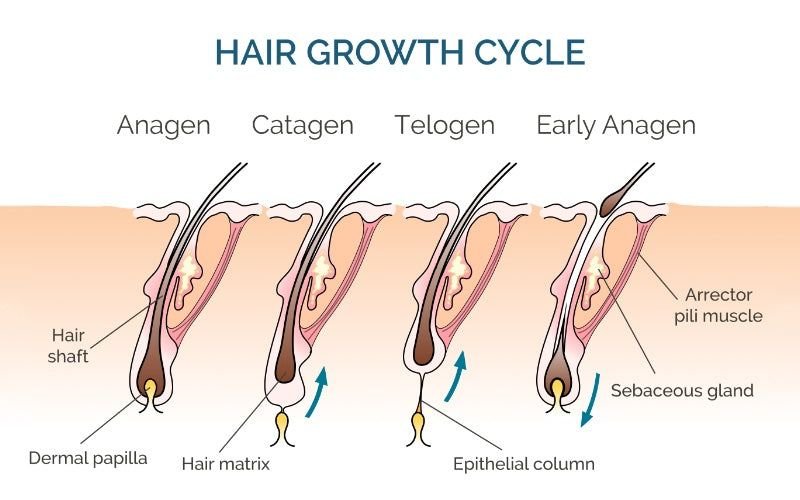
Before talking about food, it helps to understand what hair growth actually involves. Each hair on your scalp grows from a follicle, a tiny pocket in the skin. Hair growth happens in three phases:
- Anagen (growth phase): Lasts 2–7 years. Around 85–90% of your scalp hair is in this phase at any given time. This is when the follicle is actively building new hair cells.
- Catagen (transition phase): Lasts about 2–3 weeks. Growth stops and the follicle shrinks.
- Telogen (resting phase): Lasts around 3 months. Old hair rests in the follicle before shedding to make room for new growth.
Losing 50–100 hairs per day is completely normal — those are telogen hairs completing their cycle. Problems begin when more follicles than usual shift into the telogen phase at once (a condition called telogen effluvium), or when the growth phase shortens over time (as in androgenetic alopecia, or pattern hair loss).
Here is the key nutrition connection: because hair cells divide so rapidly, follicles need a constant supply of amino acids, vitamins, minerals, and energy. When the body faces a nutrient shortage, it prioritizes vital organs — heart, brain, liver — and treats hair as expendable. That is why hair thinning is often one of the earliest visible signs of a nutritional deficiency, appearing months before other symptoms.
Important note: No food can change your genetics or cure pattern baldness on its own. What diet can do is correct deficiencies, reduce excessive shedding, and create the best possible conditions for the hair you can grow. That distinction matters, and honest nutrition advice should never blur it.
2. Protein: The Building Block of Every Hair Strand
Hair is made almost entirely of a protein called keratin. Each strand is essentially a long chain of amino acids, and your body needs a steady supply of dietary protein to manufacture them. When protein intake drops too low — as it does on very restrictive diets or poorly planned vegetarian diets — hair growth can slow and shedding can increase within two to three months.
How Much Protein Do You Need?
The general recommendation for adults is about 0.8 grams of protein per kilogram of body weight per day, but many nutrition professionals consider 1.0–1.2 g/kg a better target for active adults and anyone trying to support tissue repair. For a 60 kg woman, that means roughly 60–72 grams of protein daily; for a 75 kg man, around 75–90 grams.
Best Protein Foods for Hair
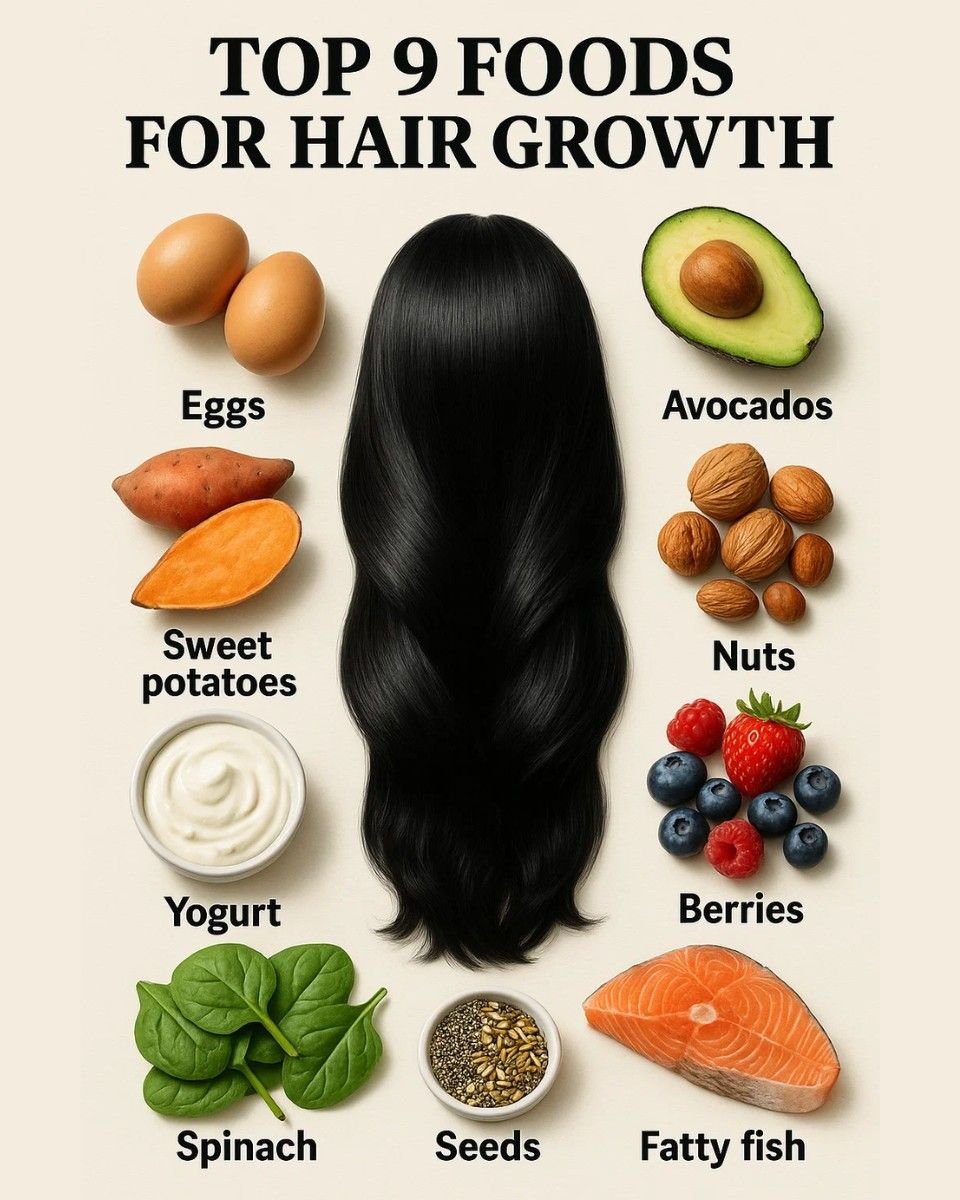
- Eggs: One large egg provides about 6 grams of complete protein plus biotin and B vitamins. They are affordable, widely available, and one of the most practical hair foods in any desi kitchen.
- Chicken and lean meat: Excellent sources of complete protein with all essential amino acids.
- Fish: Provides protein plus omega-3 fatty acids (covered in detail below).
- Lentils and daal: Masoor daal, moong daal, and other lentils provide roughly 7–9 grams of protein per cooked cup. Pair them with rice or roti for a complete amino acid profile.
- Chickpeas (chana): Around 15 grams of protein per cooked cup, plus iron and zinc.
- Yogurt (dahi): Greek-style or regular plain yogurt offers 5–10 grams of protein per serving along with probiotics.
- Milk, paneer, and cheese: Useful dairy protein sources for vegetarians.
- Nuts and seeds: Almonds, walnuts (akhrot), and peanuts contribute protein along with healthy fats.
A Common Desi Pitfall
Many traditional South Asian diets are carbohydrate-heavy — big servings of rice or roti with a small portion of daal — and protein gets crowded out, especially in vegetarian households. If your meals rarely include a palm-sized portion of protein, your hair may be paying the price. The fix is simple: make protein the anchor of every meal, not the afterthought.
3. Iron: The Deficiency Behind So Much Hair Loss
If there is one nutrient to highlight for South Asian readers, it is iron. Iron deficiency is the most common nutritional deficiency in the world, and it is a well-documented cause of excessive hair shedding, particularly in women of childbearing age. Research suggests that low ferritin (the body’s iron storage protein) is associated with telogen effluvium and chronic hair shedding.
Iron’s role in hair is straightforward: it helps red blood cells carry oxygen to the hair follicles. Without enough iron, follicles are starved of oxygen and energy, and more hairs shift prematurely into the shedding phase.
Why This Matters So Much in South Asia
Iron deficiency anemia is extremely common among Pakistani and South Asian women due to a combination of factors: heavy menstrual periods, diets low in meat, high consumption of tea with meals (tannins in chai reduce iron absorption), frequent pregnancies, and limited access to iron-rich foods. Many women live with low iron for years without knowing it — and blame their hair loss on shampoo, stress, or “bad genes.”
Signs Your Hair Loss May Be Iron-Related
- Shedding that increases gradually over months
- Fatigue, pale skin, or feeling cold
- Brittle nails or craving non-food items like ice or clay (pica)
- Heavy or prolonged menstrual periods
If these sound familiar, ask your doctor for a blood test measuring ferritin and hemoglobin before starting supplements. Iron supplements should only be taken when a deficiency is confirmed, because excess iron can be harmful.
Best Iron-Rich Foods
- Red meat in moderation: Beef and mutton contain heme iron, the most easily absorbed form. Even small portions a few times a week make a difference.
- Liver (kaleji): Extremely rich in iron, though best eaten occasionally due to its high vitamin A content.
- Spinach and saag: Palak, sarson ka saag, and other leafy greens provide non-heme iron. Cooking them reduces oxalates and improves absorption.
- Lentils and chickpeas: Daal and chana are solid plant-based iron sources.
- Dates (khajoor): Provide modest iron along with natural energy — a traditional and practical snack.
- Eggs: Contain some iron along with protein and B vitamins.
- Dried apricots and raisins (kishmish): Useful iron-containing snacks.
The Vitamin C Trick
Plant-based (non-heme) iron is poorly absorbed — often less than 10%. But eating vitamin C in the same meal can double or triple iron absorption. This is why the meal plan later in this article pairs daal with lemon, and saag with tomatoes. Conversely, avoid drinking chai or coffee with iron-rich meals; wait at least an hour after eating.
4. Biotin and the B-Complex Vitamins
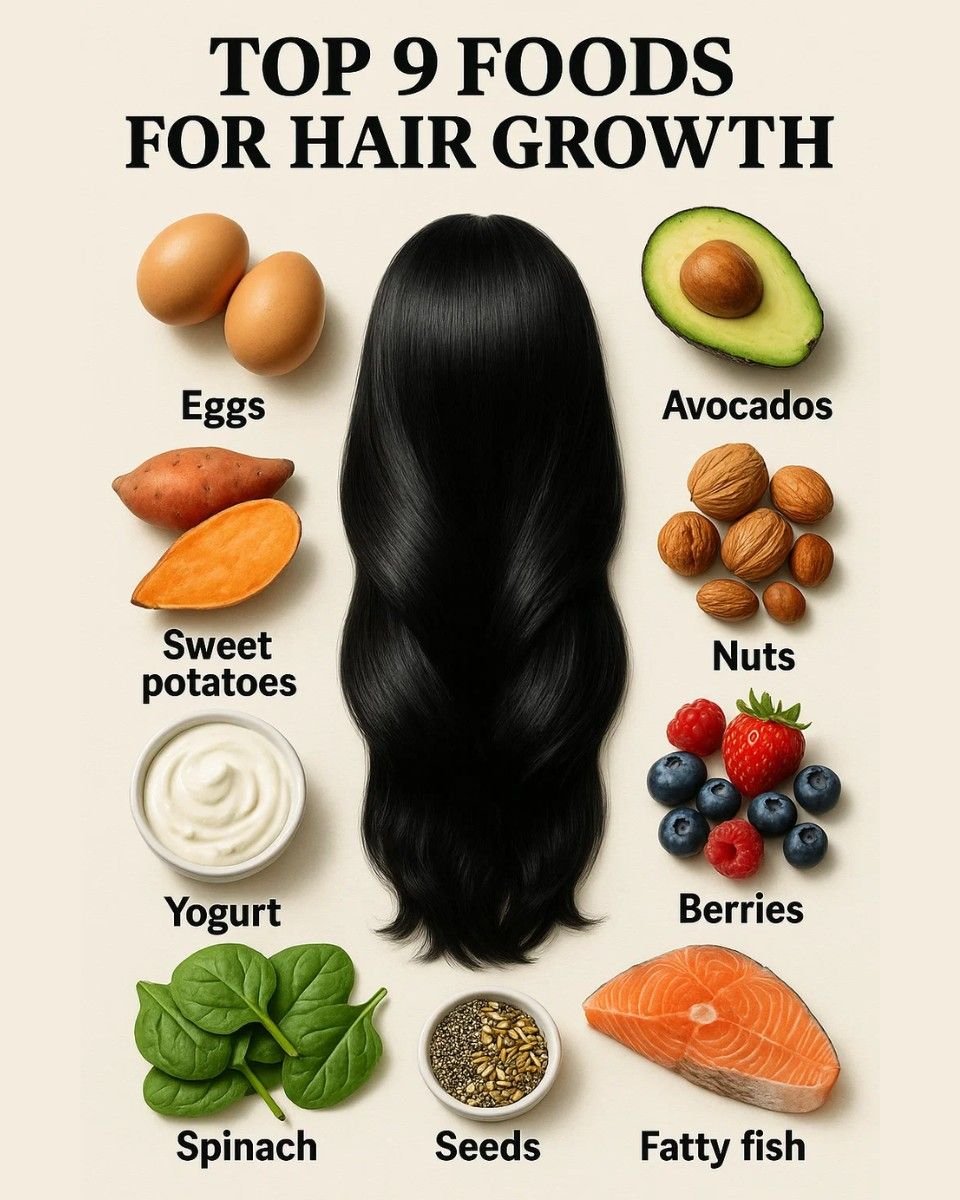
Biotin (vitamin B7) is probably the most famous “hair vitamin,” heavily marketed in hair gummies and supplements. The truth is more nuanced: true biotin deficiency is rare in people eating a varied diet, and there is limited strong evidence that extra biotin helps hair growth in people who are not deficient. That said, biotin does play a genuine role in keratin production, and marginal deficiencies can occur with very restrictive eating.
Rather than chasing biotin supplements, focus on food sources and the broader B-vitamin family — especially B12 and folate, which support red blood cell formation (and therefore oxygen delivery to follicles). B12 deficiency is notably common among vegetarians and is another underappreciated contributor to hair thinning in South Asia.
Best Food Sources
- Eggs: The yolk is one of the richest natural sources of biotin.
- Nuts and seeds: Almonds, peanuts, sunflower seeds, and walnuts.
- Sweet potatoes: Provide biotin plus beta-carotene.
- Meat, fish, eggs, and dairy: Essential for vitamin B12 (plant foods contain essentially none).
- Lentils, chickpeas, and leafy greens: Good sources of folate.
- Bananas and avocados: Contain biotin and other B vitamins.
A word on supplements: High-dose biotin supplements can interfere with certain blood tests (including thyroid and heart tests), causing misleading results. If you take biotin, tell your doctor — and consider whether food sources might serve you just as well.
5. Vitamin D: The Sunshine Vitamin and the Hair Cycle
Vitamin D receptors are present in hair follicles, and research suggests the vitamin plays a role in the hair growth cycle — particularly in helping follicles transition into the active growth phase. Low vitamin D levels have been associated with alopecia areata (patchy hair loss) and increased shedding in several studies, though the relationship is still being investigated.
The South Asian Paradox
Pakistan gets abundant sunshine, yet vitamin D deficiency is widespread — especially among women who spend most of their time indoors or cover their skin outdoors. Limited sun exposure, darker skin (which synthesizes vitamin D more slowly), and low dietary intake combine to create deficiency rates that surprise many people.
Best Food Sources
- Fatty fish: Salmon, mackerel, and sardines are among the few meaningful food sources.
- Egg yolks: Modest amounts.
- Fortified milk and dairy products: Check labels, as fortification varies.
- Mushrooms exposed to sunlight: One of the few plant sources.
Sensible Sun Exposure
For most people, 10–20 minutes of midday sun on arms and face a few times a week supports vitamin D production. But food and sunlight are often not enough to correct a true deficiency — if your levels are low, your doctor may recommend a supplement. Get tested rather than guessing, since both deficiency and excessive supplementation carry risks.
6. Zinc: The Mineral for Follicle Repair
Zinc is involved in hundreds of enzymatic reactions, including protein synthesis and cell division — both essential for growing hair. It also helps keep the oil glands around follicles working properly. Zinc deficiency has been linked to hair shedding and poor hair texture in clinical studies, and it is one of the nutrients most commonly found low in people with telogen effluvium.
Best Zinc-Rich Foods
- Meat and shellfish: Beef, mutton, and chicken are excellent sources.
- Chickpeas (chana) and lentils: Good plant sources, though phytates in legumes reduce absorption — soaking and sprouting help.
- Pumpkin seeds: One of the best plant-based zinc sources; a small handful daily is an easy habit.
- Sesame seeds (til): Provide zinc along with healthy fats and calcium.
- Yogurt and cheese: Dairy contributes modest zinc.
- Eggs and nuts: Cashews and almonds add smaller amounts.
Caution: Zinc and copper compete for absorption, so long-term high-dose zinc supplements can cause copper deficiency. Food sources do not carry this risk, which is another reason to prefer food first.
7. Omega-3 Fatty Acids: Nourishing the Scalp
Hair grows from the scalp, and scalp health directly affects hair quality. Omega-3 fatty acids — particularly EPA and DHA — support the skin barrier, help regulate inflammation, and keep the scalp moisturized from within. Some small studies suggest omega-3 supplementation may improve hair density and reduce shedding, though larger trials are still needed.
Best Food Sources
- Fatty fish: Salmon, mackerel (surmai), sardines — aim for two servings per week.
- Walnuts (akhrot): A traditional South Asian brain-and-hair food, rich in plant omega-3 (ALA).
- Flaxseeds (alsi): Ground flaxseed provides ALA; add a tablespoon to yogurt, smoothies, or roti dough.
- Chia seeds: Another easy ALA source for drinks and porridges.
Note that the body converts plant-based ALA to EPA and DHA inefficiently, so fish or fish oil remains the most reliable source. For vegetarians, walnuts and flaxseeds are still worthwhile additions.
8. Vitamin A and Beta-Carotene: Needed, But Balance Matters
Vitamin A is essential for cell growth — including hair cells — and helps skin glands produce sebum, the natural oil that moisturizes the scalp and keeps hair from drying out. A deficiency can lead to dry, brittle hair.
But here is the critical warning: too much vitamin A can cause hair loss. Excess preformed vitamin A (retinol), usually from supplements or very frequent liver consumption, is a documented cause of hair shedding. This is one of the clearest examples of “more is not better” in nutrition.
Safe Sources: Beta-Carotene
The safest way to get vitamin A is through beta-carotene from plant foods, because the body only converts what it needs:
- Carrots, sweet potatoes, and pumpkin: Rich in beta-carotene.
- Spinach, saag, and moringa leaves: Excellent green sources.
- Mangoes and papaya: Seasonal fruits with good beta-carotene content.
- Eggs and dairy: Provide modest preformed vitamin A in safe amounts.
Avoid high-dose vitamin A supplements unless prescribed, and eat liver (kaleji) only occasionally rather than daily.
9. Selenium and Vitamin E: The Antioxidant Protectors
Hair follicles are vulnerable to oxidative stress — damage from free radicals generated by pollution, UV exposure, and normal metabolism. Selenium is a key component of antioxidant enzymes that protect follicles, while vitamin E helps protect cell membranes, including those of the scalp skin.
Best Food Sources
- Brazil nuts: Just 1–2 per day can meet selenium needs — but do not overdo it, as excess selenium is toxic.
- Eggs, meat, and fish: Reliable selenium sources.
- Sunflower seeds, almonds, and spinach: Good vitamin E sources.
- Wheat germ and vegetable oils: Additional vitamin E.
Selenium is another “Goldilocks” nutrient — deficiency impairs follicle protection, but excess causes hair loss, brittle nails, and other toxicity symptoms. Food sources keep you safely in the middle.
10. Traditional South Asian Hair Foods: What the Evidence Says
Desi households have used certain foods for hair health for generations. Here is an honest look at what science supports:
Amla (Indian Gooseberry)
Amla is exceptionally rich in vitamin C — among the highest of any fruit — plus antioxidants and polyphenols. Eating amla (fresh, as murabba, or as powder in water) supports vitamin C intake, which aids collagen production and iron absorption, both relevant to hair. Traditional amla hair oils have limited clinical evidence, but as a food, amla is genuinely nutritious.
Curry Leaves (Curry Patta)
Often cited in traditional remedies for premature greying and hair fall. Curry leaves do contain antioxidants, iron, and B vitamins — but in the small quantities used for tempering (tarka), their nutritional contribution is modest. Enjoy them as part of your cooking; just do not expect miracles from a few leaves.
Coconut
Coconut provides healthy fats and some minerals. Coconut oil as a pre-wash treatment may reduce protein loss from hair shafts (there is some evidence for this), but eating coconut does not directly grow hair. It is a fine part of a balanced diet, not a hair-growth superfood.
Sesame Seeds (Til)
Til is genuinely nutritious — calcium, zinc, iron, healthy fats, and lignans with antioxidant properties. Til ke ladoo in winter or a spoonful of tahini-style sesame paste are practical ways to include them.
The Honest Takeaway
Traditional foods earn their place in a hair-healthy diet because they are nutrient-dense whole foods — not because any single one is magic. The pattern that helps hair is the same pattern that helps everything else: varied, minimally processed, protein-adequate eating. Be skeptical of anyone selling a single “miracle” food or oil for hair regrowth.
11. Foods and Habits That Can Harm Your Hair
What you avoid matters as much as what you eat:
- Crash diets and very-low-calorie eating: Rapid weight loss is one of the most common triggers of telogen effluvium. Shedding typically starts 2–3 months after the diet begins. Any diet under ~1,200 calories per day without medical supervision risks hair loss.
- Excess vitamin A: As discussed, high-dose supplements or daily liver can trigger shedding.
- Excessive alcohol: Interferes with nutrient absorption (especially zinc and B vitamins) and dehydrates.
- Very high mercury fish: Large predatory fish eaten frequently can expose you to mercury, which in extreme cases affects hair. Stick to smaller fish like sardines and mackerel.
- Chai with every meal: Tannins inhibit iron absorption. Enjoy your chai — just have it between meals, not with them.
- Skipping meals regularly: Inconsistent energy intake stresses the body, and hair is deprioritized.
12. Sample Day Meal Plan for Hair Growth
Here is a practical, desi-friendly day of eating that covers protein, iron, zinc, B vitamins, vitamin C, and healthy fats. Adjust portions to your appetite and needs.
Breakfast
- 2 boiled or omelette eggs with a whole-wheat paratha
- 1 glass of milk or a bowl of yogurt (dahi)
- 5–6 soaked almonds and 2 walnuts (akhrot)
- Hair nutrients: protein, biotin, B12, zinc, omega-3 (ALA)
Mid-Morning Snack
- 1 amla (fresh) or a small bowl of mixed fruit with lemon squeezed on top
- A few dates (khajoor) — 3 to 4
- Hair nutrients: vitamin C, iron, antioxidants
Lunch
- 1.5 cups cooked masoor or moong daal with lemon juice squeezed in
- 1 cup cooked chickpeas (chana) or a palm-sized piece of chicken/fish
- 2 rotis or 1 cup rice
- Side salad: tomatoes, cucumber, carrots
- Hair nutrients: protein, iron, zinc, folate, vitamin C (lemon + tomatoes boost iron absorption)
Evening
- Chai or green tea (between meals, not with food — protects iron absorption)
- Small handful of roasted pumpkin seeds and peanuts
- Hair nutrients: zinc, healthy fats, protein
Dinner
- Palak (spinach) cooked with a little chicken, paneer, or chickpeas
- 2 rotis
- Bowl of yogurt (dahi)
- Hair nutrients: iron, beta-carotene, protein, calcium
Before Bed (Optional)
- Warm milk with a pinch of turmeric (haldi doodh)
- Hair nutrients: protein, calcium; turmeric adds anti-inflammatory curcumin
Hydration: Aim for 8–10 glasses of water daily. Dehydration does not directly cause hair loss, but it affects overall skin and scalp condition.
13. Hair-Loss Red Flags: When to See a Doctor
Nutrition supports hair, but it cannot fix everything. See a doctor or dermatologist if you notice:
- Sudden, patchy bald spots (possible alopecia areata — an autoimmune condition)
- A rapidly receding hairline or widening part that runs in the family (possible androgenetic alopecia, which has medical treatments)
- Scalp pain, itching, redness, scaling, or sores (possible infection, psoriasis, or dermatitis)
- Hair loss with fatigue, weight changes, or feeling cold (possible thyroid disorder or anemia)
- Shedding that continues beyond 6 months despite dietary improvements
- Eyebrow or body hair loss along with scalp shedding
A doctor may order blood tests (ferritin, hemoglobin, thyroid function, vitamin D, B12) to identify the cause. Treating the underlying condition — whether it is thyroid disease, PCOS, or iron deficiency — is far more effective than any diet tweak alone.
Medical disclaimer: This article is for educational purposes only and is not medical advice. Nutritional needs vary by individual. If you are experiencing significant hair loss, have a medical condition, are pregnant or breastfeeding, or are considering supplements, consult a qualified healthcare professional or registered nutritionist before making changes.
Frequently Asked Questions
1. How long does it take to see results from dietary changes for hair?
Hair grows slowly — about 1 to 1.25 cm per month — and the hair cycle means dietary changes take time to show. Most people need 3 to 6 months of consistent improved nutrition before noticing reduced shedding or new growth. If a deficiency was the cause, shedding often slows first (within 2–3 months), followed by visible regrowth. Be patient and consistent; there are no overnight fixes.
2. Can I regrow hair on bald spots just by eating better?
It depends on the cause. If the spot is due to a nutritional deficiency or temporary shedding (telogen effluvium), correcting the deficiency may allow regrowth. But bald spots from androgenetic alopecia (pattern baldness) or scarring alopecia generally do not regrow with diet alone — these need medical evaluation and treatment. See a dermatologist for an accurate diagnosis rather than hoping food will fix it.
3. Are hair growth gummies and biotin supplements worth it?
For most people, probably not. If your diet already includes eggs, nuts, meat, and dairy, you are unlikely to be biotin-deficient, and extra biotin has limited evidence of benefit. A basic diet fix beats an expensive supplement in almost every case. Supplements make sense only when a blood test confirms a deficiency — and even then, take them under professional guidance, since high-dose biotin can interfere with lab tests.
4. Does drinking more water help hair grow faster?
Water does not directly speed up hair growth, but chronic dehydration can leave hair dry, brittle, and more prone to breakage — which makes it look like it is not growing. Staying well-hydrated supports scalp health and overall wellbeing. Think of water as protecting the hair you grow, rather than growing it faster.
5. Which single food is best for hair growth?
There is no single best food — hair needs a combination of nutrients, and no one food provides them all. That said, if you had to pick one powerhouse, eggs come close: complete protein, biotin, B12, vitamin D, zinc, and selenium in one affordable package. But eggs work best as part of a varied diet including lentils, leafy greens, nuts, seeds, and fish — not as a solo act.
Conclusion: Feed Your Hair From the Inside

Thick, healthy hair is built in the kitchen long before it shows in the mirror. The formula is not exotic: enough protein at every meal, iron-rich foods paired with vitamin C (especially important for South Asian women), zinc and B vitamins from varied whole foods, omega-3s for scalp health, and traditional nutrient-dense foods like amla, sesame seeds, and walnuts woven into your routine. Avoid crash diets, go easy on vitamin A supplements, and give any change at least three months before judging it.
If you have corrected your diet and shedding continues — or if you notice any of the red flags above — do not keep guessing. A proper evaluation can identify thyroid issues, hormonal causes, or deficiencies that food alone cannot resolve.
Want a hair-health nutrition plan built around your body, your bloodwork, and your lifestyle? Book a one-on-one appointment with our UK-Registered Associate Nutritionist for a personalized assessment and a practical desi meal plan tailored to your needs.
Keep Reading
- Skin and Hair Nutrition Guide: the complete pillar page for this series
- Best Foods for Glowing Skin: What a Nutritionist Recommends
- Health Disclaimer
References
- World Health Organization. Healthy diet (fact sheet).