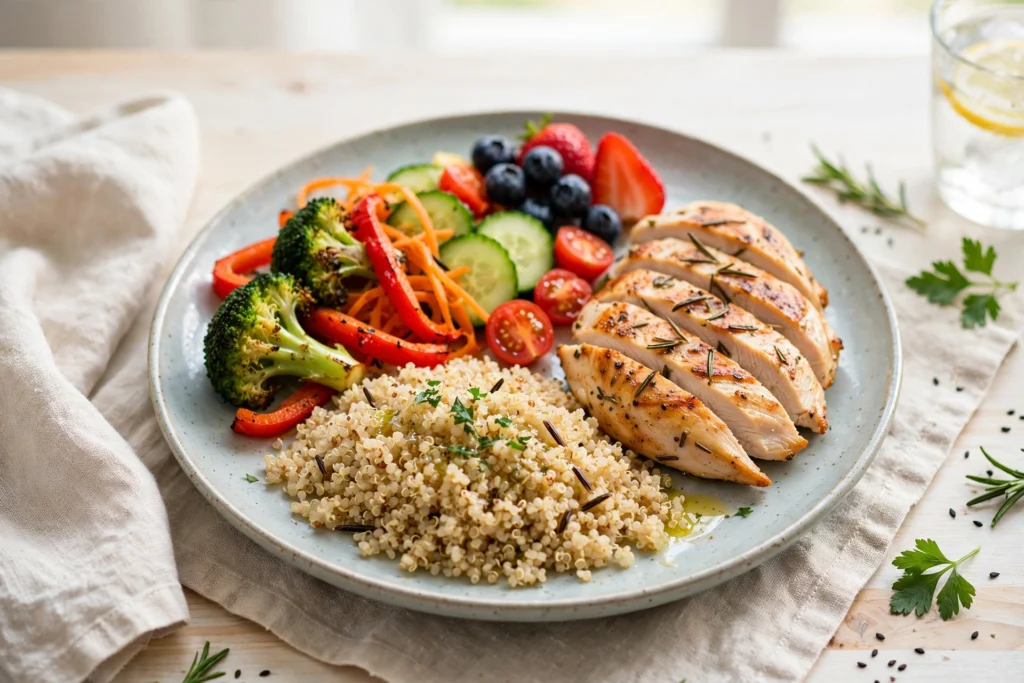
Meal planning for diabetics is not about strict rules or perfect numbers. It is about building a weekly routine of balanced plates, consistent portions, and familiar foods that keep blood sugar steady.
If you have diabetes, you’ve probably heard conflicting advice about what to eat. One person tells you to cut out carbs completely. Another says whole fruit is fine. A relative at a dawat insists a little mithai “won’t hurt.” With so much noise, it’s easy to feel stuck — eating the same boring meals out of fear, or swinging between strict restriction and giving in entirely.
The good news is that eating well with diabetes doesn’t require bland food, extreme diets, or perfect discipline. It requires a plan. This guide gives you exactly that: a practical, evidence-informed weekly approach to meal planning for diabetics — built on the plate method, carb counting basics, and glycaemic awareness — with South Asian foods (roti, rice, daal, sabzi, chai) handled honestly rather than avoided.
Medical disclaimer: This article is for education only and is not medical advice. Everyone’s diabetes management is different. Never start, stop, or change your diabetes medication based on anything you read here — discuss any changes with your doctor or diabetes team. If you take insulin or sulphonylureas, be aware that changes in food intake can affect blood glucose and hypoglycaemia risk; speak to your healthcare professional before making changes to your eating pattern.
In this guide, you will learn:
- How to use the diabetes plate method for every meal
- Carb counting basics and why portion size matters more than “good” vs “bad” foods
- What glycaemic index and glycaemic load mean in plain language
- Daily fibre, protein, and healthy-fat targets
- How to time meals sensibly around medication (without changing doses yourself)
- A complete 7-day sample meal plan with South Asian options
- How to handle roti, rice, daal, chai, and mithai at family gatherings
- Grocery shopping, meal prep, and eating-out strategies that actually work
1. Why Meal Planning Matters More Than Any Single “Superfood”
Research shows that overall dietary pattern matters far more than any individual food. For people with type 2 diabetes, structured meal planning is associated with better glycaemic control, improved weight management, and reduced diabetes-related distress compared with eating without a plan.
A plan removes the three biggest obstacles:
- Decision fatigue. When you’re hungry and unsure what to eat, you reach for whatever is closest — often something high in refined carbohydrate and low in fibre.
- Portion creep. Without a framework, starch portions tend to grow over time.
- Skipped meals. Many people with diabetes skip breakfast thinking it will “save carbs,” but irregular eating often leads to larger blood glucose swings later in the day.
You don’t need to eat perfectly. You need to eat predictably enough that your body — and your medication — can do their jobs.
2. Know Your Diabetes Type: Why One Size Doesn’t Fit
Before building your plan, be clear about your situation, because it shapes your strategy.
2.1 Type 1 diabetes
People with type 1 diabetes produce little or no insulin and must match insulin doses to carbohydrate intake. For them, accurate carb counting is essential — every meal is a calculation. The plate method still helps with balance, but insulin dosing is the central skill, learned with a diabetes educator.
2.2 Type 2 diabetes
Most people with type 2 diabetes still produce insulin but their bodies respond to it less effectively (insulin resistance). Here, the goals are steadier blood glucose, weight management, and reducing medication needs over time where possible. Portion control, fibre, and regular meal timing do most of the work.
2.3 Pre-diabetes and gestational diabetes
The same principles apply, with emphasis on prevention. Structured eating and modest weight loss are among the strongest evidence-backed tools for preventing progression from pre-diabetes to type 2 diabetes. In gestational diabetes, blood glucose targets are tighter, so work closely with your care team.
Your action step: Know which type you have and what medication you take, because — as section 9 explains — timing matters.
3. The Diabetes Plate Method: Your Anchor for Every Meal

The plate method is the simplest evidence-based framework for building a balanced meal, recommended by the American Diabetes Association and widely used by dietitians worldwide. Here’s how it works:
- Half your plate: Non-starchy vegetables — salad, bhindi, palak, cauliflower, tinda, karela, mixed sabzi, cucumbers, tomatoes.
- One quarter: Lean protein — chicken, fish, eggs, paneer, tofu, lean beef, chickpeas (chana), kidney beans (rajma), lentils.
- One quarter: Carbohydrate foods — roti, rice, whole-grain bread, pasta, starchy vegetables like potatoes, corn, or sweet potatoes.
- On the side: Water, and optionally a small serving of fruit or unsweetened yoghurt (dahi).
3.1 Why it works
The plate method naturally limits carbohydrate to roughly one-quarter of the meal while the vegetables and protein slow digestion, which may blunt post-meal glucose spikes. No weighing scales needed, no maths — just a plate and your eyes.
3.2 Making it work with South Asian meals
A traditional thali actually fits the plate method well when you adjust proportions: instead of four rotis and a mountain of rice, try two small rotis (or one cup of cooked rice), one to two cups of sabzi, a palm-sized protein portion, and a small bowl of dahi. The foods don’t change — the ratios do.
4. Carb Counting Basics: The Skill That Changes Everything

Carbohydrate is the macronutrient with the largest and most direct effect on blood glucose. That doesn’t make carbs the enemy — it makes them the variable worth understanding.
4.1 What counts as a carbohydrate
Starches (roti, rice, bread, potatoes, oats), sugars (table sugar, honey, fruit, mithai), and milk/yoghurt (lactose) all contain carbohydrate. Fibre is also a carbohydrate, but it is digested differently and has a much smaller effect on blood glucose.
4.2 The 15-gram “carb choice”
Many diabetes educators use the concept of one “carb choice” = 15 grams of carbohydrate. Learning approximate values for your staple foods is more useful than memorising tables:
- 1 small roti (whole wheat, ~30 g): roughly 15 g carbs
- 1 cup cooked white rice (~150 g): roughly 45 g carbs
- 1 cup cooked brown rice: roughly 45 g carbs (similar total, but higher fibre)
- 1 medium banana: roughly 27 g carbs
- 1 cup cooked daal (masoor/moong): roughly 30–35 g carbs
- 1 cup plain dahi: roughly 12 g carbs
- 2 tbsp sugar in chai: roughly 25 g carbs
4.3 How to use this in your weekly plan
You don’t need to count every gram. The practical approach: pick a consistent carbohydrate range per meal (many adults with type 2 diabetes find 45–60 g per meal a reasonable starting framework to discuss with their dietitian) and use the plate method to stay near it. Consistency matters more than precision.
5. Glycaemic Index and Glycaemic Load, Explained Simply
5.1 Glycaemic index (GI)
The glycaemic index ranks carbohydrate foods from 0 to 100 by how quickly they raise blood glucose compared with pure glucose. Low GI is 55 or below; medium is 56–69; high is 70 or above. Low-GI foods — lentils, chickpeas, whole oats, most vegetables, whole fruit — tend to raise blood glucose more gradually.
5.2 Glycaemic load (GL)
GI alone can mislead, because it doesn’t account for portion size. Glycaemic load multiplies GI by the actual amount of carbohydrate in a serving. Watermelon has a high GI but a low GL per slice, because it’s mostly water. A large bowl of rice has both a high GI and a high GL — the combination that matters.
5.3 What this means for your kitchen
- Brown vs white rice: Brown rice has a slightly lower GI and more fibre, but the difference is modest — portion size still matters more. Basmati rice has a lower GI than many short-grain varieties, which is useful to know if basmati is your family staple.
- Daal: Lentils and legumes are among the lowest-GI staple foods available, thanks to their fibre and protein. A daal-based meal typically produces a gentler glucose response than an equivalent amount of plain rice.
- Roti: Whole-wheat roti is moderate GI. Finer-ground atta and very thin rotis digest faster; coarser atta with visible bran digests a little slower. Keeping the roti portion to one or two small ones matters more than the flour type.
- The cooling trick: Cooked-and-cooled rice or potatoes form some resistant starch, slightly lowering the glucose response. It’s a small effect — not a free pass for double portions.
6. Fibre: The Underrated Diabetes Nutrient

6.1 How much you need
Adults are generally advised to aim for 25–30 grams of fibre per day; many people with diabetes consume far less. Research consistently links higher fibre intake with improved glycaemic control, better cholesterol profiles, and greater satiety — which helps with weight management.
6.2 Soluble vs insoluble fibre
Soluble fibre (oats, barley, lentils, chickpeas, isabgol/psyllium, fruit) forms a gel in the gut that slows carbohydrate absorption — directly useful for blood glucose. Insoluble fibre (whole-wheat bran, vegetable skins) supports digestion and fullness.
6.3 Easy fibre wins in a South Asian diet
Your traditional diet already contains excellent fibre sources: daal, chana, rajma, lobia, vegetables, and whole fruit. The gap is usually that fibre-rich foods get crowded out by large refined-starch portions. Rebalance toward the plate method and fibre largely takes care of itself. A tablespoon of isabgol in water before a heavy meal is a common traditional practice that some people find helpful for satiety — but it’s no substitute for balanced meals, and it can interact with medication absorption, so mention it to your doctor.
7. Protein and Fat: Getting the Balance Right
7.1 Protein targets
Protein slows digestion, preserves muscle during weight loss, and increases fullness. Most adults need roughly 0.8–1.0 g of protein per kilogram of body weight daily, with needs rising with age and activity. For someone weighing 70 kg, that’s roughly 55–70 g per day — achievable with a palm-sized protein portion at two meals plus daal, dahi, or eggs at the third.
Good options: chicken, fish (especially oily fish like salmon or sardines for omega-3s), eggs, paneer, tofu, soya, and legumes. Legumes pull double duty as protein plus fibre-rich carbohydrate.
7.2 Fats: which ones and how much
Replace saturated fats with unsaturated ones where practical. Cook with oils higher in unsaturated fats (mustard, canola, olive, or sunflower oil) rather than ghee, butter, or coconut oil for everyday cooking — save ghee for the occasional tadka where its flavour matters. A small handful of nuts (badam, akhrot) daily provides healthy fats and may improve satiety, though portions matter since nuts are calorie-dense.
7.3 What to limit
Heavily processed meats, deep-fried snacks (samosas, pakoras as daily habits — not occasional treats), sugary drinks, and large amounts of added sugar. Note that fruit juice, even fresh-squeezed, behaves more like a sugary drink than whole fruit: the fibre is gone and the sugar hits fast.
8. Hydration, Beverages, and the Chai Question
8.1 Water first
Aim for water as your default drink. Dehydration can concentrate blood glucose, and many people mistake thirst for hunger.
8.2 Chai with diabetes
Chai itself — tea with milk — is not the problem; the sugar is. Two cups of chai with two teaspoons of sugar each add roughly 50 g of carbohydrate to your day without you noticing. Options that work: gradually reduce to one teaspoon, switch to a smaller cup, or try it unsweetened with elaichi (cardamom) or adrak (ginger) for flavour. Milk in chai adds lactose (milk sugar) too, so very milky, very large cups add up.
8.3 What about diet drinks and sweeteners?
Non-nutritive sweeteners may help reduce sugar intake in the short term, but they are not magic — and some research suggests they can maintain a preference for very sweet tastes. Water, unsweetened tea, and sparkling water are better defaults. Avoid sugary sodas, sweetened lassi, and “energy drinks” entirely.
9. Timing Your Meals Around Medication

Important: this section is about timing your eating, not changing your medication. Never adjust doses, skip medication, or add supplements to “cover” food without your doctor’s guidance.
9.1 Why timing matters
Many diabetes medications work in coordination with food. For example, some medications are taken with the first bite of a meal; taking them on an empty stomach or hours after eating changes how they work. Insulin users must match doses to meals — a missed or delayed meal after insulin can cause hypoglycaemia (low blood sugar).
9.2 Practical timing principles
- Eat at consistent times. Regular meal times make both your body’s glucose patterns and your medication’s effects more predictable.
- Don’t skip meals after taking medication. If your regimen includes insulin or sulphonylureas, skipping a meal is a hypoglycaemia risk. Discuss a plan for sick days and missed meals with your doctor in advance.
- Space meals sensibly. Three balanced meals with 4–5 hours between them works for many people; some do better with smaller, more frequent meals. There is no single right answer — consistency is what counts.
- Evening eating: A very late, heavy dinner may worsen morning glucose readings. Finishing dinner 2–3 hours before sleep is a reasonable target for most people.
9.3 Hypoglycaemia awareness
Know the symptoms — shakiness, sweating, sudden hunger, confusion, irritability — and keep fast-acting glucose (glucose tablets or a small juice box) with you if you take insulin or sulphonylureas. This is a conversation to have with your doctor, not something to manage by guesswork.
10. Your 7-Day Sample Meal Plan

This plan is built on the plate method, with roughly consistent carbohydrate across days and South Asian options at every meal. Adjust portions to your needs with your dietitian’s guidance. Each day includes three meals and one optional snack.
Day 1 — Monday
- Breakfast: Vegetable omelette (2 eggs) with palak and tomato + 1 small whole-wheat roti
- Lunch: Grilled chicken breast, 1 cup mixed sabzi, 1 small roti, small bowl of dahi
- Snack: 1 small apple + 10 badam
- Dinner: Masoor daal (1.5 cups), 1 cup cauliflower sabzi, 1 small roti, salad
Day 2 — Tuesday
- Breakfast: Oats porridge (½ cup dry oats) cooked in milk, topped with cinnamon and 5 chopped akhrot halves
- Lunch: Chana chaat (1.5 cups chickpeas) with cucumber, tomato, onion, lemon, and imli-free chutney
- Snack: 1 cup buttermilk (chaas) with roasted jeera
- Dinner: Baked fish, 1 cup bhindi, ¾ cup cooked brown rice, salad
Day 3 — Wednesday
- Breakfast: 1 cup plain dahi with ½ cup mixed berries and 1 tbsp ground flaxseed
- Lunch: Rajma (1.5 cups) with ¾ cup cooked basmati rice and a large side salad
- Snack: Cucumber and carrot sticks with 3 tbsp hummus
- Dinner: Chicken karahi (made with 1 tsp oil per serving), 1 cup tinda, 1 small roti
Day 4 — Thursday
- Breakfast: 2-egg bhurji with onion, tomato, and green chilli + 1 small roti
- Lunch: Moong daal (1.5 cups), 1 cup palak sabzi, 1 small roti, small bowl of dahi
- Snack: 1 small pear + 1 tbsp peanut butter
- Dinner: Grilled paneer tikka (150 g), 1.5 cups mixed grilled vegetables, ½ cup quinoa or brown rice
Day 5 — Friday
- Breakfast: Vegetable dalia (broken wheat porridge, ½ cup dry) with peas and carrots
- Lunch: Tuna or chicken salad in 2 whole-grain bread slices with lots of salad leaves
- Snack: 1 cup unsweetened chai (small cup) + 5 akhrot halves
- Dinner: Karela sabzi (1 cup), arhar daal (1.5 cups), 1 small roti, salad
Day 6 — Saturday
- Breakfast: Besan cheela (2 small, made with vegetables) with mint chutney and dahi
- Lunch: Leftover-friendly: mixed daal (1.5 cups), 1 cup seasonal sabzi, ¾ cup rice
- Snack: 1 small orange
- Dinner: Baked chicken drumsticks (skin removed), large mixed salad, 1 small whole-wheat naan
Day 7 — Sunday (family day)
- Breakfast: Whole-wheat toast (2 slices) with 2 boiled eggs and tomato
- Lunch: Family-style: 2 small rotis, 1 cup chicken qorma (light on oil), 1 cup salad, ½ cup raita
- Snack: Roasted chana (¼ cup)
- Dinner: Light: clear chicken shorba (soup) with vegetables + 1 small roti
A note on the plan: This is a template, not a prescription. Energy needs vary enormously with body size, activity, age, and medication. Use it to learn the pattern — balanced plate, consistent carbs, fibre at every meal — then personalise it.
11. Smart Grocery Shopping for the Week
A good week starts with a good shop. Keep a running list and shop mostly from the perimeter of the store: fresh produce, dairy, meat and fish, then whole grains and legumes from the aisles.
11.1 Your weekly staple list
- Vegetables (half the trolley): Palak, bhindi, cauliflower, tinda, karela, tomatoes, cucumbers, onions, carrots, salad leaves, frozen mixed vegetables for backup
- Protein: Chicken breast, fish fillets, eggs, paneer or tofu, daal (masoor, moong, arhar), chana, rajma
- Carbs: Whole-wheat atta, brown or basmati rice, oats, dalia
- Dairy: Plain dahi, milk, chaas
- Healthy fats: Mustard or olive oil, badam, akhrot, flaxseed
- Flavour: Fresh herbs, ginger, garlic, green chillies, lemon, spices (haldi, jeera, dhania, cinnamon)
11.2 Reading labels in 30 seconds
Check the nutrition panel per 100 g: total carbohydrate, of which sugars, and fibre. Compare two similar products and pick the higher-fibre, lower-sugar one. Watch for “no added sugar” products that are still high in total carbohydrate — and for serving sizes smaller than what anyone actually eats.
11.3 Meal prep: the 90-minute Sunday session
Cook a big pot of daal, a tray of roasted vegetables, a batch of brown rice, and boil eggs. Portion protein for the week. Wash and chop salad vegetables. With components ready, assembling plate-method meals takes ten minutes — which is the real secret to sticking with the plan on busy weekdays.
12. Eating Out, Dawats, and Mithai: Real Life Strategies
A plan that collapses at the first wedding dinner isn’t a plan — it’s a fantasy. Here’s how to handle the social food situations that are central to South Asian life.
12.1 At restaurants
Order grilled, tandoori, or karahi-style proteins; ask for sauces on the side; start with salad or shorba; choose one starch (roti OR rice, not both in large amounts); drink water instead of sugary drinks. Most restaurants will happily adjust.
12.2 At dawats and weddings
Eat a small balanced snack before you go so you arrive steady, not starving. Survey the full spread before filling your plate — then build one plate-method plate and enjoy it. For mithai: you don’t have to refuse everything forever, but be deliberate. Choose one small piece of your favourite, eat it slowly, and consider it your dessert carbohydrate for that meal (reduce the rice/roti accordingly). “Just one small piece” chosen consciously beats three pieces eaten on autopilot.
12.3 Festivals and Eid
Plan ahead rather than improvising. If sheer khurma or sawaiyan is the tradition, have a small bowl and balance the rest of the day’s meals toward vegetables and protein. Tell your host in advance if you need simpler options — most families are understanding when it’s about health, not rejection of their cooking.
12.4 When blood sugar runs high after an event
Don’t punish yourself with a skipped meal the next day — that often causes rebound swings. Return to your normal plan, drink water, take a walk, and monitor as your care team advised. One off-plan meal doesn’t erase a week of good ones.
13. Tracking Without Obsessing
13.1 What to track
A simple food and glucose log for the first few weeks teaches you more than any article: what you ate, approximate portions, and your readings. Patterns emerge quickly — “rice at lunch spikes me more than roti” is the kind of personal insight no generic plan can give you.
13.2 What not to do
Don’t weigh every gram forever, don’t chase a “perfect” number after every meal, and don’t compare your readings with someone else’s. Blood glucose varies with stress, sleep, illness, and activity — food is only one factor. If logging starts causing anxiety, simplify it or discuss it with your care team.
13.3 The two-week review
After two weeks on the plan, look back: which meals kept you feeling steady and full? Which left you hungry or spiking? Keep the winners, adjust the rest. Meal planning is a skill that improves with practice, not a test you pass once.
Frequently Asked Questions
Q1: Can diabetics eat rice?
Yes — rice is not forbidden. What matters is the type and portion. Choose basmati or brown rice over short-grain white rice where possible, keep portions to about ¾ to 1 cup cooked per meal, pair it with protein and plenty of vegetables, and consider it your quarter-plate carbohydrate. Research shows total carbohydrate amount affects blood glucose more than the specific grain.
Q2: How many rotis can a diabetic eat per day?
There is no universal number — it depends on your total carbohydrate target, body size, activity, and medication. As a starting framework, many adults do well with 1–2 small whole-wheat rotis per meal (roughly 15–30 g carbohydrate each), balanced with vegetables and protein. Your dietitian can personalise this based on your glucose readings.
Q3: Is fruit allowed, or is the sugar a problem?
Whole fruit is allowed and encouraged — 2 to 3 small servings a day fits most diabetes meal plans. The fibre in whole fruit slows sugar absorption, which is why whole fruit behaves very differently from fruit juice. Choose whole, fresh fruit over juice, dried fruit, or canned fruit in syrup, and pair fruit with a meal or a protein snack rather than eating it alone if you notice spikes.
Q4: Should I eat before taking my diabetes medication?
It depends on the medication — some are taken with food, some before, some regardless. Follow the timing your doctor or pharmacist gave you, and eat at consistent times so the medication works predictably. If you’re unsure about your specific medicine’s timing, ask your pharmacist. Never skip or adjust medication because of a meal change without medical advice.
Q5: Can meal planning reverse type 2 diabetes?
Structured eating, weight management, and activity can put type 2 diabetes into remission for some people — meaning blood glucose returns to non-diabetic ranges without medication — and research such as the DiRECT trial shows this is possible, particularly with substantial weight loss early after diagnosis. However, remission is not guaranteed, is not the same as a cure, and requires ongoing maintenance and medical supervision. Be cautious of anyone promising reversal through a specific diet alone.
Conclusion: Start This Week, Not “Someday”
Meal planning for diabetes isn’t about perfection — it’s about replacing guesswork with a simple, repeatable pattern: half the plate vegetables, a quarter protein, a quarter carbohydrate, fibre at every meal, consistent timing, and honest portions of the foods you actually love, from daal to roti to the occasional piece of mithai at a dawat.
Pick three things from this guide to start this week: use the plate method at dinner, measure your rice portion for seven days, and cut the sugar in your chai in half. Small, consistent changes compound — and your next blood test will show it.
If you’d like a meal plan built around your body, your medications, your food preferences, and your glucose readings — not a generic template — that’s exactly what personalised nutrition guidance is for. Book an appointment and let’s build your plan together.
Keep Reading
For a day-by-day desi meal plan with exact portions, read Diabetes Diet Chart (Indian): A 7-Day Meal Plan with Real Desi Foods next.