This evidence-based guide to iron deficiency symptoms and treatment explains how to recognize the warning signs, get the right blood tests, and treat it effectively.
Do you feel exhausted even after a full night’s sleep? Is your skin looking paler than usual, or are your nails breaking more easily? These quiet, everyday changes are among the most common — and most overlooked — signs of iron deficiency, a condition that affects an estimated 1 in 4 people worldwide, according to the World Health Organization.
Iron deficiency is the most widespread nutritional deficiency on the planet, and in South Asia it is especially common. Women of reproductive age, growing children, athletes, and people following vegetarian or low-meat diets carry the highest risk. The good news is that iron deficiency is one of the most well-understood nutrient deficiencies in medicine, and with the right diagnosis and treatment plan, most people recover fully.
In this guide, you will learn:
- What iron deficiency is and how it differs from iron-deficiency anemia
- The most common causes of iron deficiency in adults and children
- Early and advanced symptoms, from fatigue and pallor to pica and restless legs
- How iron deficiency is diagnosed through iron studies (ferritin, serum iron, TIBC, transferrin saturation)
- The difference between iron-deficiency anemia and anemia of chronic disease
- Evidence-based treatment options: oral iron dosing, IV iron, and dietary strategies
- Which foods enhance iron absorption and which ones block it
- How South Asian dietary patterns (daal, roti, tea with meals) affect iron status, and practical fixes
- Answers to the most frequently asked questions about iron deficiency
What Is Iron Deficiency?
Iron is an essential mineral your body needs to make hemoglobin, the protein in red blood cells that carries oxygen from your lungs to every tissue in your body. Iron is also required for myoglobin (which supplies oxygen to muscles), for the production of enzymes involved in energy metabolism, and for normal immune function.
Iron deficiency occurs when your body’s iron stores become depleted. Think of it in three stages:
- Storage depletion — Ferritin (the protein that stores iron) drops, but hemoglobin remains normal. Most people have no symptoms at this stage, though some research suggests subtle fatigue and reduced exercise tolerance may already appear.
- Iron-deficient erythropoiesis — The bone marrow no longer has enough iron to produce healthy red blood cells. Iron studies become abnormal, and symptoms typically begin.
- Iron-deficiency anemia — Hemoglobin falls below the normal range. This is the stage most people recognize, but it is only the tip of the iceberg.
This distinction matters because iron deficiency without anemia still causes real symptoms and deserves treatment. Many clinicians now recognize “non-anemic iron deficiency” as a clinically important condition, especially in women, endurance athletes, and people with chronic heart failure, where research shows that iron repletion improves quality of life even when hemoglobin is normal.
Your body cannot make iron on its own — every milligram must come from your diet, and absorption is tightly regulated. You lose iron every day through shed skin and intestinal cells, and women additionally lose iron through menstruation and pregnancy. When intake or absorption fails to keep up with losses, deficiency develops.
Common Causes of Iron Deficiency
Increased Iron Requirements
Certain life stages and situations raise your body’s demand for iron well above the usual daily intake:
- Pregnancy — Blood volume expands by roughly 40–50%, and the developing baby draws iron from the mother. The WHO estimates that up to 40% of pregnant women worldwide are anemic, and iron deficiency is the leading cause. Iron requirements during pregnancy roughly double.
- Adolescence — Rapid growth spurts increase iron demand, and the onset of menstruation in girls compounds the need.
- Infancy and early childhood — Full-term babies are born with iron stores that last about 4–6 months; after that, iron must come from food. Babies fed excessive cow’s milk (more than ~700 ml/day) are at particular risk, because cow’s milk is low in iron and can cause low-grade intestinal blood loss.
Blood Loss
Chronic blood loss is the most common cause of iron deficiency in adults, and each milliliter of blood lost carries away roughly 0.5 mg of iron.
- Heavy menstrual bleeding — A leading cause of iron deficiency in women of reproductive age. Periods lasting more than 7 days, needing to change pads or tampons every hour or two, or passing large clots may indicate menorrhagia.
- Gastrointestinal blood loss — Slow, invisible bleeding from the gut caused by stomach or duodenal ulcers, hemorrhoids, colorectal polyps, inflammatory bowel disease, regular use of NSAIDs (such as ibuprofen), or, less commonly, gastrointestinal cancers. In adults — especially men and postmenopausal women — new-onset iron deficiency should prompt evaluation for a gastrointestinal source.
- Frequent blood donation — Regular donors lose iron with each donation and may need supplementation between donations.
- Post-surgical blood loss — Major surgery can deplete iron stores significantly.
Inadequate Dietary Intake
Iron deficiency can develop simply because the diet provides too little absorbable iron:
- Low-meat and vegetarian diets — Plant-based (non-heme) iron is absorbed at only 2–10%, compared with 15–35% for heme iron from animal sources.
- Restrictive dieting and eating disorders — Very low-calorie diets often fall short on iron.
- Poverty and food insecurity — Limited access to iron-rich foods such as meat, lentils, and fortified products.
Poor Iron Absorption
Even an iron-adequate diet can fail if absorption is impaired:
- Celiac disease — Damage to the small intestinal lining reduces iron uptake; iron deficiency that does not respond to oral iron is a classic clue.
- Post-gastrectomy or bariatric surgery — Reduced stomach acid and bypassed intestinal segments lower absorption.
- Helicobacter pylori infection — This stomach bacterium competes for iron and impairs absorption; eradicating it often improves iron status.
- Chronic antacid or proton-pump inhibitor use — Stomach acid helps convert iron into an absorbable form; long-term acid suppression may reduce absorption.
Iron Deficiency Symptoms: What to Watch For
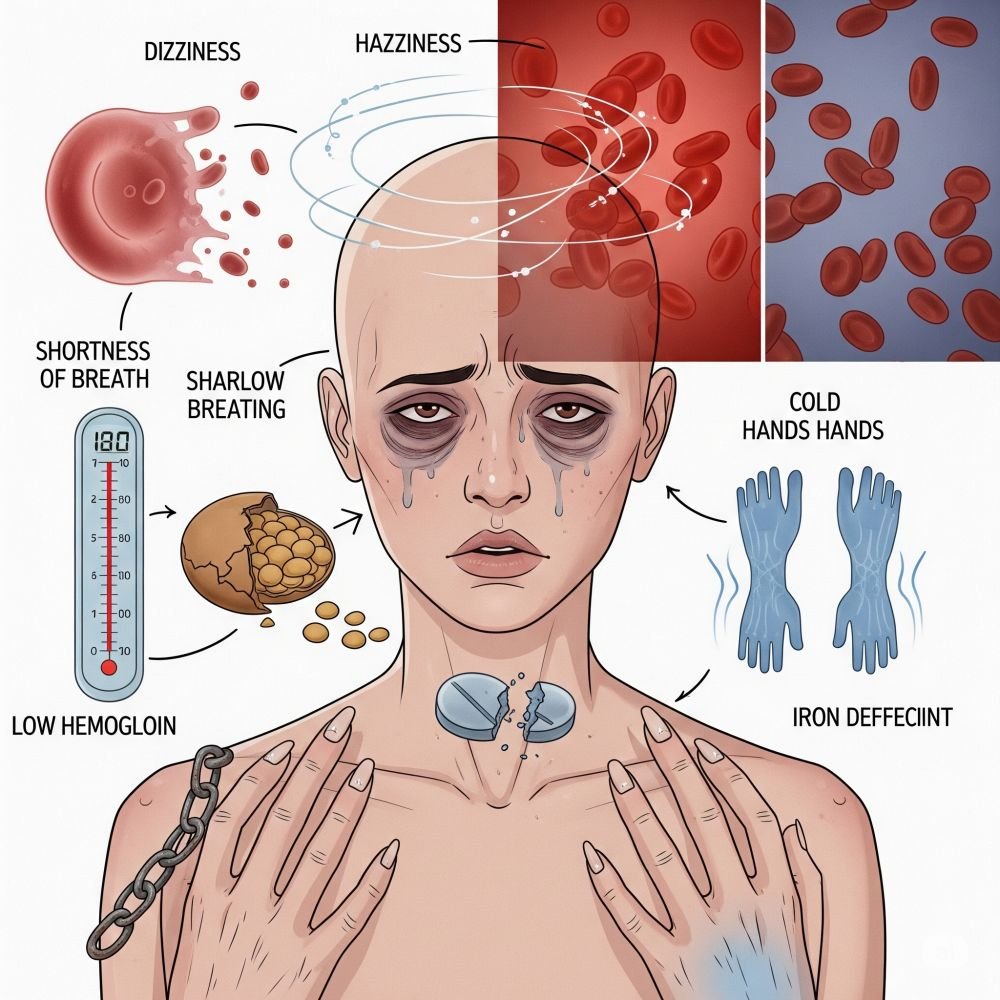
Symptoms often develop gradually, so many people adapt to feeling unwell and assume it is normal. Pay attention to clusters of symptoms rather than any single one.
Fatigue and Weakness
Persistent tiredness that does not improve with rest is the hallmark symptom. Because hemoglobin carries less oxygen to muscles and the brain, even ordinary tasks can feel draining. Research shows that fatigue in iron deficiency is not “just in your head” — it reflects measurable reductions in oxygen delivery and energy metabolism.
Pale Skin, Pallor of the Inner Eyelids and Nails
Pallor is a classic sign. A simple self-check used in many parts of the world: gently pull down your lower eyelid — the inner lining should look pink-red. A noticeably pale inner eyelid suggests anemia, though it is not diagnostic on its own. Paleness of the nail beds, gums, and tongue can also appear.
Shortness of Breath and Rapid Heartbeat
With fewer red blood cells, the heart must work harder to circulate oxygen. You may notice breathlessness climbing stairs, a racing or pounding heart during mild exertion, or a feeling of heaviness in the chest. In severe cases, these symptoms can appear even at rest.
Dizziness and Headaches
Reduced oxygen delivery to the brain can cause lightheadedness when standing, frequent headaches, and difficulty concentrating — sometimes described as “brain fog.”
Cold Hands and Feet
Poor circulation of oxygenated blood often leaves the hands and feet feeling cold, even in warm weather.
Brittle Nails and Hair Changes
Iron deficiency disrupts the growth of rapidly dividing cells, including nail and hair cells. Nails may become thin, brittle, and prone to breaking. In more advanced deficiency, nails can develop a spoon-shaped appearance called koilonychia — the nail becomes concave instead of convex. Hair may shed more than usual (telogen effluvium), and regrowth can be slow until iron stores are restored.
Restless Legs Syndrome
An uncomfortable urge to move the legs, especially in the evening or at night, is strongly associated with iron deficiency. The connection is biological: iron is a cofactor for the enzyme that produces dopamine, and low brain iron disrupts dopamine signaling. Studies show that iron repletion often improves restless legs symptoms, particularly when ferritin is low.
Pica: Craving Non-Food Substances
Pica — craving and eating non-nutritive substances — is one of the most distinctive symptoms of iron deficiency. The most common form is pagophagia (compulsive ice chewing or eating), reported in up to half of iron-deficient patients in some studies. Others crave clay, soil, chalk, raw rice, starch, or paper. Pica usually resolves quickly once iron therapy begins, which is why clinicians consider it almost diagnostic. If you or a family member develops such cravings, it is worth getting iron studies done promptly.
Angular Cheilitis and Sore Tongue
Cracks at the corners of the mouth (angular cheilitis), a smooth or sore tongue (glossitis), and a burning sensation in the mouth can all occur in iron deficiency, reflecting impaired cell turnover in the mouth’s lining.
Reduced Immunity and Frequent Infections
Iron is needed for immune cell function. People with iron deficiency may catch colds and other infections more often, and wound healing can be slower.
When Symptoms Become Serious
Seek prompt medical care if you experience fainting, chest pain, severe shortness of breath at rest, heart palpitations that will not settle, very pale or yellowish skin, or black/tarry stools (which may indicate gastrointestinal bleeding). Severe iron-deficiency anemia can strain the heart, and in older adults it may worsen underlying heart disease.
How Iron Deficiency Is Diagnosed: Iron Studies Explained
A diagnosis is never made on symptoms alone. Your clinician will order blood tests, typically starting with a complete blood count (CBC) and iron studies.
Complete Blood Count (CBC)
In iron-deficiency anemia, the CBC usually shows low hemoglobin and hematocrit, with red blood cells that are smaller than normal (microcytic) and paler than normal (hypochromic) — reflected in low MCV and low MCH values. However, remember that iron deficiency can exist with a completely normal CBC, which is why iron studies matter.
Serum Ferritin
Ferritin is the single most useful test for iron deficiency because it reflects your body’s iron stores. A low ferritin (commonly below 30 µg/L in otherwise healthy adults) indicates depleted stores. Note that ferritin is also an acute-phase reactant — it rises during infection, inflammation, and chronic disease — so a “normal” ferritin in someone who is ill does not rule out deficiency.
Serum Iron
This measures iron currently circulating in the blood bound to transferrin. It fluctuates throughout the day and drops after meals, so it is never interpreted on its own.
TIBC (Total Iron-Binding Capacity)
TIBC measures how much iron the blood could carry — it is essentially a proxy for transferrin, the transport protein. In iron deficiency, the body makes more transferrin to capture every available molecule of iron, so TIBC rises.
Transferrin Saturation
Transferrin saturation is calculated from serum iron divided by TIBC. In iron deficiency, serum iron falls while TIBC rises, so saturation drops — typically below 16–20%. Low transferrin saturation with low ferritin is a classic pattern of true iron deficiency.
Typical Iron Study Patterns
| Test | Iron Deficiency | Normal (approx.) |
|---|---|---|
| Ferritin | Low (<30 µg/L) | 30–300 µg/L (men), 15–150 µg/L (women) |
| Serum iron | Low | 60–170 µg/dL |
| TIBC | High | 240–450 µg/dL |
| Transferrin saturation | Low (<16–20%) | 20–50% |
(Reference ranges vary by laboratory; always interpret results with your clinician.)
Additional Tests Your Doctor May Order
Depending on the situation, your clinician may also check vitamin B12 and folate (to rule out other nutritional anemias), C-reactive protein (to see whether inflammation is falsely raising ferritin), stool occult blood, or refer for endoscopy when gastrointestinal blood loss is suspected.
Iron-Deficiency Anemia vs. Anemia of Chronic Disease
Not all anemia with low iron numbers is true iron deficiency, and getting this distinction right determines whether iron therapy will help.
Iron-deficiency anemia (IDA) is caused by genuinely depleted iron stores — the body simply does not have enough iron. Ferritin is low, TIBC is high, and transferrin saturation is low. Iron supplementation reliably helps.
Anemia of chronic disease (ACD) — also called anemia of inflammation — occurs when long-standing illness (chronic kidney disease, rheumatoid arthritis, chronic infections, cancer, heart failure) triggers the liver to release hepcidin, a hormone that locks iron inside storage cells and blocks intestinal absorption. The body has iron, but it cannot use it. In ACD, ferritin is normal or high (inflammation raises it), TIBC is low or normal, and transferrin saturation may be low-normal.
The two conditions can also coexist — someone with chronic disease can simultaneously be truly iron deficient, which is common in inflammatory bowel disease and chronic kidney disease. This is why clinicians look at the full pattern of iron studies (and sometimes CRP) rather than any single number, and why self-prescribing iron without testing can be misguided: giving iron in pure ACD may not help and could theoretically add oxidative stress.
Treatment of Iron Deficiency
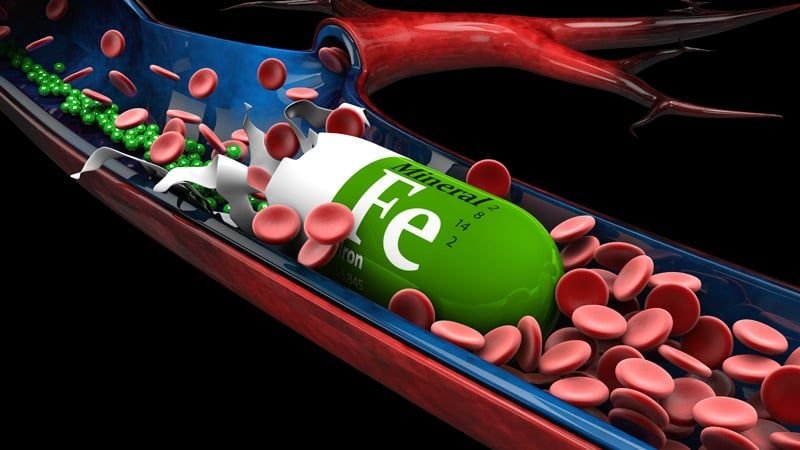
Treatment has three pillars: replenish iron stores, address the underlying cause, and maintain healthy levels afterward. The right plan depends on the severity of deficiency, the cause, and how well you tolerate oral iron.
Finding and Treating the Cause
Iron therapy without addressing the cause is like refilling a leaking bucket. Heavy periods may need gynecological management; gastrointestinal bleeding needs investigation and treatment; celiac disease needs a gluten-free diet; H. pylori needs eradication therapy. Your clinician should always look for the “why” alongside the “what.”
Oral Iron Therapy: Dosing and Best Practice
Oral iron is the first-line treatment for most people with uncomplicated iron deficiency, and it is inexpensive and widely available.
How much to take: Traditional practice prescribed 150–200 mg of elemental iron per day (often as ferrous sulfate 325 mg tablets, each containing about 65 mg elemental iron, taken two to three times daily). However, recent research has changed this picture: large daily doses raise hepcidin levels, which then blocks absorption of the next doses and worsens gastrointestinal side effects. Current evidence supports lower, less frequent dosing — for example, 40–80 mg of elemental iron once daily, or even alternate-day dosing — which research shows may achieve similar or better absorption with fewer side effects. Always follow your clinician’s prescription rather than adjusting doses yourself.
How to take it for best absorption:
– Take iron on an empty stomach (1 hour before or 2 hours after meals) if you can tolerate it; if it causes nausea, taking it with a small meal is better than skipping doses.
– Take it with vitamin C (a glass of orange juice or a vitamin C tablet), which meaningfully improves absorption.
– Avoid taking iron at the same time as calcium supplements, antacids, thyroid medication (levothyroxine), or certain antibiotics — separate them by at least 2 hours.
– Avoid tea and coffee around the dose (see the inhibitors section below).
How long: Treatment typically continues for about 3 months after hemoglobin normalizes, to rebuild ferritin stores — so a full course often lasts 3–6 months. Your clinician will recheck blood tests to confirm.
Side effects: The most common are constipation, nausea, stomach cramps, and dark stools (dark stools are harmless and expected). If side effects are troublesome, ask your clinician about switching to a different iron salt (ferrous gluconate or ferrous fumarate), lowering the dose, or alternate-day dosing — do not simply stop.
IV Iron Therapy
Intravenous iron delivers iron directly into the bloodstream and is used when:
- Oral iron is not tolerated despite dose adjustments
- Iron deficiency persists despite adequate oral therapy (suggesting malabsorption)
- There is ongoing blood loss that outpaces oral replacement
- Rapid repletion is needed — for example, in late pregnancy, before major surgery, or in severe anemia
- The patient has conditions like inflammatory bowel disease, chronic kidney disease, or post-bariatric surgery where absorption is impaired
Modern IV iron formulations (such as ferric carboxymaltose and iron isomaltoside) can replace large iron deficits in one or two infusions and are generally well tolerated when given in a medical setting. Mild side effects include headache, flushing, or muscle aches; serious allergic reactions are rare with newer preparations but IV iron must always be administered where emergency care is available. Your clinician will calculate the dose from your weight and hemoglobin deficit.
Dietary Treatment: Iron-Rich Foods
Diet alone rarely corrects established deficiency quickly, but it is essential for maintaining stores after treatment and for preventing recurrence.
Heme iron sources (best absorbed): red meat (beef, mutton), kaleji (liver — one of the richest iron sources available), kidney, chicken, and fish. Liver is extraordinarily iron-dense, though pregnant women should limit liver intake because of its very high vitamin A content — discuss portions with your clinician.
Non-heme iron sources (plant-based): palak (spinach) and other dark leafy greens (sarson, methi), daal and other lentils (masoor, moong, chana), chana (chickpeas), kidney beans (rajma), soybeans, fortified cereals, pumpkin seeds, sesame seeds (til), dried apricots and raisins, jaggery (gur), and whole grains.
Practical tip: Pair plant iron sources with vitamin C at the same meal — for example, squeeze lemon over daal or palak, or eat an orange or amla alongside chana chaat. This can multiply non-heme iron absorption several-fold.
Iron Absorption: Enhancers and Inhibitors
Whether iron comes from food or tablets, absorption is strongly influenced by what you consume alongside it.
Enhancers of Iron Absorption
- Vitamin C (ascorbic acid) — The most powerful enhancer. Citrus fruits, amla, guava, tomatoes, bell peppers, and lemon juice all help convert iron into its absorbable form.
- Heme iron and the “meat factor” — Eating even a small amount of meat, fish, or poultry alongside plant foods boosts non-heme iron absorption from the whole meal.
- Fermented foods — Fermentation reduces phytates (see below); foods like yogurt-based preparations may modestly help.
- Cooking in iron cookware — Traditional iron karahis and tawas can add small but meaningful amounts of iron to food, especially acidic dishes like tomato-based curries.
Inhibitors of Iron Absorption
- Tea and coffee — Tannins and polyphenols bind iron in the gut. This is one of the most relevant inhibitors in South Asia, where chai with meals is a deeply rooted habit. Research shows that drinking tea with a meal can reduce non-heme iron absorption by 60% or more. The fix is simple: enjoy your chai, but have it at least 1–2 hours before or after iron-rich meals or iron tablets.
- Calcium — Milk, yogurt, and calcium supplements inhibit both heme and non-heme iron absorption when consumed at the same time. In South Asia, where doodh (milk) and dahi feature heavily in meals, separating dairy from iron-rich foods matters.
- Phytates — Found in whole grains, bran, and legumes — staples like roti (whole wheat) and daal contain phytates that bind iron. Soaking lentils and beans before cooking, fermenting dough, and pairing with vitamin C all reduce phytate’s effect.
- Oxalates — Spinach (palak) is rich in iron but also high in oxalates, which limit its absorption — another reason to pair palak with lemon or tomatoes.
- Antacids and proton-pump inhibitors — Reduced stomach acid impairs iron absorption, as noted earlier.
The South Asian Plate: Iron Challenges and Practical Fixes
South Asian diets have genuine strengths for iron nutrition — lentils, chickpeas, leafy greens, and jaggery are everyday foods — but certain entrenched habits work against iron status. Population surveys consistently show high rates of anemia among South Asian women and children, and diet patterns are part of the story.
The Tea-With-Meals Problem
Drinking strong doodh-patti or chai alongside breakfast, lunch, or dinner is perhaps the single most correctable iron-blocking habit in the region. Shifting tea to mid-morning or mid-afternoon — between meals rather than with them — costs nothing and can substantially improve iron absorption from the same food.
Roti, Daal, and Phytates
Whole-wheat roti and daal form the backbone of daily eating, and both carry phytates. Rather than abandoning these staples (which would be neither realistic nor necessary), reduce phytate impact by soaking daal and chana for several hours before cooking, using fermented batters where traditional (dosa, idli), and always adding a vitamin C source — lemon, tomato, amla, or a side of salad — to the meal.
Making the Most of Palak, Kaleji, and Chana
- Palak is nutritious but its iron is partly locked by oxalates — cook it with tomatoes or finish with lemon juice.
- Kaleji (liver) is among the most iron-dense foods in any cuisine; including it once or twice a week can make a real difference for non-vegetarians (with the pregnancy caveat above).
- Chana and other legumes provide solid iron plus protein — sprouting chana before cooking further reduces phytates and may improve mineral availability.
- Gur (jaggery) used in place of refined sugar adds trace iron along with sweetness.
Vegetarian Households
In vegetarian families, combining strategies matters most: daal + lemon, palak + tomato, chana chaat with onion-tomato and lemon, fortified atta where available, and keeping tea and dairy away from the main iron-rich meal. For those who cannot meet needs through diet — particularly menstruating women and pregnant women — clinician-guided iron supplementation is appropriate and common.
Special Populations
Pregnant Women
Pregnancy roughly doubles iron requirements, and deficiency is linked to preterm birth, low birth weight, and maternal fatigue. Most guidelines recommend routine iron supplementation during pregnancy (commonly 30–60 mg elemental iron daily), with higher therapeutic doses when deficiency is diagnosed. IV iron may be used in later pregnancy when oral iron is insufficient or poorly tolerated. Any supplementation during pregnancy should be guided by your obstetrician.
Children and Adolescents
Growing children need steady iron for brain development — research links early childhood iron deficiency to lasting effects on cognition and behavior, which is why prevention matters so much. Avoid excessive cow’s milk in toddlers, include iron-rich complementary foods from 6 months (mashed daal, egg yolk, meat where culturally appropriate), and have adolescents — especially girls after menarche — screened if they show fatigue or poor concentration.
Athletes
Endurance athletes lose iron through sweat, gastrointestinal micro-bleeding, foot-strike hemolysis (in runners), and, in some, exercise-induced hepcidin spikes that temporarily block absorption. Athletes — particularly female distance runners — should have iron studies checked if performance drops or fatigue persists, and should time iron supplements away from training sessions when possible.
Older Adults
In older adults, new iron deficiency should never be assumed to be “just diet” — gastrointestinal evaluation is important to rule out slow blood loss from polyps, ulcers, or malignancy. At the same time, poor dentition, reduced appetite, and multiple medications can genuinely reduce iron intake and absorption.
Preventing Iron Deficiency: Long-Term Strategies
- Eat iron-rich foods regularly, pairing plant sources with vitamin C.
- Keep tea, coffee, and large dairy servings 1–2 hours away from iron-rich meals and iron supplements.
- Address heavy menstrual bleeding with your gynecologist rather than silently compensating with supplements.
- Recheck iron studies after treatment to confirm stores are rebuilt, not just hemoglobin.
- Consider periodic screening if you are in a high-risk group — pregnant women, adolescents, frequent blood donors, endurance athletes, vegetarians with symptoms, and adults over 65.
- Treat underlying gut conditions (celiac disease, H. pylori, IBD) that silently block absorption.
Frequently Asked Questions
How long does it take to recover from iron deficiency?
Hemoglobin usually begins rising within 2–4 weeks of effective treatment, and most people feel noticeably less fatigued within the first month. However, fully rebuilding iron stores (ferritin) typically takes 3–6 months of continued therapy. Stopping treatment as soon as you “feel better” is a common reason deficiency returns — follow your clinician’s full course and recheck labs.
Can I treat iron deficiency with diet alone?
For mild deficiency caught very early, dietary changes may help, especially combined with removing absorption blockers like tea with meals. But once ferritin is significantly depleted or anemia has developed, diet alone is usually too slow — the iron gap is simply too large to close with food in a reasonable timeframe. Most clinicians recommend supplements for confirmed deficiency and diet for maintenance and prevention.
Why do iron tablets cause constipation, and what can I do about it?
Iron can slow gut motility and harden stools — it is the most common reason people abandon treatment. Strategies that help include taking iron with food (slightly lower absorption but better tolerance), increasing fiber and water intake, trying alternate-day dosing, or asking your clinician about a different iron formulation. Do not stop treatment without discussing alternatives first.
Is it safe to take iron supplements without a blood test?
It is not advisable. Iron is one of the few nutrients where excess is genuinely harmful — iron overload can damage the liver, heart, and pancreas, and people with conditions like hemochromatosis (an inherited iron-overload disorder) must avoid extra iron. Fatigue has many causes, from thyroid disorders to sleep apnea to depression, and iron will not help those. A simple blood test confirms whether iron is actually the problem.
Does drinking tea really cause iron deficiency?
Tea does not “cause” deficiency on its own in someone with adequate iron intake and no blood loss — but in people with borderline iron status (very common among South Asian women), habitually drinking strong tea with every meal can meaningfully reduce absorption and tip the balance toward deficiency. The evidence-based fix is timing: keep a 1–2 hour gap between tea and iron-rich meals or supplements, rather than giving up chai.
Conclusion
Iron deficiency is common, frequently missed, and highly treatable — but only when it is properly diagnosed and its cause addressed. Recognizing the early symptoms, from persistent fatigue and pallor to brittle nails, restless legs, and pica, allows you to seek testing before deficiency progresses to anemia. Iron studies — ferritin, serum iron, TIBC, and transferrin saturation — give a clear picture of your iron status, and distinguishing true iron deficiency from anemia of chronic disease ensures you get the right treatment. Whether the answer is oral iron, IV iron, dietary changes, or treating an underlying cause like heavy periods or gut disease, most people recover fully with a complete course of therapy.
Small, sustainable changes to South Asian eating patterns — moving chai away from mealtimes, pairing daal and palak with vitamin C, and including iron-dense foods like kaleji and chana — can protect your iron stores for years to come.
If you recognize these symptoms in yourself, do not self-diagnose or start high-dose supplements on your own — get your iron studies checked and work with a qualified professional on a plan tailored to your body, your diet, and your health history.
Ready to take the next step? Book an appointment with our nutrition team for personalized iron-deficiency assessment, diet planning, and supplement guidance.
Medical disclaimer: This article is for educational purposes only and is not a substitute for professional medical advice, diagnosis, or treatment. Always seek the advice of your physician or another qualified health provider with any questions you may have regarding a medical condition. Never disregard professional medical advice or delay seeking it because of something you have read here.
Keep Reading
Continue with our companion guide: Best Iron-Rich Foods for Anemia: What to Eat and How to Absorb It.
References
- NIH Office of Dietary Supplements: Iron Fact Sheet for Health Professionals (updated September 2025).
- World Health Organization: Anaemia Fact Sheet (February 2025).